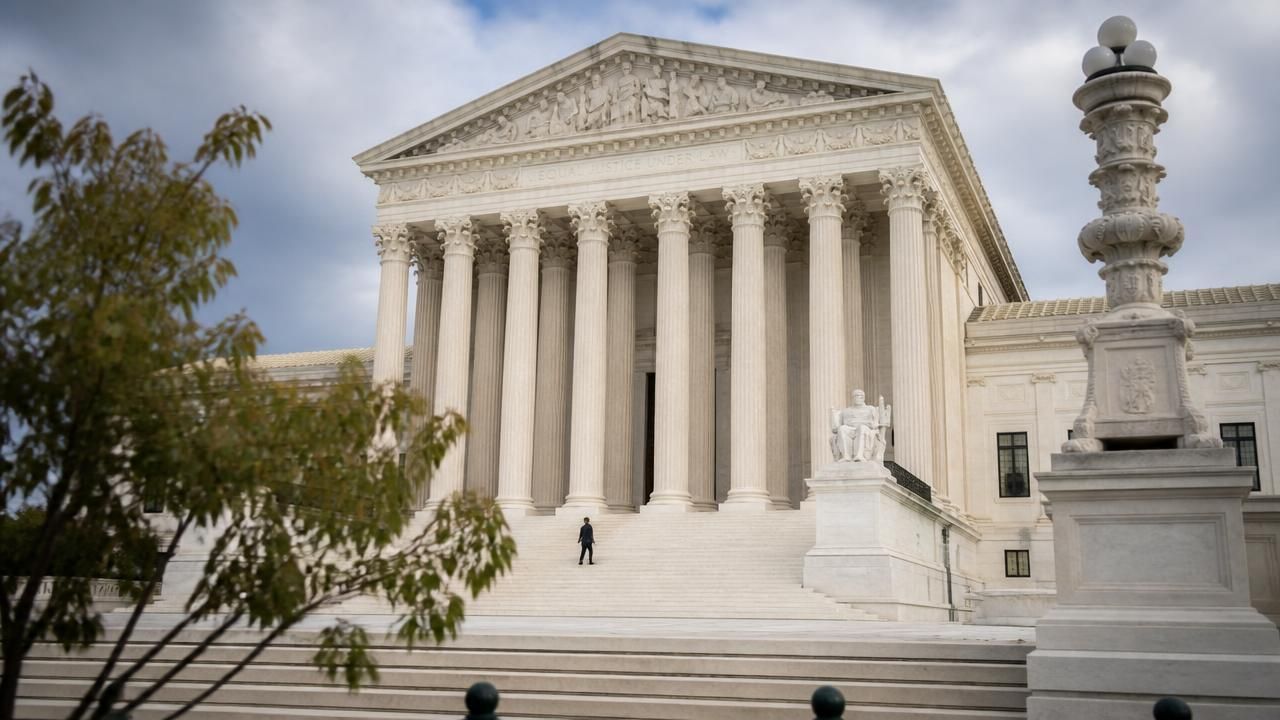
The Supreme Court opened its new term on the first Monday in October, returning to a docket that is already testing the court’s public standing, its ethical boundaries and its relationship with the White House. The term’s first marquee battle is a climate case that could reshape the financial exposure of the oil industry, but it is far from the only controversy. The justices are also set to hear major disputes over immigration and guns, while the shadow of President Trump and a growing emergency docket hang over the court.
At the center of the opening week is a bid by Big Oil to toss climate lawsuits brought by states and municipalities, including Boulder, Colorado. The case asks whether Boulder can pursue state-law claims against oil companies for climate-related damages, or whether federal law preempts those claims. The court’s decision to hear the case has alarmed environmental advocates and energized industry lawyers, who warn of a patchwork of liability that could cost fossil fuel companies billions.
Alito recusal jolts climate case
The climate showdown was jolted late by Justice Samuel Alito’s recusal, a decision that leaves only eight justices to hear the case. MSN’s coverage described the move as a “last-minute decision” that “leaves Supreme Court climate fight with eight justices.” Bloomberg Supreme Court reporter Greg Stohr said the recusal creates the possibility of a 4-4 split, which would leave the lower court ruling in place and deny the oil companies the definitive victory they sought.
"Justice Samuel Alito’s recusal creates the possibility of a 4-4 split," Stohr said, adding that the term is already shaped by the court’s growing emergency docket and renewed questions about Supreme Court ethics.
Alito’s recusal also renewed scrutiny of the court’s ethics practices. Stohr noted that the term will bring fresh attention to potential changes to the court and to Alito’s eventual retirement. For a court that has faced declining public trust, the optics of an eight-justice climate case are unlikely to quiet critics.
A docket packed with controversy
CBS News reported that the court is “gearing up for a new term with major cases on climate change, immigration and guns.” The immigration and firearms cases are expected to reignite familiar ideological battles, while the climate case carries unusual financial stakes. The Hill previewed “what to watch” in the new term, and its coverage highlighted the court’s “shaky” relationship with Trump. MSN similarly noted that the Supreme Court is heading into the term “with one eye on President Trump,” a reminder that the justices may soon be asked to rule on disputes arising from his administration’s policies.
KUOW framed the term as “another term jam-packed with controversy,” a description that captures the mood around a court that has become a central player in American political life. The term also begins against the backdrop of long-running debates over court packing, a proposal that surfaced during the 2020 presidential campaign, when some Democrats floated expanding the bench. Those debates have not disappeared; they have merely moved to the background as the court takes up cases with immediate consequences.
Financial and political fallout
The climate case is not just an environmental story. It is a financial one. If Boulder and other local governments can pursue state-law claims, oil companies could face a new wave of litigation seeking damages for climate impacts. Industry lawyers argue that such suits would impose enormous costs and disrupt national energy policy. Environmental groups counter that the companies have long known about the risks of fossil fuels and should be held accountable.
The court’s handling of the case will be watched closely on Wall Street. A 4-4 split would leave the lower court ruling intact, but it would not settle the underlying legal question. A broader ruling for Big Oil could foreclose many climate suits nationwide, while a ruling for Boulder could open the door to more. Either way, the decision will have ripple effects for energy stocks, insurers and municipal budgets.
The term’s other cases carry their own financial and social implications. Immigration disputes can affect labor markets and federal spending, while gun cases can shape the liability of firearms manufacturers and sellers. The emergency docket, which Bloomberg highlighted as a defining feature of the current court, allows the justices to act quickly on requests from the White House and states, often with limited briefing and no oral argument. That process has drawn criticism from across the ideological spectrum.
Ethics, Trump and the court’s standing
The court’s relationship with Trump is especially delicate. During his presidency, Trump appointed three justices, and the court’s conservative majority has delivered major victories for his policy priorities. But Trump has also publicly criticized the court when it has ruled against him, and the new term could force the justices to weigh in on cases involving his administration, his policies or his legal exposure. The Hill’s preview described the relationship as “shaky,” a sign that the court’s political neutrality will be tested.
Ethics questions are also unlikely to fade. Stohr said the term will bring renewed questions about Supreme Court ethics, potential changes to the court and Alito’s eventual retirement. Those questions are not abstract. They go to the heart of whether the court can command public confidence at a time when its decisions affect climate policy, immigration enforcement, gun regulation and the financial sector.
As the justices settle into the new term, the climate case will serve as an early test of how the court manages its own legitimacy. With eight justices hearing the case, the possibility of a split decision looms. The outcome will not only determine whether Boulder can pursue its claims, but also signal how far the court is willing to go in shielding the oil industry from state-law liability. For a term already described as jam-packed with controversy, the opening weeks have made one thing clear: the Supreme Court remains at the center of the nation’s most divisive and consequential fights.