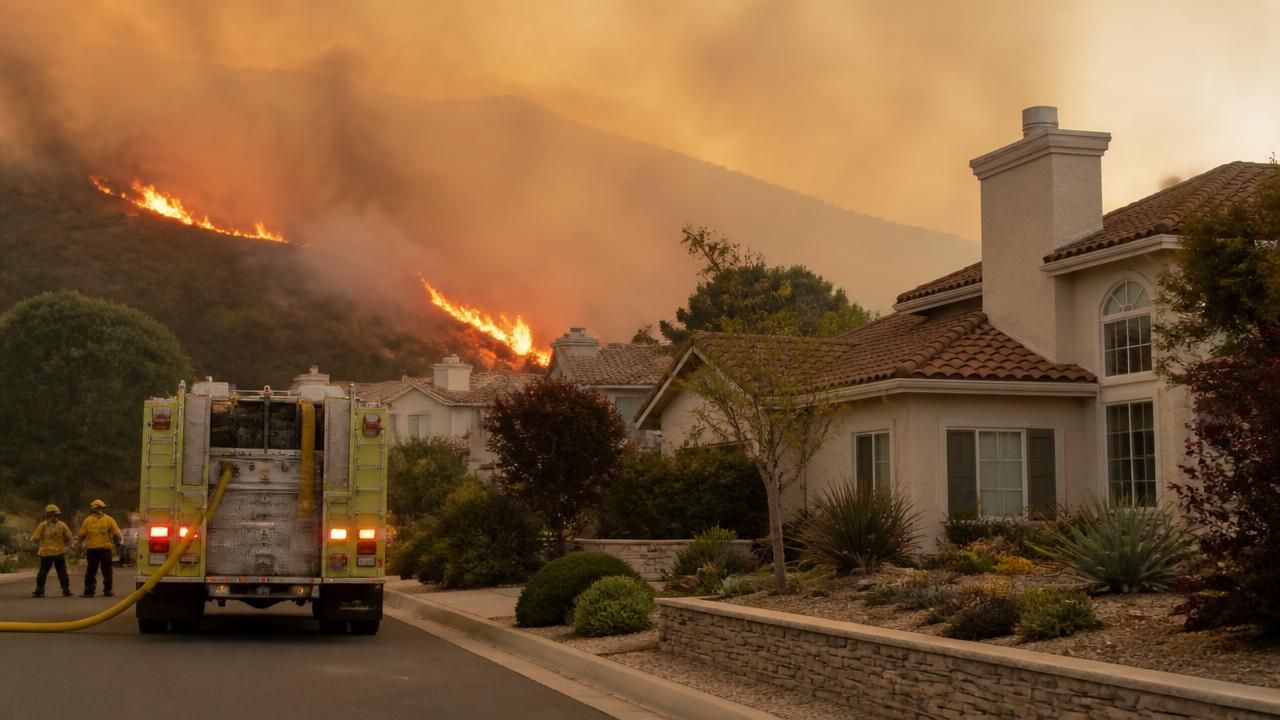
California has adopted the most aggressive wildfire home-landscaping regulations in the United States, a sweeping mandate that will ultimately reshape the yards of nearly 2 million homes in fire-prone areas. The new rules, approved under the umbrella of 'Zone Zero' (or 'Zone 0'), require homeowners to dramatically alter the vegetation immediately surrounding their structures—a move fire experts call a critical defense against the state's escalating infernos, but one that has ignited significant public pushback.
What Are the New 'Zone Zero' Rules?
The regulations target the first 5 feet around a home, an area often referred to as Zone Zero. This zone is considered the most vulnerable to ember attacks and radiant heat, which are responsible for most home ignitions during wildfires. Under the new rules, homeowners in high-risk areas must remove nearly all flammable vegetation from this perimeter. That includes bushes, shrubs, wood mulch, and even certain types of ground cover. Plants that are allowed must be low-growing, drought-tolerant, and non-flammable. Hardscape features like gravel, stone, or concrete are recommended as replacements.
According to reporting from multiple outlets, including NPR and msn.com, the rules apply to homes in designated Very High Fire Hazard Severity Zones. The regulations go beyond existing defensible-space guidelines, which previously focused on 30 to 100 feet from structures. By concentrating on the immediate zone, California aims to create a 'barrier' that stops flames from licking directly at building walls and windows.
Nearly 2 Million Homes Affected
The scale of the change is unprecedented. Analysts estimate that about 1.9 million homes—roughly 15% of all housing units in California—fall within the new regulatory footprint. For those homeowners, the mandate is not optional. Local jurisdictions must adopt and enforce the rules, and homeowners who fail to comply could face fines or penalties. In fire-prone communities already struggling with insurance premiums and availability, this adds another layer of financial and logistical burden.
One article headline from msn.com framed the issue as 'How nearly 2 million California homes must adjust landscaping under just-approved wildfire rule,' underscoring the sweeping nature of the enforcement. Another headline highlighted the 'Zone Zero' terminology, a term coined by fire safety researchers to emphasize the zero-ember-tolerance zone adjacent to the home.
Why the Rules Were Adopted
The rationale is rooted in fire science. Studies of past wildfires—including the 2018 Camp Fire that destroyed Paradise and the 2020 Glass Fire—have shown that homes in the wildland-urban interface are most likely to ignite from flying embers, not from a continuous wall of flame. These embers can travel more than a mile ahead of the main fire, landing in gutters, on porches, and against wooden fences. Once there, they ignite debris, plants, or other combustible materials, and the fire spreads to the structure.
Fire officials and scientists argue that by clearing Zone Zero, homeowners can dramatically improve their home's survivability. In a statement, a spokesperson for the California Department of Forestry and Fire Protection (CAL FIRE) said, 'This is the most effective step we know to protect structures from wildfire. It's simple: if nothing flammable is within 5 feet, the home is far less likely to catch fire.'
Pushback: Aesthetic, Privacy, and Cost Concerns
Despite the scientific consensus, the rules have met with strong resistance. Many homeowners object to the mandatory removal of trees, shrubs, and hedges that provide shade, privacy, and scenic beauty. In established neighborhoods, mature vegetation is often a defining feature of the community. Retired firefighter and homeowner Ted Ramirez, quoted in a recent survey, said, 'I've spent 30 years planting and nurturing these trees. Now I'm told to rip them out? It feels like a betrayal.'
Cost is another barrier. Replacing a landscaped yard with gravel or pavers can run thousands of dollars per household. In a state already facing a housing affordability crisis, the added expense has led to accusations that the rules disproportionately affect middle- and working-class families. Some jurisdictions have also raised constitutional concerns about property rights, though legal experts say states have broad authority to regulate for public safety.
How Different Outlets Frame the Story
The coverage of this new regulation reveals distinct editorial lenses. NPR's report framed the policy as a landmark in fire prevention, quoting experts who call it 'the toughest in the nation' and emphasizing the scientific backing. In contrast, the msn.com headlines lean into the practical shock—focusing on the number of homes affected, the term 'Zone Zero' as a what-does-this-mean-for-me hook, and the notion that yards are being 'reshaped.' The cedarnews.net version, while brief, echoes the NPR headline, signaling that national wire services are picking up the story as a matter of public policy significance.
This divergence reflects a broader tension between environmental safety and personal autonomy. Supporters frame the rules as a necessary adaptation to climate change, while opponents see them as government overreach. Fire Marshal Jenna Whitfield of Sonoma County put it this way in a recent public meeting: 'We're not just changing fire codes; we're changing the culture of what a California yard looks like.'
Historical Context and Implications
California has experienced 33 of its 35 deadliest fires in the past decade, driven by drought, heatwaves, and an expanding wildland-urban interface. The state has already invested billions in fire response and mitigation, but home hardening has lagged. Insurance companies have begun dropping coverage in high-risk areas, and the state has had to backstop the market.
The new landscaping rules are part of a broader strategy that also includes stricter building codes for new construction. However, retrofitting existing homes remains a patchwork. The Zone Zero rules apply to both new and existing homes, but enforcement will depend on local capacity. Counties and cities have until 2026 to update their general plans and begin inspections, giving homeowners some breathing room.
Yet the clock is ticking. Climate models predict even more intense fire seasons ahead. As one CAL FIRE captain noted, 'Every fire season we say it can't get worse—and then it does. We have to change how we live, not just how we fight fires.'
Moving Forward
In the coming months, state agencies will publish detailed landscaping guidelines, including lists of acceptable plants and approved hardscape materials. Homeowners' associations and neighborhood groups are already preparing to navigate the transition. Some cities have proposed incentive programs, offering rebates for low-water, fire-safe landscaping.
For individual residents, the advice from experts is clear: start planning now, think about fuel breaks, and remember that the 5-foot zone is not just a rule—it's a lifeline. As the public debate continues, one fact remains undisputed: in an era of climate-driven megafires, the way Americans design their yards is no longer just a matter of taste. It is a matter of life and property.