CK Hutchison Holdings Ltd., the Hong Kong-based conglomerate, has launched international arbitration proceedings against Panama, seeking more than $1.5 billion in damages over the loss of its investments in two ports along the Panama Canal. The move escalates a simmering dispute that has drawn in geopolitics, foreign investment law, and the future of one of the world's most strategic trade routes.
What Happened?
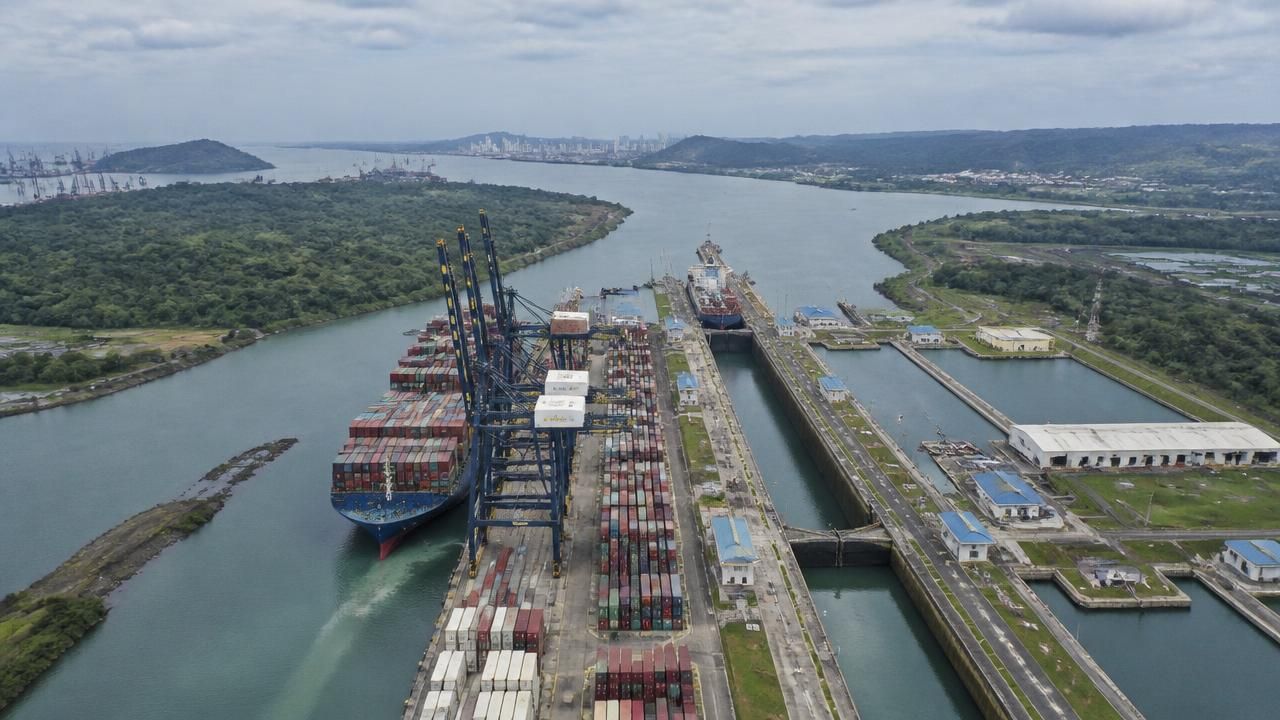
The company's subsidiary, Panama Ports Company (PPC), operated the Balboa and Cristobal ports for nearly three decades under a concession granted in 1997. In early 2025, Panama's government, led by President José Raúl Mulino, moved to seize the ports, citing sovereignty concerns and a Supreme Court ruling that declared the concession's extension unconstitutional. The government's action effectively stripped CK Hutchison of its operational control, prompting the company to seek redress through treaty-based arbitration.
According to Bloomberg Markets, CK Hutchison "commenced international arbitration proceedings against Panama, seeking more than $1.5 billion in damages over the loss of its investments in two ports on the country's strategic canal." Other outlets, including Macao News and World Cargo News, report the claim could be as high as US$2 billion when accounting for future profits and lost opportunities. China Daily HK pegs the figure at HK$11.7 billion, which is roughly equivalent to $1.5 billion, but the discrepancy highlights the complexity of valuing long-term concession rights.
Legal Grounds and Forum
The arbitration is believed to be filed under the Hong Kong-Panama Investment Promotion and Protection Agreement (IPPA), a bilateral treaty that allows investors to seek compensation for expropriation or unfair treatment. Legal experts at Aceris Law, an international arbitration firm, note that this case offers "key lessons for foreign investors," particularly about the risks of operating in countries where political winds can shift abruptly. The dispute is likely to be heard at the International Centre for Settlement of Investment Disputes (ICSID) or another recognized tribunal, though the exact forum has not been disclosed.
"This is a classic treaty arbitration case involving expropriation," said a senior legal analyst quoted by Aceris Law. "The key question will be whether Panama's actions constituted lawful expropriation with compensation or an unlawful seizure without prompt, adequate, and effective payment."
Background: A 25-Year Concession Unravels
CK Hutchison, controlled by Hong Kong's wealthiest family, the Li Ka-shing clan, has operated the Panama ports since 1997. In 2021, the same government that later seized the ports extended the concession to 2047, providing a stable framework for billions of dollars in investment. But the political landscape shifted dramatically after US President Donald Trump publicly criticized Panama for allegedly ceding influence to China over the canal, even threatening to retake the waterway. Panama's Supreme Court promptly declared the 2021 extension unconstitutional, and by March 2025, security forces had occupied the port facilities, according to multiple reports.
The seizure was framed by Mulino as an assertion of Panamanian sovereignty, but critics see it as a concession to American pressure. Beijing Review, in a commentary titled "The heavy price of Panama's seizure of key ports," argued that Panama's actions undermine its reputation as a reliable destination for foreign investment and warn of long-term economic consequences.
The BlackRock-MSC Deal Complication
Amid the turmoil, CK Hutchison had been negotiating a $22.8 billion sale of its global port operations to a consortium led by BlackRock and Mediterranean Shipping Company (MSC). However, World Cargo News reported that the consortium has moved to exclude the Panama ports from the deal entirely, citing the ongoing concession turmoil and the legal uncertainty surrounding PPC's assets. This exclusion not only reduces the transaction's scope but also leaves the Panama ports in limbo—caught between CK Hutchison's arbitration claim and Panama's nationalization.
For CK Hutchison, the arbitration is thus a two-front battle: seeking compensation from Panama while also restructuring its global port portfolio without the contested assets. The sale to BlackRock-MSC, if completed, would mark a major divestment for the Li family, but the Panama dispute could set a precedent for how governments treat foreign infrastructure investors.
Geopolitical and Economic Implications
The case is not just a commercial dispute; it is a flashpoint in US-China rivalry. Reuters reported on a separate Venezuela raid, with the headline "With Venezuela raid, US tells China to keep away from the Americas," reflecting a broader pattern of Washington pushing back against Chinese influence in the Western Hemisphere. CK Hutchison, though Hong Kong-based, is perceived as a Chinese-linked entity, making its port operations a target of American scrutiny.
Analysts say that Panama's decision to seize the ports could deter other foreign investors, particularly those from China and Hong Kong, from committing capital to critical infrastructure in the region. The Aceris Law analysis emphasizes that investors must carefully craft stabilization clauses and dispute resolution mechanisms in concession agreements, as treaties alone cannot fully protect against political risk. Meanwhile, the arbitration award, which could take years, will serve as a barometer of how international law treats state expropriation in the 21st century.
What's Next?
CK Hutchison's claim will now proceed through the arbitration process, which typically takes 2-4 years to reach a final award. Panama has the right to raise jurisdictional challenges and argue that the concession was lawfully revoked for public purpose, but it must ultimately prove that any expropriation met the treaty's fair treatment standards. If the tribunal rules in CK Hutchison's favor, Panama could be forced to pay substantial compensation—potentially over $2 billion—which would strain its national budget.
For now, the two ports remain under Panamanian government control, and the BlackRock-MSC deal proceeds without them. The outcome of this arbitration will be closely watched by multinational corporations, infrastructure investors, and governments alike, as it tests the limits of sovereign power and investor rights in an era of renewed great-power competition.