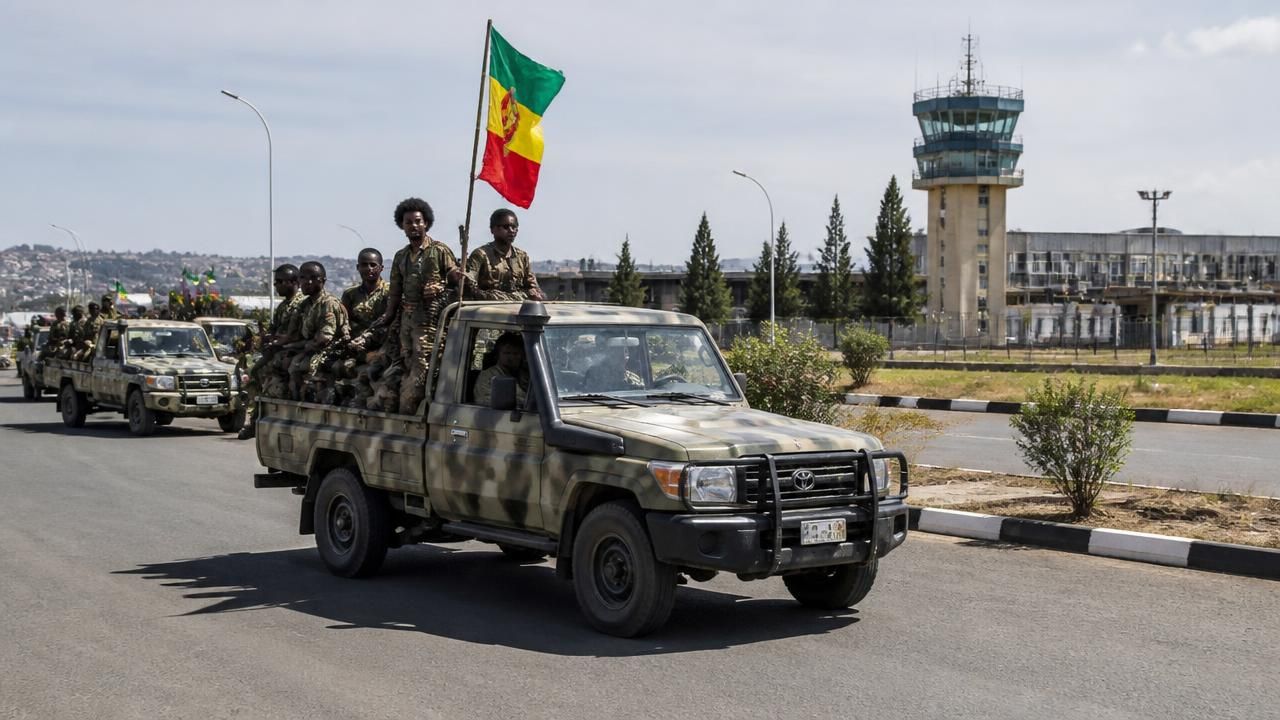
Mekelle, Ethiopia - Ethiopian government forces have retaken control of Mekelle airport and other key parts of the Tigray regional capital, according to multiple reports, after Tigrayan fighters briefly seized the facility and forced Ethiopian Airlines to cancel flights. The rapid shift in control marked a major turning point in the renewed conflict, though the situation remained fluid and accounts differed sharply.
Bloomberg Markets reported that Ethiopian forces seized the airport and other parts of Mekelle as leaders of the Tigray People's Liberation Front (TPLF) retreated from the city. Al Jazeera, citing conflict news updates, said government forces advanced in Tigray as rebels retreated, and separately confirmed that federal forces had retaken the airport from Tigrayan rebels. Yahoo News framed the development as Tigray's rebels abandoning the regional capital as government forces advanced.
But earlier reports told a different story. The Associated Press reported that Ethiopian Airlines, the state-owned carrier and one of Africa's largest, had canceled flights to Mekelle as fighters took over the airport. MSN initially reported that Tigray rebels had seized the airport and clashed with federal forces as fighting reignited. Later, MSN reported that government forces had retaken the airport in Tigray's capital, according to sources. The contradictory headlines underscored the fog of war and the difficulty of verifying ground events in a region with limited communications.
A City and Airport in Flux
Mekelle, home to hundreds of thousands of people, is the political and administrative center of Tigray. Its airport is a critical lifeline for humanitarian aid, commercial travel, and military logistics. Control of the facility has repeatedly shifted during the conflict, making it a barometer of momentum.
According to the reports, the sequence appeared to unfold rapidly: Tigrayan forces moved into the airport area, prompting Ethiopian Airlines to suspend flights. Then federal forces counterattacked or advanced, retaking the airport and pushing TPLF leaders out of the city. The exact timing and casualty figures were not immediately clear.
"Ethiopia Retakes Tigray Airport as Northern Rebels Retreat," Bloomberg Markets reported, calling it "a major turning point in the renewed conflict."
Al Jazeera's coverage emphasized what readers needed to know: government forces advancing, rebels retreating, and the airport changing hands. Its separate report focused on the retaking of the airport from Tigray rebels in Mekelle. The outlet's framing was regionally focused, providing context on the conflict's trajectory.
Airline Cancellations and Economic Ripple Effects
Ethiopian Airlines' decision to cancel flights to Mekelle was one of the first tangible signs of the renewed fighting. The carrier, which connects Ethiopia to dozens of international destinations and is a key driver of the country's economy, has repeatedly had to adjust operations during the Tigray conflict. Flight cancellations disrupt not only passenger travel but also cargo, medical supplies, and humanitarian personnel.
The aviation disruption has broader financial implications. Ethiopia's economy is already grappling with high inflation, foreign-exchange shortages, and debt distress. Renewed conflict in the north can deter foreign investment, raise sovereign risk premiums, and delay post-war reconstruction. For a country that has been pursuing debt restructuring and economic reform, renewed instability is a setback.
Businesses in Mekelle and across Tigray have faced repeated shutdowns, looting, and supply-chain breaks. Banks, telecoms, and transport networks have been damaged or disrupted. The airport's status is therefore not just a military fact but an economic indicator.
Competing Narratives and the Fog of War
The differing reports illustrate how the same event can be framed differently depending on sourcing and timing. Bloomberg and Al Jazeera, relying on sources and official statements, reported a government retaking of the airport and a rebel retreat. AP focused on the immediate aviation impact, reporting that Ethiopian Airlines canceled flights as fighters took over the airport. MSN published both sides: an initial report of rebels seizing the airport and clashing with federal forces, followed by a report that government forces had retaken it.
Yahoo's framing—"Ethiopia's Tigray rebels abandon regional capital as govt advances"—suggested a more decisive government advance. The variation reflects the challenges journalists face in a conflict zone where access is restricted, communications are often cut, and both sides have incentives to shape the narrative.
Independent verification remains difficult. Neither the Ethiopian government nor the TPLF immediately issued a full detailed statement in the reports reviewed. Residents and humanitarian workers have at times been unable to communicate due to internet and phone blackouts.
Background: A Conflict with Deep Roots
The Tigray conflict began in November 2020, when tensions between the federal government led by Prime Minister Abiy Ahmed and the TPLF, which had dominated Ethiopian politics for nearly three decades, erupted into war. The fighting has killed thousands, displaced millions, and triggered widespread allegations of atrocities. A ceasefire agreement in late 2022 later raised hopes for peace, but implementation has been fragile, and renewed clashes have repeatedly threatened the truce.
The TPLF governed Tigray and controlled Mekelle for much of the post-2020 period, while federal forces and their allies held surrounding areas. Control of Mekelle and its airport has changed hands before, making the latest reports part of a longer pattern of shifting front lines.
What to Watch
- Verification: Whether independent observers or international media can confirm who controls the airport and Mekelle.
- Humanitarian access: Whether aid flights and convoys can resume, and how quickly Ethiopian Airlines restores service.
- Military momentum: Whether the rebel retreat signals a broader government offensive or a tactical withdrawal.
- Political talks: Whether the renewed fighting derails any remaining peace process or leads to new negotiations.
- Economic impact: How investors and creditors react to the instability, and whether it affects Ethiopia's reform and debt talks.
For now, the reports paint a picture of a city and airport in rapid flux, with government forces claiming the upper hand and Tigrayan leaders pulling back. But as the conflicting headlines show, the situation on the ground can change within hours—and the full picture may not emerge until communications improve and independent verification is possible.