Bolivia has secured a $1.9 billion financing program from the International Monetary Fund, including an immediate disbursement of $214 million, in a package designed to help President Rodrigo Paz pull the country out of one of the sharpest economic contractions in South America.
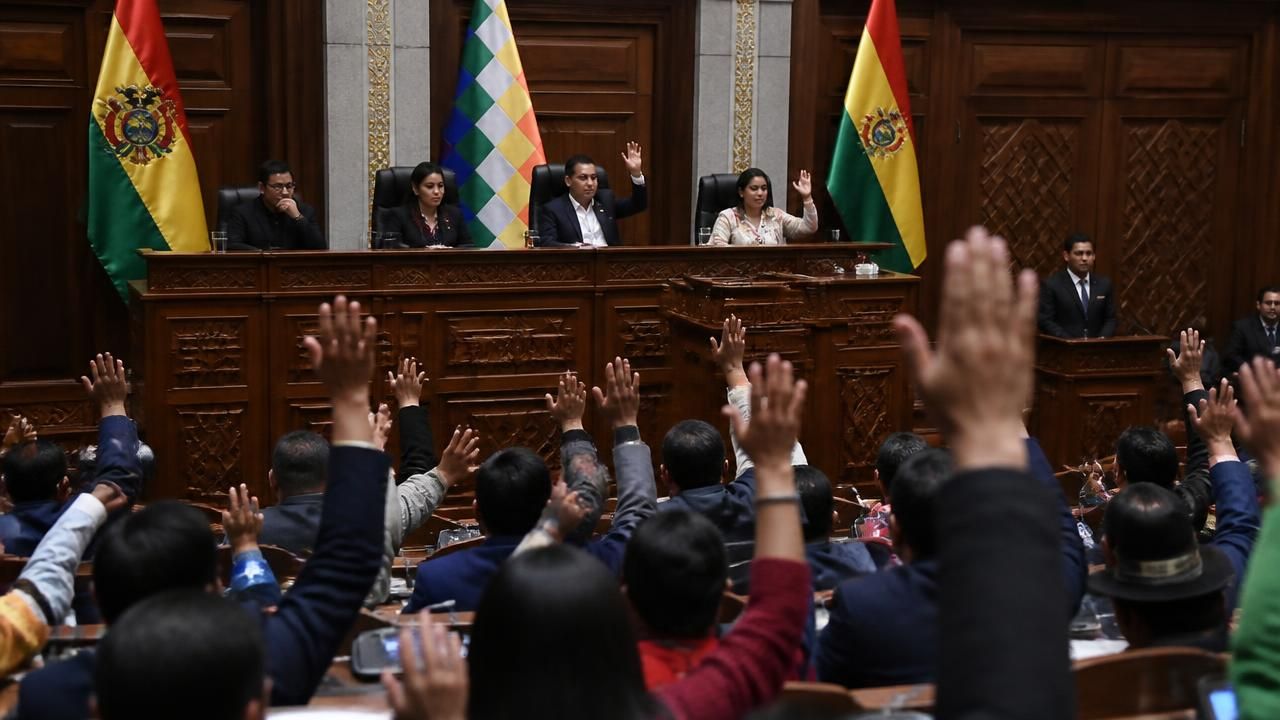
The agreement cleared its last political hurdle in Bolivia's congress, which approved the program in a vote that landed just days before Paz was due to make his debut address at the United Nations General Assembly — timing that supporters cast as a signal of international credibility and that critics described as a rush to lock in austerity before the public backlash could organize.
A rescue package with conditions attached
According to Bloomberg, the IMF board signed off on the $1.9 billion program after months of negotiation, with the $214 million upfront tranche aimed at stabilizing Bolivia's balance of payments. The remainder is expected to be released in phases tied to periodic reviews of fiscal targets, subsidy reform and central bank operations.
The Fund's involvement is a striking reversal for a country that spent much of the past two decades financing itself with commodity revenue rather than multilateral credit. Bolivia's natural gas exports, once the backbone of the treasury, have fallen sharply as fields aged and investment dried up. Foreign reserves that peaked above $15 billion in 2014 have dwindled to a fraction of that level, leaving the central bank unable to defend a fixed exchange rate and creating persistent parallel-market pricing for dollars.
The result has been a chronic shortage economy: queues at fuel stations, limits on bank withdrawals and an inflation rate that has accelerated well beyond the low single digits that Bolivians took for granted during the gas boom.
Diesel subsidies eliminated
The most politically explosive element of the package is the elimination of diesel subsidies, confirmed alongside the congressional vote. Fuel subsidies have long been Bolivia's single largest drain on public finances, costing the state billions each year and encouraging smuggling across the borders with Brazil, Peru and Chile, where prices were far higher.
Removing them is expected to lift pump prices toward regional levels, with knock-on effects for freight, public transport and food costs — the precise mechanism that makes such reforms combustible in a country with a long history of protest-driven reversals.
The Rutland Herald reported that the congressional approval was already triggering threats of unrest, with unions and transport federations signaling road blockades if the price adjustments move faster than promised compensation. It is a familiar script in Bolivia: past attempts to cut fuel subsidies were abandoned within days after nationwide protests.
Politics: hurdles remain
Reuters framed the deal as one where the loan agreement is real but the political path forward is not guaranteed, noting that hurdles remain even after the vote. Paz, who took office in November 2025 after defeating Jorge Quiroga in a runoff and ending two decades of Movement for Socialism dominance, governs in a congress where his support cannot be taken for granted.
That makes the IMF vote both a legislative victory and a test case. If the government can hold its coalition together through the first subsidy-driven price increases, subsequent reviews become easier. If it cannot, the program's later tranches — and the credibility of Paz's wider reform agenda — come into question.
Why the UN timing mattered
The decision to force the package through congress just before Paz's United Nations debut was not incidental. A head of state arriving in New York with a freshly approved IMF program can present his government to investors, rating agencies and bilateral creditors as a coherent, bankable reform story rather than a crisis being managed day to day. For a country that needs to roll over debt and attract mining and lithium capital, that framing is worth real money.
How the story was framed
Coverage of the same decision diverged sharply in emphasis:
“IMF Approves Bolivia Loan Deal to Support Paz's Economic Reforms” — Bloomberg Markets
“Bolivia and IMF reach $1.9 billion loan agreement, political hurdles remain” — Reuters
“Bolivia approves $1.9 billion IMF deal, eliminates diesel subsidies” — MSN
“Bolivia Rushed an IMF Loan Through Congress Right Before Paz's UN Debut — Here's Why” — MSN
“Bolivia's Congress approves $1.9 billion IMF deal, triggering threats of unrest” — Rutland Herald
The financial press led with the numbers and the reform narrative; the wire services led with the unresolved politics; the aggregators led with the subsidy cut and the optics of the UN timeline; the regional outlet led with the risk of street violence.
What comes next
- Disbursement of the remaining tranches, contingent on fiscal and monetary targets agreed with IMF staff.
- Implementation of the diesel price adjustment, including any compensatory payments to transport workers and low-income households.
- Rebuilding net international reserves and narrowing the gap between the official and parallel exchange rates.
- Structural reforms that Paz has promised but not yet detailed, including tax administration, pensions and the state energy company.
For now, Bolivia has bought itself time and hard currency. Whether that translates into stabilization depends less on Washington or on the IMF's boardroom than on whether the Paz government can absorb the political cost of the very measures the loan is meant to finance.