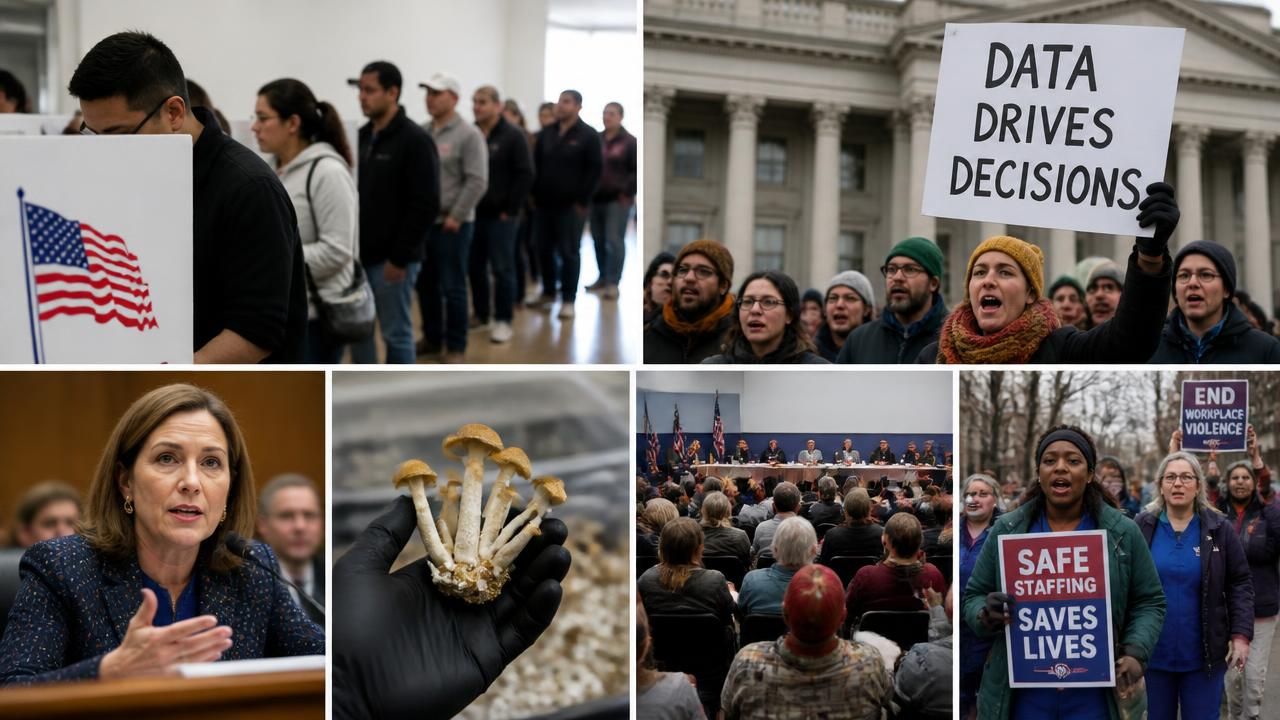
In a week marked by urgent reporting, experts, workers, and residents have raised alarms on multiple fronts: a Census Bureau report touted by President Trump, a purge of data experts from federal agencies, a controversial nominee to lead labor data, promising results from Oregon's psilocybin program, a contentious swimming pool hearing in Sioux City, and a hospital strike over workplace violence. Though diverse, these stories share a common thread—a growing sense that institutions are under strain and that people are speaking out.
Census Bureau Report on Noncitizen Voting Draws Fire
The most prominent concern centers on a Census Bureau report that President Trump has used to renew false claims of widespread voting by non-U.S. citizens in 2020. NPR reported that a Trump-aligned think tank has ties to the highly unusual report, raising alarms about its credibility. Independent experts say the report is based on flawed methodology and does not reflect reality. “This is not a reliable estimate—it’s being used for political purposes,” one researcher told NPR. The Census Bureau itself has acknowledged limitations, but the report continues to be cited in political debates.
“Experts raise alarms over Census Bureau report Trump is touting on noncitizen voting.” — NPR
Purge of Data Experts Stirs Concerns for Economic Reports
Meanwhile, Politico reported that the removal of career data experts from federal agencies is a “bad sign” for the accuracy of economic reports. The purge has hit agencies like the Bureau of Labor Statistics, where experienced statisticians are being replaced or pushed out. Former officials warn that this could compromise economic indicators that guide policy decisions. “We are losing institutional knowledge and technical expertise, and that’s dangerous,” said a former BLS economist. The report adds to fears that the administration is politicizing official statistics.
Trump’s Labor Data Pick Intensifies Fears of Political Interference
The New York Times added to these concerns with its story on President Trump’s nominee to lead the Labor Department’s data agency. The pick, whose background lies outside statistics and data science, has alarmed experts who fear the administration is seeking greater control over labor market figures. Combined with the broader purge, this suggests a coordinated effort to bend data to political ends. “This is unprecedented in modern history,” said a former Census Bureau director. The nomination is now pending before the Senate, where it faces an uncertain path.
Oregon’s Psilocybin Program Shows Promise in Real-World Study
In a sign of progress on health policy, a real-world study of Oregon’s nonmedical psilocybin program has shown encouraging results. The study, reported by multiple outlets, followed participants who used psilocybin through the state’s pioneering regulated framework. Researchers found significant improvements in self-reported well-being, with many participants citing reductions in anxiety and depression. While the program remains controversial at the federal level, advocates see this as evidence that regulated access to psychedelics could expand. “This is the first large-scale, real-world data we have, and it’s promising,” said a study author. However, experts stress that more research is needed to confirm long-term safety and efficacy.
Sioux City Pool Hearing Divides Residents
At the local level, a public hearing in Sioux City over the future of a municipal swimming pool drew a packed room, with residents split between those wanting to preserve the existing facility and those advocating for its demolition. Supporters of the pool argue it is a vital community asset, especially for low-income families, while critics say the aging structure is too costly to maintain and unsafe. The hearing, covered by kwit.org, highlighted the challenges facing small cities as they balance budgets and community needs. One resident said, “This pool is the heart of our summer for kids,” while another countered, “We cannot keep pouring money into a facility that only serves a few months a year.” The city council is expected to make a decision in the coming weeks.
Hospital Workers Strike Over Workplace Violence
In the healthcare sector, striking hospital employees are sounding the alarm over a surge in workplace violence. According to wyso.org, workers at a hospital walked off the job to demand stronger safety protocols and better staffing levels. The strikers report verbal and physical assaults from patients and visitors, a problem that has grown since the COVID-19 pandemic. “We are not asking for much—just the right to come to work and leave safely,” said one nurse on the picket line. Hospital administrators say they are committed to safety but have not yet met all union demands. The strike reflects a broader trend across the country, as healthcare workers increasingly unionize and push back against unsafe conditions.
Implications and Outlook
The convergence of these stories points to a broader crisis of trust in institutions. Researchers and government watchdogs warn that political interference in data agencies can have cascading effects, from skewed economic forecasts to misinformed public policy. Meanwhile, communities are wrestling with tangible, local decisions, and workers are organizing for basic protections. What is clear is that silence is not an option for those affected. As these reports demonstrate, the concerns are real, varied, and growing.
- The Census Bureau report on noncitizen voting is criticized as politically motivated and methodologically flawed.
- Data expert purges and the labor data nominee may compromise the integrity of key economic statistics.
- Oregon’s psilocybin program shows early promise, offering potentially new avenues for mental health treatment.
- Sioux City’s pool debate illustrates the difficulty of maintaining public infrastructure with limited resources.
- Hospital strikes over workplace violence underscore the safety crisis facing healthcare workers.
As these stories develop, journalists and citizens alike will be watching closely. The coming months will reveal whether these alarms lead to meaningful change or are simply echoes in a turbulent political landscape.