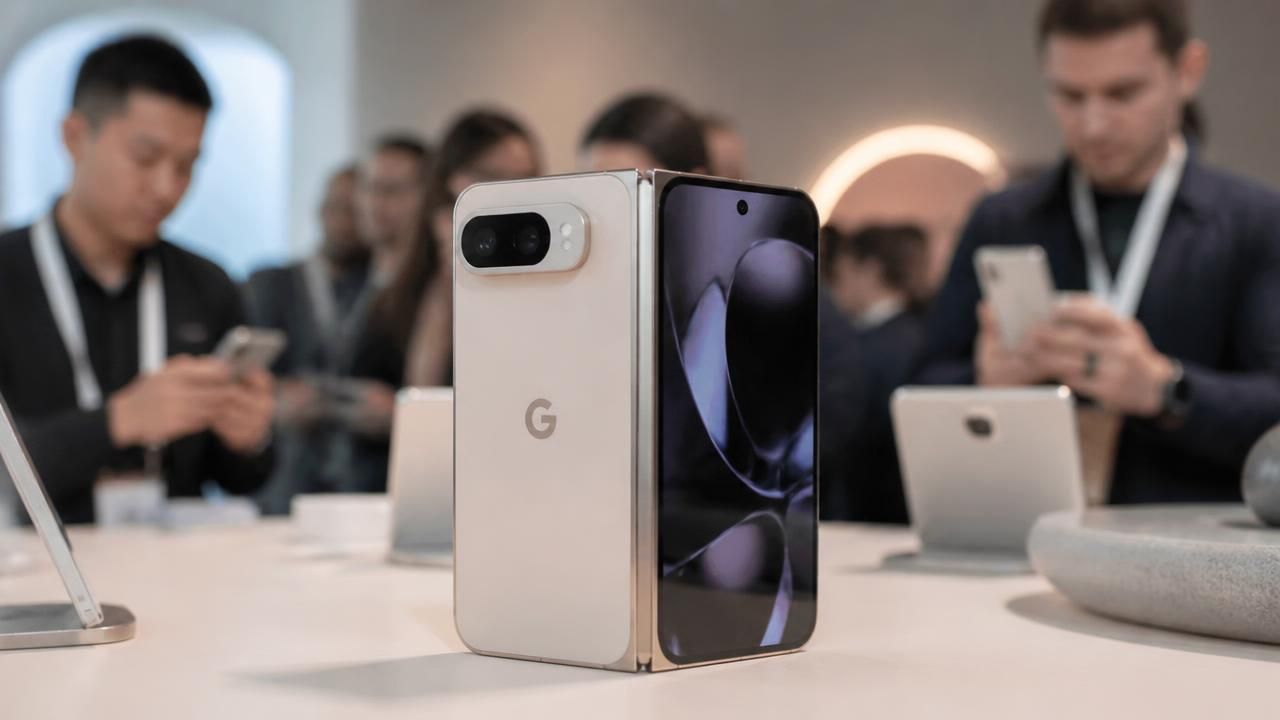
At its Made by Google 2026 event in August, Google unveiled its next-generation Pixel 11 family, headlined by the Pixel 11 Pro Fold—a device that arrives at a pivotal moment for foldable phones. With Samsung refining its Galaxy Z Fold line to near-creaseless thinness and Apple expected to enter the category with a foldable iPhone, Google's newest flagship foldable faces intense scrutiny. The initial critical reception is sharply divided: some call it a long-overdue competitor to Samsung, while others say it represents stagnation in a market moving fast.
A Familiar Design, With a Few Twists
The Pixel 11 Pro Fold maintains the squarish, book-style form factor of its predecessor, but according to The Verge, it still features a "very obvious crease" and a design that "has hardly changed a thing." Digital Trends echoed that sentiment, saying official-looking renders left them "underwhelmed." However, Android Headlines praised the new camera bar, describing it as "stunning," while TechRadar, which went hands-on with all three standard Pixel 11 models, noted that "Google's made nearly all the improvements I wanted to see."
Google is clearly betting on durability this time around. One MSN headline reads "With the Pixel 11 Pro Fold, Google Doubles Down on Durability," a move that could address a common complaint among foldable users. The device is also reported to offer more storage but less RAM than before, a trade-off that has sparked debate among enthusiasts (via The Gadget Flow).
Pricing and Value Proposition
The Pixel 11 Pro Fold is priced at $1,900, according to an MSN report, while the standard Pixel 11 Pro starts at $1,099 (Startup Fortune). That positions the Fold about $200 below Samsung's Galaxy Z Fold 8 Ultra, potentially making it the value pick among premium foldables. The Shortcut's review went further, claiming "Google just made the Fold 8 look overpriced." Mashable similarly argued that Google is "closing the foldable gap" and "finally gives Samsung a real fight."
But the value story is nuanced. Startup Fortune notes that Google is betting on Gemini AI subscriptions to recoup costs, and Tom's Guide's review lamented "the lack of Pixel 11 upgrades is indefensible," pointing to iterative hardware changes. The price increase for the standard Pixel 11 series also drew criticism from CNET and others, with some asking whether Google's pricier phones still offer the same value as Samsung's Galaxy line.
Camera Innovation and the 'HiLight' Feature
WIRED highlighted four new camera tricks on the Pixel 11 smartphones, and TechRadar singled out the new 'HiLight' feature as "the surprising standout." This feature, likely powered by the company's Tensor AI chip, appears to be Google's answer to differentiating its cameras beyond raw hardware. The new camera bar design, first seen in leaked renders, is also a significant visual change that one reviewer called "stunning."
"I think Google might have something interesting here," said TechRadar's hands-on reviewer, praising the improvements in "all the right places."
The AI focus extends beyond the camera. Google is increasingly bundling Gemini features into Pixel devices, and the Pixel 11 Pro is reportedly the first to make a paid Gemini subscription part of the value proposition. Analysts see this as a strategic move to monetize AI, but enthusiasts have expressed backlash, with one site reporting "Google Pixel 11 Pro Launch Sparks Enthusiast Backlash."
A Market in Flux
The foldable market is transforming faster than ever. Samsung's Galaxy Z Fold 7 introduced a dramatically thinner design, and the upcoming Galaxy Z Fold 8 Ultra allegedly pushes further, nearly eliminating the crease and introducing a passport-sized form factor. Meanwhile, Apple's long-rumored foldable iPhone is expected to launch next month. In this context, The Verge titled its review "Google's Pixel 11 Pro Fold feels like the end of an era," suggesting that Google's approach may be out of step.
Yet not everyone is ready to write it off. MSN's hands-on said "Google finally saw the right focus points," and Geeky Gadgets called the Pixel 11 "the ultimate smartphone comeback." The contrast in reviews reflects a broader split in the tech community: those who prize hardware innovation versus those who value software polish, camera smarts, and a lower price.
What the Critics Are Saying
- The Verge: "Square screen, very obvious crease"—a symbol of Google's stagnation.
- Mashable: "Google is closing the foldable gap"—a credible Samsung rival.
- Tom's Guide: "Lack of Pixel 11 upgrades is indefensible"—too iterative.
- The Shortcut: "Google just made the Fold 8 look overpriced"—better value.
- TechRadar: "Improvements in all the right places"—with HiLight as the standout.
Implications and Outlook
Google's strategy with the Pixel 11 series appears to be one of consolidation rather than revolution. By refining durability, enhancing AI features, and aggressively pricing the Pro Fold, Google is aiming for the sweet spot of the foldable market: users who want a premium device without paying the Samsung tax. However, as competitors push the physical boundaries of foldable screens, Google's cautious, iterative approach risks being perceived as playing catch-up.
The next few months will be telling. If Apple's foldable iPhone lives up to its rumors, Google will face unprecedented pressure. For now, the Pixel 11 Pro Fold stands as a solid, if not spectacular, entry in a market that is rapidly evolving. Whether that's enough to secure Google's position—or whether it marks the beginning of the end—remains to be seen.