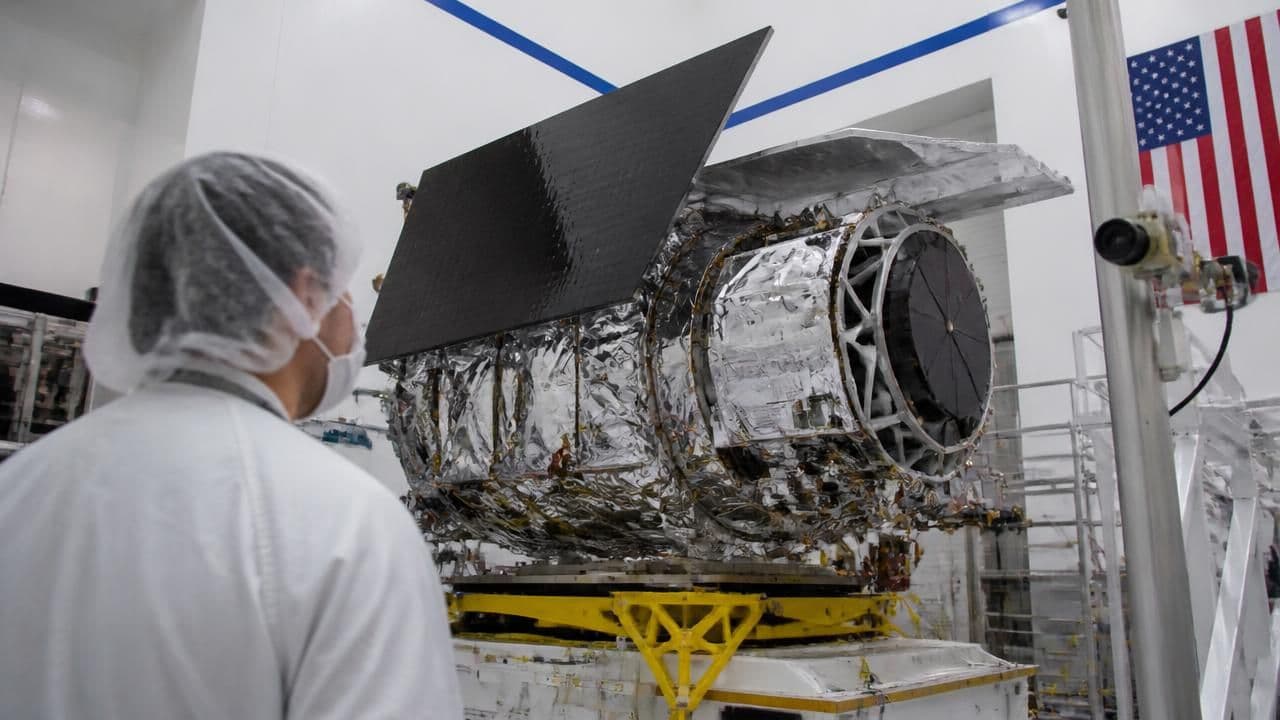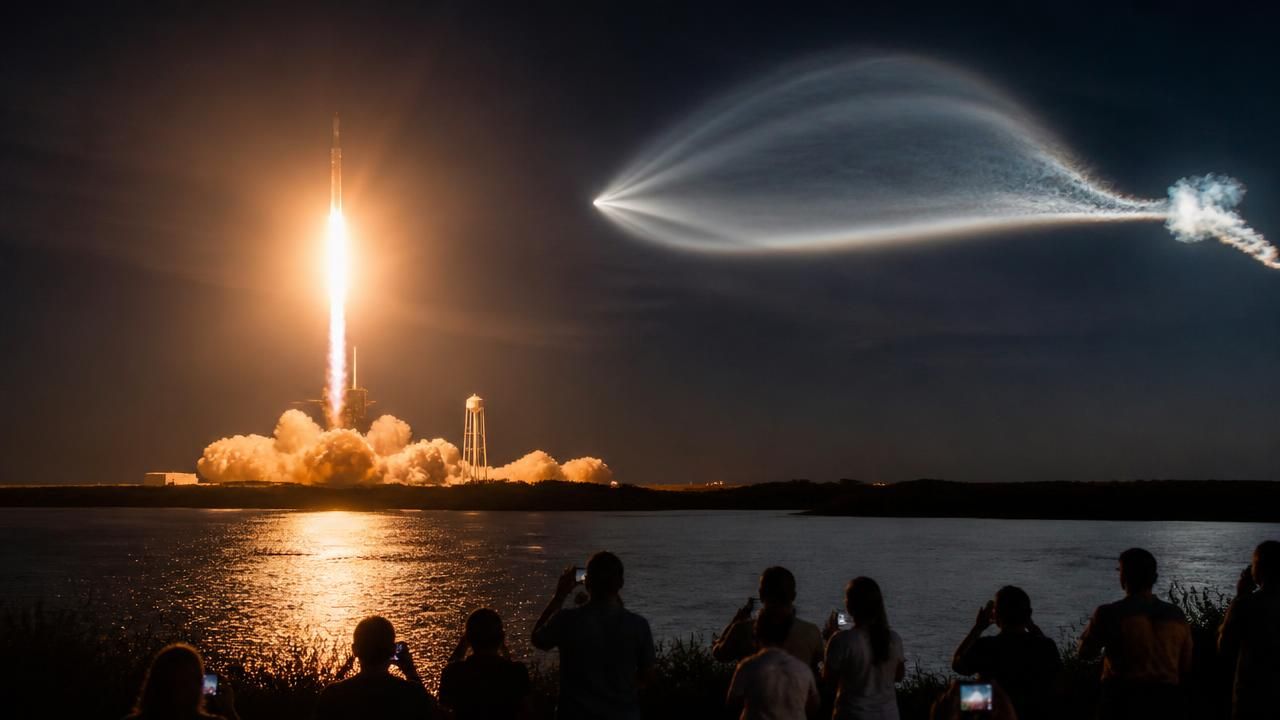
SpaceX has completed another resupply run to the International Space Station, launching its 35th commercial resupply services mission for NASA with a Falcon 9 rocket from Florida. The Dragon capsule carried roughly 6,300 pounds of cargo, including new solar arrays, biomedical experiments, National Science Foundation-funded research and student-led projects, according to mission previews and NASA updates. The launch, targeted for no earlier than Oct. 13, was reported by local Florida outlets as a Tuesday event that produced sonic booms and a luminous pre-dawn plume visible far beyond the Space Coast.
A dual mission: cargo and science
CRS-35 is part of NASA's broader strategy of outsourcing routine cargo delivery to commercial partners while using the station as a microgravity laboratory. Spaceflight Now reported that the manifest included new solar arrays for the orbiting outpost and thousands of pounds of supplies. Science outlets focused on the health research aboard: Phys.org described the mission as one dedicated to health research, while Seeking Alpha highlighted medical experiments among the payloads. Yahoo Finance, citing NASA, noted biomedical studies, NSF-funded science and student-led projects as key elements of the mission.
The experiments matter because the station remains a unique platform for studying how biological systems behave without gravity. Biomedical research conducted in orbit can inform treatments for bone loss, muscle wasting, cardiovascular changes and immune dysfunction on Earth, while also helping NASA prepare for longer missions to the Moon and Mars. Student-led projects add an educational dimension, giving younger researchers experience with spaceflight hardware and data analysis.
NASA said the returning research samples could 'advance future space exploration and improve life on Earth.'
Health research in microgravity
The CRS-35 payload reflects a growing emphasis on human health in space. NASA and its partners have increasingly prioritized experiments that examine tissue engineering, drug efficacy and physiological adaptation during long-duration flight. The mission also carried hardware and supplies needed to keep the station running, underscoring the dual role of commercial resupply flights: they are both logistics runs and scientific couriers.
Skywatchers treated to sonic booms and 'space jellyfish'
The launch generated attention far beyond mission control. Arizona Republic reported that the SpaceX rocket launch from Florida brought sonic booms and a 'jellyfish' effect, while King5 described a 'space jellyfish' spectacle across U.S. skies. The phenomenon occurs when a rocket ascends during twilight or pre-dawn hours: its exhaust plume is illuminated by sunlight while the ground remains dark, creating a glowing, expanding jellyfish-like shape. Florida Today warned that sonic booms were expected as the booster returned to Earth.
Local reports illustrated the launch's wide visibility. NorthJersey.com noted that the International Space Station and the rocket might be visible over New Jersey during the week. Knox News asked readers whether they had seen a flash of light in Tennessee, confirming it was a SpaceX rocket. Hindustan Times reported that the Falcon 9 lifted off from Florida carrying supplies to the ISS. The coverage shows how a single launch can become a regional and even national skywatching event, with residents from the Southeast to the Northeast looking up at the same time.
Return journey and splashdown
After its stay at the station, the Dragon spacecraft is set to return scientific samples and hardware to Earth. NASA said the spacecraft will depart no earlier than Wednesday, Nov. 18, undocking from the Harmony module's space-facing port at 11:05 a.m. EST after a command sent by ground controllers at SpaceX's facility in Hawthorne, California. Live coverage of undocking and departure begins at 10:45 a.m. EST on NASA's streaming platforms.
NASA and SpaceX are monitoring weather and targeting splashdown off the California coast no earlier than 1:50 a.m. Thursday, Nov. 19, which is 10:50 p.m. PST on Nov. 18. Teams will adjust plans based on conditions in the Dragon recovery area. NASA will not stream the splashdown but will post updates on its space station blog. Thousands of pounds of cargo are returning, including research samples that could inform future exploration and terrestrial medicine. NASA specifically mentioned returning research that includes 3D-bioprinted biological samples, a sign of how orbital experiments are increasingly producing data and materials that require careful recovery.
How different outlets framed the story
NASA's own coverage emphasized operations, science return and the commercial partnership that makes resupply missions routine. Spaceflight Now framed the launch around payload capacity and new solar arrays, while science-focused outlets such as Phys.org put health research at the center. Financial and business outlets, including Seeking Alpha and Yahoo Finance, highlighted the mission's medical research and cargo value. Local television and newspaper coverage, from Arizona Republic and King5 to NorthJersey.com and Knox News, focused on the visible spectacle: sonic booms, a flashing light and the chance to see the ISS or rocket pass overhead.
The varied framing reflects the multiple audiences of modern spaceflight. For NASA, CRS-35 is a logistics and research mission. For SpaceX, it is another operational success in a high-cadence launch schedule. For the public, it is a reminder that space activity can be visible from the backyard, whether as a distant bright point or a glowing plume stretching across the sky.
Why it matters
Commercial resupply missions have become essential to the station's longevity. They deliver food, water, equipment and experiments, and they return samples that cannot be analyzed adequately in orbit. The CRS-35 mission also illustrates the widening role of private companies in supporting government science, a model NASA has relied on since the space shuttle's retirement. As the station's operations continue and plans for commercial space stations advance, the ability to launch, dock, undock and recover cargo reliably will remain a foundational capability.
For now, the mission's legacy will be measured in two ways: in the data returned from biomedical and student experiments, and in the images and reports shared by skywatchers who saw a rocket turn the night sky into a temporary phenomenon.