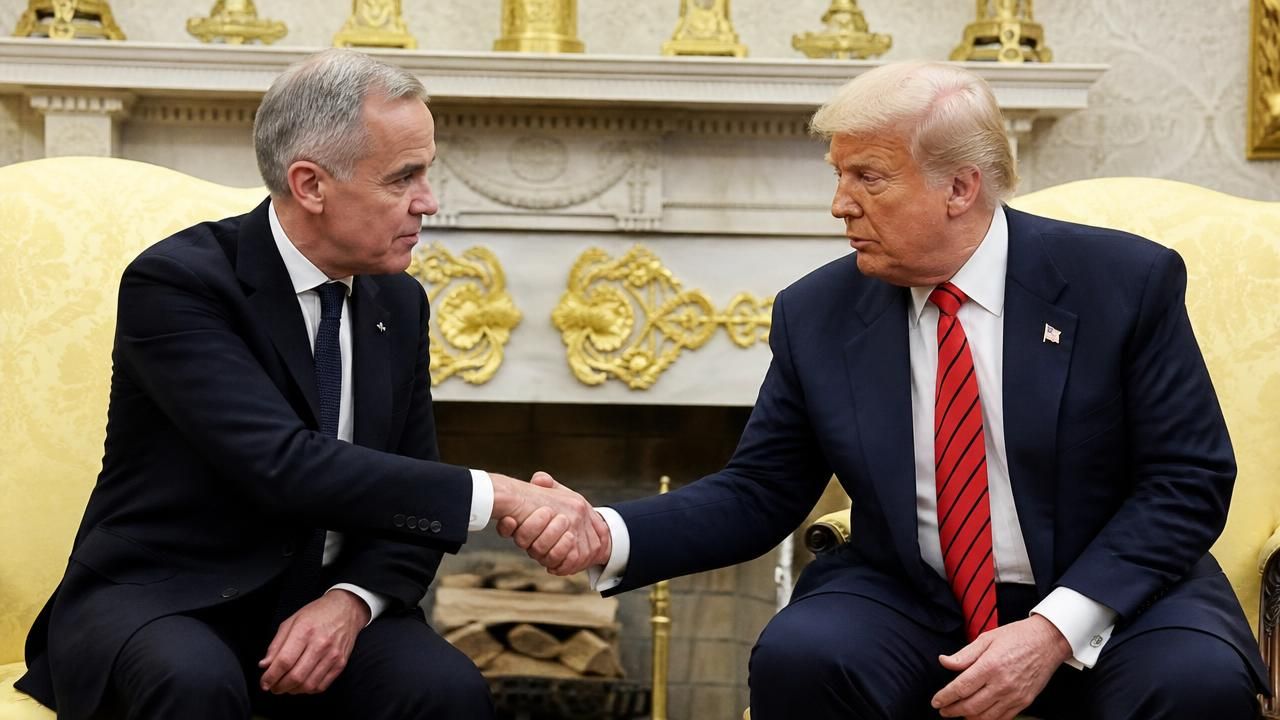
In a dramatic eleventh-hour reversal, President Donald Trump announced that the United States and Canada have reached a last-minute deal to delay the imposition of 50% tariffs on Canadian imports. The pause, which lasts three days, came less than two hours before the sweeping sanctions were scheduled to go into effect, averting what would have been a major escalation in trade tensions between the neighboring allies.
The development was confirmed by multiple outlets, including NPR, Bloomberg, and the BBC, marking a sudden shift after weeks of escalating rhetoric. The tariffs, targeting approximately $20 billion worth of Canadian goods, had been announced as punishment for what the White House described as unfair trade practices and insufficient border enforcement. The deal, though tentative, has been framed by the Trump administration as a breakthrough, while Canadian officials, led by Prime Minister Mark Carney, struck a more cautious tone, emphasizing that significant work remains before a final agreement is reached.
A Last-Minute Reprieve
The announcement came late in the day, with the White House confirming that Trump spoke directly with Carney by phone. According to a statement from the President, the two leaders agreed to pause the tariffs for 72 hours to allow negotiators to finalize the terms of a broader trade deal. The pause applies to the threatened 50% tariffs, which were set to hit a wide range of Canadian exports, including steel, aluminum, dairy products, and manufactured goods.
Bloomberg reported that the deal was “tentative,” with both sides acknowledging unresolved issues. The Financial Times similarly noted that Trump claimed a deal had been reached, but stopped short of declaring a complete resolution. The ambiguity was reflected in markets, which saw a cautious rally as investors welcomed the delay but remained wary of the underlying friction.
“We have made substantial progress,” Carney said in a brief statement, echoing the sentiment that while the immediate crisis was averted, the broader negotiation is far from over.
What Triggered the Tariff Threat?
The tariff threat was part of a broader trade confrontation that has simmered for months. The White House had accused Canada of maintaining restrictive agricultural quotas, subsidizing its lumber industry, and failing to curb Chinese transshipments of goods into the U.S. market. The 50% tariff was considered a punitive measure designed to force Ottawa to the negotiating table.
Canada, for its part, had vowed to retaliate with dollar-for-dollar counter-tariffs on U.S. goods, including orange juice, appliances, and bourbon. Trade analysts noted that the last-minute pause reflects the high stakes for both economies, which are deeply integrated. The U.S.-Canada trade relationship is worth over $700 billion annually, making it one of the largest bilateral trade partnerships in the world.
Keystone XL Revival Hints
In a surprising twist, the Guardian and other outlets reported that Trump also hinted at reviving the Keystone XL oil pipeline project, a long-contested infrastructure initiative that was canceled by the Biden administration in 2021. The pipeline, which would transport crude oil from Alberta to Nebraska, has been a flashpoint in U.S.-Canada energy relations. Trump suggested that Canada’s willingness to cooperate on trade could open the door to reconsidering the project.
“We have a lot to discuss, including energy,” Trump told reporters, according to pool reports. “The Keystone pipeline could be a great asset for both countries if we get the right deal.” The remark was seen as a strategic gesture, signaling that the trade talks could extend beyond tariffs into broader economic and energy cooperation.
Business Impact and Uncertainty
The mere threat of the tariffs had already begun to hurt Canadian businesses, as the Toronto Star reported. Exporters faced canceled orders, shipping delays, and uncertainty that made planning impossible. A small manufacturer in Ontario told the Star that clients had frozen purchases pending the tariff decision. “We can’t quote prices when we don’t know if 50% will be added next week,” said the business owner, who asked not to be named.
Even with the temporary pause, the damage is not fully undone. Economists caution that the lingering threat of tariffs creates a “shadow” over cross-border trade, discouraging investment and long-term contracts. The U.S. Chamber of Commerce welcomed the delay but urged both governments to reach a permanent resolution. “A three-day pause is not a solution,” said a chamber spokesperson. “Businesses need certainty.”
Carney’s Calculated Response
Prime Minister Carney, who has been in office for just over a year, walked a tightrope in his public response. He praised the dialogue with Washington but avoided declaring victory. According to thestar.com, Carney stressed that “key work remains” and that the three-day window will be used to “lock in the commitments” made during the call. His cautious tone reflected the political reality in Canada, where opposition parties have criticized him for being too conciliatory toward Trump.
At the same time, Carney hinted that Canada had made concessions, though he did not specify what they were. Reports suggest Ottawa agreed to stricter border controls and to review its dairy import quotas, two long-standing U.S. grievances. In exchange, the tariffs would be removed permanently, not just paused.
Global Reactions and Market Response
Global markets reacted positively to the news, with the Canadian dollar strengthening against the U.S. dollar and stock indices in both countries trimming earlier losses. European and Asian markets also took note, as the dispute had threatened to disrupt global supply chains. The temporary resolution was seen as a sign that the two countries could avoid a full-blown trade war.
However, international observers remain skeptical. The Diplomatic Insight noted that the “deal” is more of a “pause” than a resolution, and that similar last-minute reprieves have occurred before in Trump’s trade policy, only for tensions to flare again. The BBC’s analysis echoed this, pointing out that Trump’s negotiation style often involves creating crises to extract concessions.
What Happens in the Next Three Days?
Negotiators from both sides will work around the clock to finalize a framework agreement. Key issues on the table include:
- Border security measures: Canada has pledged additional resources to curb drug trafficking and illegal crossings.
- Dairy and poultry quotas: The U.S. wants expanded access to Canadian markets, a politically sensitive issue in Canada.
- Energy cooperation: The potential revival of Keystone XL and other joint energy projects.
- Dispute resolution mechanisms: A system to address future trade grievances without resorting to tariffs.
If an agreement is reached, the 50% tariffs would be permanently suspended. If not, Trump has said he will not hesitate to reinstate them. Carney, meanwhile, has emphasized that Canada will not accept a “bad deal” and is prepared to walk away if necessary.
A Pattern of Brinkmanship?
This episode fits a broader pattern in Trump’s trade policy, where tariffs are used as leverage to force negotiations. Earlier this year, similar threats against Mexico led to a last-minute immigration deal. Critics argue that this approach creates unnecessary economic instability, while supporters say it forces partners to address longstanding grievances.
For now, the immediate crisis has been averted. But the next 72 hours will determine whether this is a genuine breakthrough or just another temporary truce in a continuing trade conflict. As the world watches, both leaders have staked their credibility on reaching a deal. The stakes could not be higher for millions of workers and businesses on both sides of the border.