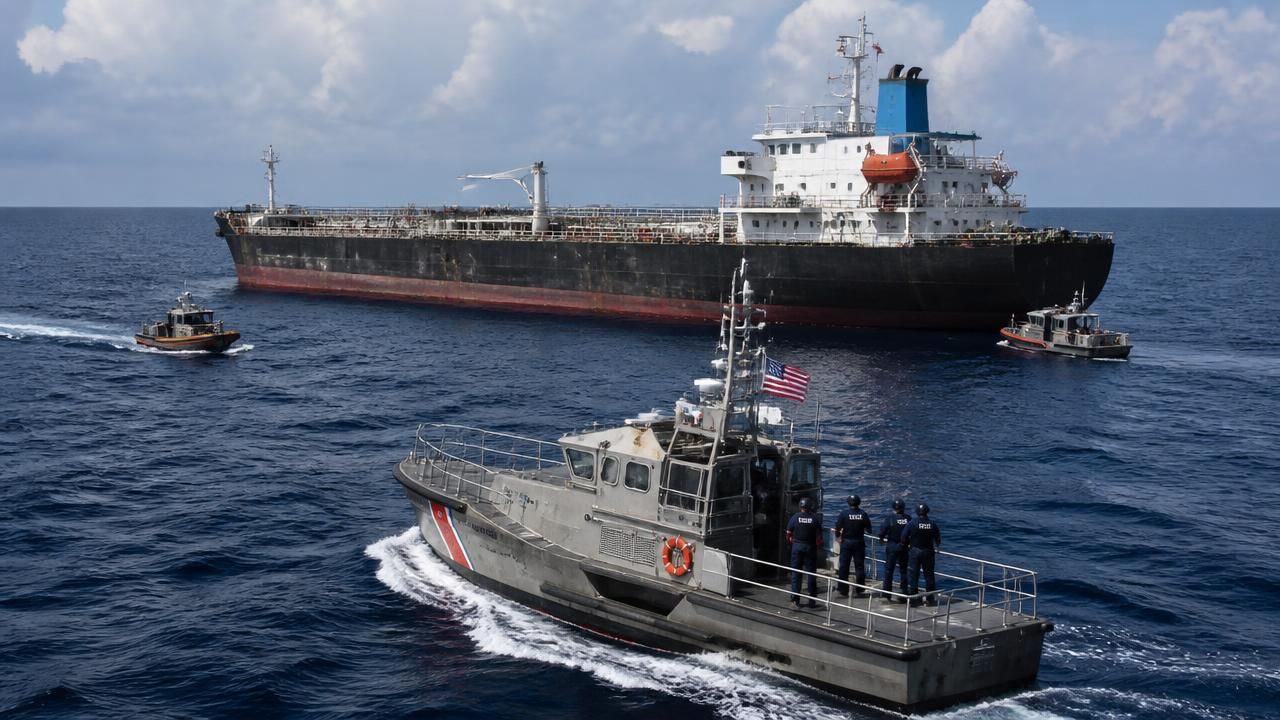
WASHINGTON — The US Coast Guard said it intercepted a large cargo ship carrying fuel bound for Cuba, boarding the vessel in the Caribbean Sea and escorting it to Mexico, in the latest escalation of the Trump administration's oil embargo against the island nation.
The ship, identified in an official Coast Guard press release as the Motor Vessel Grace, was stopped on 5 September in the Caribbean between Cuba and Mexico while using tactics designed to evade authorities, the service said. The New York Times, which first reported details of the interdiction, said the vessel measures roughly 91 metres (300ft) in length.
The Coast Guard's own release carried a headline that framed the operation as part of a broader campaign rather than an isolated incident: “Coast Guard intercepts Motor Vessel Grace, continues operations to interdict illicit Cuban fuel shipments.” The full text of that release was not publicly retrievable after the service's news portal returned an access-denied error to visitors, leaving much of the operational detail to be reconstructed from secondary reporting.
What Is Known — and What Remains Unclear
According to the Coast Guard's account as relayed by the Guardian, the Grace was stopped in international waters between Cuba and Mexico and subsequently taken to Mexico. The service characterised the ship's behaviour as consistent with evasion techniques, though it did not publicly detail which specific methods were observed.
Coverage of the episode diverged in its emphasis. Aggregated headlines distributed via MSN described the operation in plural terms — “ships” carrying “thousands of gallons of oil” — and Pakistan's The News reported the seizure of “large quantities” of fuel. Michigan-based MLive framed the same event as an anti-smuggling operation, describing a vessel “smuggling oil bound for Cuba.” The Guardian, by contrast, placed the interdiction squarely within the context of Washington's “crippling oil embargo” on Havana, while the New York Times led with the physical specifications of the ship itself. The discrepancies suggest the initial wave of reporting drew on an early, and possibly partial, Coast Guard statement that evolved as details were confirmed.
The 'Dark Fleet' Playbook
The phrase “dark fleet” has become shorthand in sanctions-enforcement circles for a cluster of evasion practices that have proliferated since Western governments began aggressively targeting Russian, Iranian and Venezuelan oil exports. Common tactics include:
- Disabling or manipulating AIS transponders so vessels vanish from public tracking systems
- Conducting ship-to-ship transfers in open water to obscure a cargo's origin
- Operating under opaque ownership structures, frequent re-flagging or false registries
- Routing through intermediary ports to disguise final destinations
US officials have argued that the same toolkit is now being applied to Cuba-bound fuel shipments, which the Coast Guard has begun describing in law-enforcement terms — as “illicit” rather than merely embargoed.
A Six-Decade Embargo, Tightened Again
The United States has maintained a comprehensive economic embargo on Cuba since 1962, codified and hardened by the 1996 Helms-Burton Act, which extended penalties to foreign companies trading with the island. Successive administrations have calibrated the pressure: the Obama administration restored diplomatic relations and eased some restrictions, while the first Trump term reversed much of that opening and added new sanctions on Cuban military-owned conglomerates.
The current interdiction campaign represents a further escalation, targeting not Cuban exports but the fuel imports that keep the island's power grid and transport network functioning. Havana has long relied on heavily discounted crude from Venezuela, supplemented in recent years by occasional shipments from Mexico and Russia — supply lines that are themselves under varying degrees of US sanction pressure.
Why Fuel Matters So Much in Cuba
Cuba's energy crisis has become the defining feature of daily life on the island. Prolonged blackouts lasting up to 20 hours a day have triggered rare street protests, shuttered businesses and accelerated emigration. A fuel shortage is not an abstract diplomatic pressure point in Havana; it translates directly into darkened hospitals, stalled public transport and diminished industrial output.
That dynamic cuts both ways politically. Washington views fuel interdiction as a lever that forces the Cuban government toward concessions, while critics argue that measures hitting civilian energy supply deepen humanitarian suffering without producing meaningful policy change — a debate that has shadowed US Cuba policy for generations.
The Wider Stakes
Three broader implications stand out. First, the operation signals that the United States is prepared to enforce its Cuba embargo at sea, not merely through financial penalties — a posture that raises the risk of confrontations with third-country vessels and their flag states. Second, it reinforces the “dark fleet” precedent, normalising maritime interdiction as a tool of sanctions policy that could be applied in other theatres. Third, the destination of the seized ship — Mexico — is diplomatically delicate, given that Mexico has historically acted as a critic of the US embargo at the United Nations and has supplied some energy assistance to Havana.
The Coast Guard's language suggests further operations are anticipated. Whether the Grace proves to be an isolated interception or the first in a sustained maritime campaign will depend on how aggressively Washington pursues the next vessel — and how Havana, Mexico City and other trading partners respond.