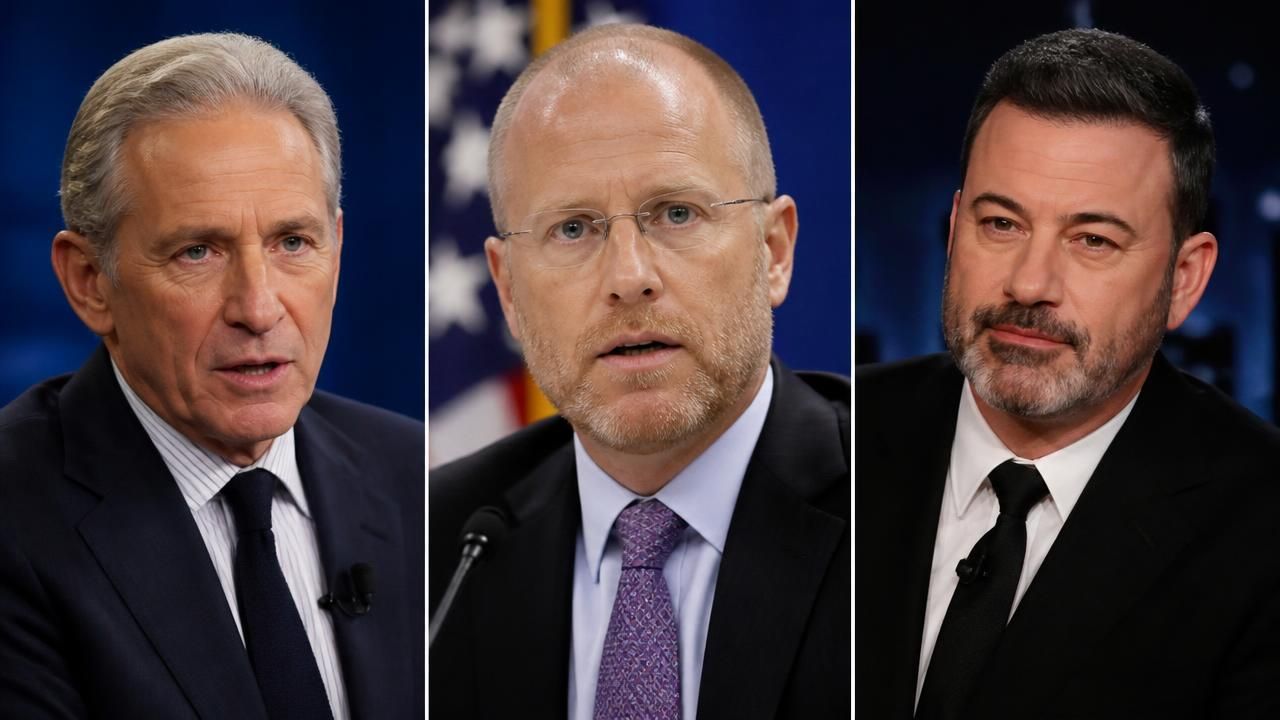
The Walt Disney Company and its ABC network filed a federal lawsuit against the Federal Communications Commission (FCC) on Wednesday, accusing the Trump administration of wielding regulatory power as a political weapon. The suit, which alleges First Amendment violations, centers on the FCC's decision to expedite review of ABC's broadcast licenses and its separate investigation into the daytime talk show The View.
In a filing that ABC called an "existential threat" to its operations, the network argued that the FCC's actions are retaliation for on-air criticism of President Donald Trump by The View co-hosts and late-night host Jimmy Kimmel. The complaint seeks to block the early renewal proceedings and to bar the FCC from using license reviews to punish protected speech.
What Led to the Lawsuit
The dispute has been escalating for months. In November 2024, FCC Commissioner Brendan Carr—designated by Trump as the agency's chair—sent letters to ABC and other networks, flagging concerns about The View and questioning whether the program had violated the agency's rules on political bias. The FCC later opened a formal investigation, and in early 2025, the agency accelerated the renewal review of ABC-owned television stations, a step networks rarely face.
Disney and ABC maintain that the FCC has no authority to police content and that the investigation is a transparent attempt to chill speech critical of the president. The lawsuit, filed in the U.S. District Court for the Southern District of New York, asserts that the FCC's actions are "clearcut retaliation" and that "the government is violating the First Amendment" by targeting a single broadcaster for its editorial viewpoints.
Legal Arguments and Expert Views
The case raises fundamental questions about broadcast regulation. Unlike cable or streaming, over-the-air broadcasters operate under a public-interest standard that requires the FCC to renew licenses every eight years. Historically, renewal has been routine, but the FCC's expedited review here—and its open references to programming content—has alarmed free-speech advocates.
"This is an unprecedented attempt by a regulatory agency to punish a network for content it dislikes," said Sarah Matthews, a media law professor at Georgetown University. "If the court allows this to proceed, every broadcaster becomes vulnerable to government pressure."
Legal analysts note that while the FCC can consider a station's service to its community during renewal, it cannot act as a censor. The First Amendment applies to broadcast journalism, albeit with some historical caveats. The Supreme Court has recognized limited FCC authority over indecent content, but political speech is squarely protected.
Advocacy Groups Rally to ABC's Defense
The lawsuit has drawn broad support from media and civil liberties organizations. According to TheWrap, 22 advocacy groups—including the Reporters Committee for Freedom of the Press, the ACLU, and the Freedom of the Press Foundation—have filed amicus briefs backing Disney's position. In one joint brief, the groups argued that "the government is violating the First Amendment" and that the FCC's actions send a chilling signal to every journalist in America.
- The Reporters Committee called the FCC's move "a textbook case of retaliation."
- The ACLU warned that "the FCC is being weaponized to punish disfavored speech."
- The National Association of Broadcasters expressed concern about the precedent, though it has not yet taken a formal position.
Public Reaction and Viewer Support
CNN reported that viewers have also rushed to ABC's defense. After news of the FCC probe broke, social media erupted with support for The View and Kimmel, and networks saw a surge in viewers tuning in to hear the hosts discuss the legal fight. Polls from Morning Consult suggest that a majority of Americans—including many Republicans—believe the FCC should not block license renewals based on political content.
On Tuesday, The View opened its broadcast with a pointed statement from co-host Whoopi Goldberg, who said, "We aren't going anywhere. We have a right to say what we think." Kimmel, known for his late-night monologues criticizing Trump, mocked the FCC's action as "a badge of honor."
FCC's Stance and Political Context
The FCC has defended its actions, with Commissioner Carr insisting that the agency is merely enforcing longstanding rules and that broadcasters must serve the public interest. In a statement, Carr said, "The FCC has an obligation to ensure that broadcasters are meeting their obligations. No network is above the law."
However, critics point to a pattern of conservative complaints against ABC. Last year, Trump's legal team filed a complaint with the FCC over a View interview in which co-host Joy Behar made on-air comments about the former president. The network has also faced a separate $15 million defamation settlement with Trump over an error in a segment by anchor George Stephanopoulos—a fact the FCC has referenced in correspondence.
Broader Implications for Broadcast Freedom
The outcome of the lawsuit could reshape the relationship between the federal government and the press. If the court rules for ABC, it would reaffirm that broadcast license renewals cannot be used as a content-based weapon. If the FCC prevails, it may embolden future administrations to target outlets they dislike—setting a perilous precedent.
Legal scholars also note that the case intersects with ongoing debates about the fairness doctrine, media consolidation, and the rise of digital platforms. ABC has argued that the FCC's selective targeting is especially damaging given that competitors like Fox News and conservative media face no similar scrutiny.
What Happens Next
The court will likely hear arguments on the preliminary injunction within weeks. Disney is asking the judge to halt the FCC's renewal proceedings and investigation while the case proceeds. A ruling could come before the end of the year, but appeals may drag on.
For now, the network has made its position clear. In the lawsuit, ABC asserts that the FCC's actions are "designed to intimidate the press and silence dissent," and that "the First Amendment does not permit the government to use a licensing regime to punish its critics."
The case is Disney Enterprises, Inc. v. Federal Communications Commission.