For the nation’s 2.4 million farmworkers, climate change is not an abstract future threat. It is a present-day killer, and a growing body of research shows that rising temperatures are making an already hazardous occupation far deadlier. The cause is a dangerous synergy: heat stress makes the body more vulnerable to pesticides, hotter air increases pesticide volatility and toxicity, and the protective clothing required to shield workers from chemicals amplifies heat strain. As one scientist put it, “It is awful. There is no other word for it.”
A Threat Multiplier in the Fields
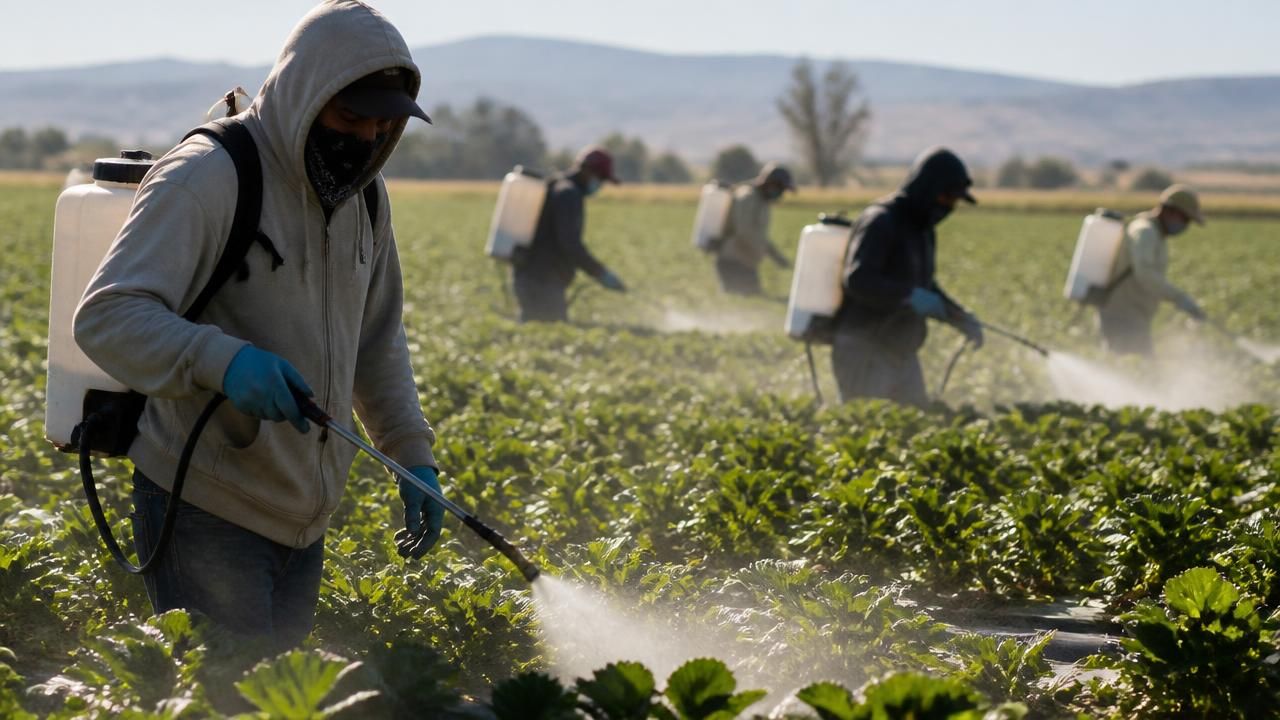
According to reporting by Ars Technica, climate change is poised to exacerbate the harms of pesticides for the nation’s 2.4 million farmworkers. The mechanisms are both physiological and chemical. When temperatures rise, the body’s natural cooling system — sweating — also increases the absorption of toxic chemicals. “Your skin can absorb some of the pesticides [that are] in the air, and also when you’re sweating as part of doing your work you are increasing the pore size of your skin,” explained Omanjana Goswami, a scientist in the food and environment program at the Union of Concerned Scientists.
Heat also changes the pesticides themselves. Warmer conditions lead to higher evaporation rates, meaning more pesticides become airborne and are inhaled. Moreover, heat can accelerate chemical transformations, turning some pesticides into more toxic compounds. This creates a compounding exposure pathway: workers inhale chemicals through their noses, absorb them through their skin, and ingest them as they sweat and breathe.
The Body’s Double Burden
Farmworkers are often required to wear long sleeves, pants, gloves, and respirators to minimize pesticide exposure. But in 100-degree heat, this protective gear becomes a liability. It traps body heat, raising core temperature and increasing the risk of heat stroke. At the same time, the physical exertion of agricultural labor — bending, lifting, hauling — generates internal heat. The result is a classic double bind: protect yourself from chemicals and risk dying of heat, or shed protective gear and risk acute pesticide poisoning.
“It is awful. There is no other word for it.” — Omanjana Goswami, Union of Concerned Scientists
Death in the Fields
The consequences are already visible. A Los Angeles Times investigation highlighted why Southern California’s farming regions are becoming “deadly hotspots” for farmworkers. As heat waves intensify, farmworkers are collapsing and dying in fields across the Central Valley, the state’s agricultural heartland. The UC Davis research initiative “Protecting California’s Farmworkers as Temperatures Climb” has documented rising rates of heat-related illness and death, and notes that labor protections have not kept pace with climate reality.
Civil Eats, an outlet focused on food and agriculture, reports that as the climate emergency grows, farmworkers lack protection from deadly heat. Unlike many other occupations, there is no federal standard requiring rest breaks, shade, or water for agricultural workers. California and a few other states have enacted heat standards, but enforcement is weak, and many workers fear retaliation if they complain. In Florida, where conditions are worsening, WUSF reported that more people are at risk as heat becomes more extreme. Meanwhile, a Texas county is so worried about warming that officials are exploring unprecedented adaptation measures.
The Regulatory Vacuum
The lack of comprehensive federal protections is the central theme in several news analyses. The 19th News reported on the Pregnant Workers Fairness Act as a potential avenue for relief for pregnant workers exposed to extreme heat, but that law covers only a narrow slice of the workforce. An Orlando Sentinel commentary argued that “basic protections are essential to protect outdoor workers from heat,” pointing to a patchwork of state rules that leaves millions without guaranteed shade, water, or rest.
The Union of Concerned Scientists’ blog ran a piece titled “Central Valley Farmworkers: Surviving Extreme Heat While Feeding the US,” highlighting the absurdity that the people who harvest the nation’s food must risk their lives in dangerously hot conditions because of existing agricultural practices. The blog called for a national standard for heat exposure, as well as stronger pesticide regulations that account for climate change.
Beyond the United States
The intersection of heat and pesticides is a global issue. GroundUp reported on how climate change threatens South Africa’s wine industry, where vineyard workers are exposed to both rising temperatures and increasing pesticide use. In many developing countries, protective equipment is unavailable or impractical, and heat-related injuries are largely unrecorded. The International Labour Organization has warned that heat stress is expected to reduce total working hours globally, with agriculture among the hardest-hit sectors.
Expert Views and Demands
Scientists and labor advocates are unified in their call for urgent action. They want three things:
- Federal heat standards that mandate shade, water, rest breaks, and gradually acclimatization for outdoor workers.
- Reform of pesticide regulations to account for the amplifying effects of temperature and humidity on toxicity.
- Increased enforcement and worker protections, including protection from retaliation for speaking out.
“We are asking people to work in conditions that are genuinely unsafe, and we’re doing nothing about it,” said Goswami. “The research is clear: as temperatures get hotter, pesticides are more dangerous. We need policies that match the reality of the climate crisis.”
Conclusion: A Human Cost That Can Be Avoided
The story of farmworkers is not just a story of agriculture; it is a story of environmental justice. Those who put food on our tables are the least responsible for climate change and the most exposed to its harms. As the planet continues to warm, the merging threats of heat and pesticides will only grow. But this is not inevitable. With political will, investment in safer agricultural practices, and a commitment to protecting the people who feed us, the deadliest effects can be mitigated. The question is whether our laws and our society will act in time.