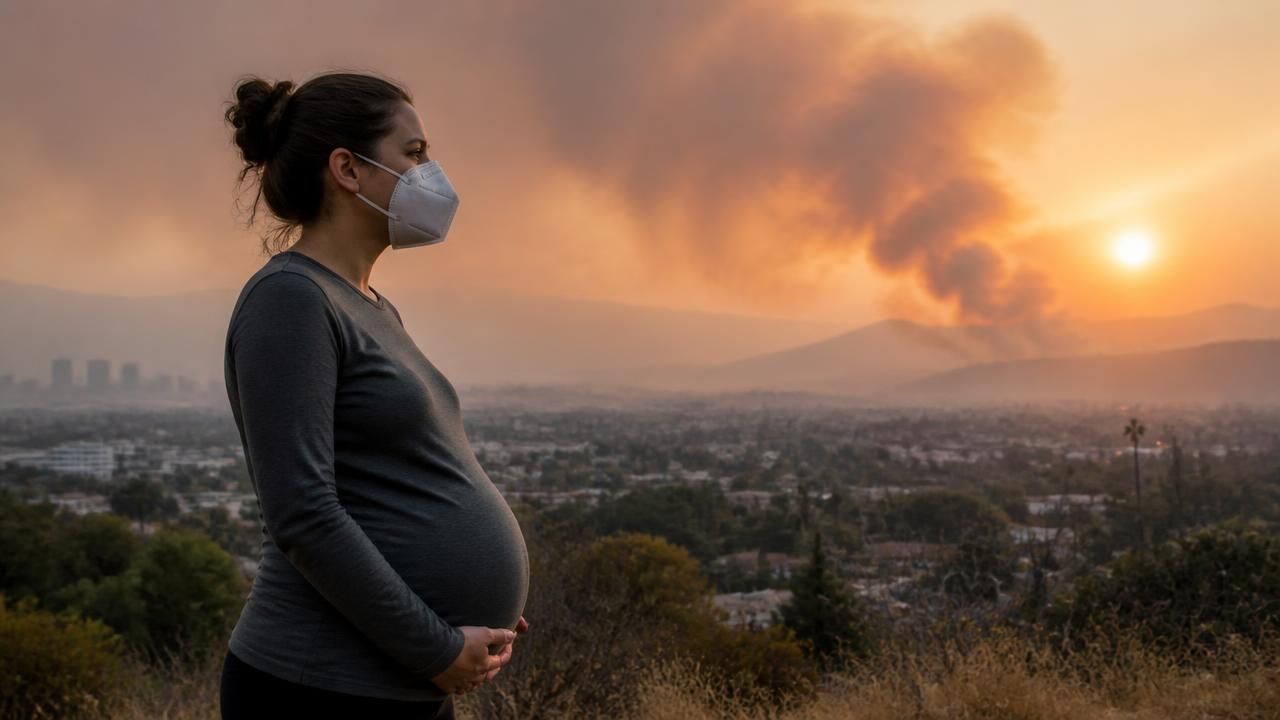
In the decades since the Clean Air Act was signed into law in 1970, the United States has made remarkable progress in curbing pollution from vehicles and industry. Emissions of six harmful air pollutants have dropped by nearly 80 percent. Yet a new national study delivers a sobering twist: wildfire smoke—supercharged by climate change—has become the single largest contributor of unhealthy air days for pregnant women, surpassing all human-caused sources combined.
The study, which analyzed air quality and pregnancy data across the country, found that by 2019 wildfires were driving more days with hazardous air pollution during pregnancy than emissions from traffic, power plants, and factories. The findings were reported by multiple outlets, including Ars Technica, The Guardian, and Stanford University's sustainability school, and published in a peer-reviewed journal. Researchers say the shift represents a profound reversal in the sources of air pollution that threaten maternal and fetal health.
A climate-fueled reversal of progress
When President Richard Nixon signed the Clean Air Act in 1970, the move followed a 1965 presidential advisory report warning that chemical and carbon pollution were harming the environment, public health, and the climate. The law, plus subsequent amendments, triggered dramatic reductions in conventional pollutants. But those gains are now being eroded by the very force the law was designed to address: the unchecked burning of fossil fuels that is warming the planet, drying out forests, and intensifying wildfires.
“Mounting evidence shows that pollution from wildfire smoke is eclipsing those air-quality gains,” wrote Ars Technica in its analysis. “The unchecked burning of fossil fuels is creating warmer, drier conditions that make wildfires more intense and destructive, and blanket communities in toxic smoke that is more harmful than pollution from other sources.”
Wildfire smoke contains a complex mix of fine particles, carbon monoxide, volatile organic compounds, and heavy metals. Studies have repeatedly shown that particulate matter from wildfires is more toxic—particle for particle—than the same concentration of pollutants from typical urban sources, likely due to its chemical composition and high concentration of fine particles that can penetrate deep into the lungs and cross the placenta.
What the study found
The research tracked exposure across nearly the entire U.S., using satellite data, ground monitors, and pregnancy outcome records. The team found that by 2019, wildfire smoke accounted for the majority of days when air quality exceeded federal health standards in areas where pregnant women lived. That mark had been reached just a few years earlier, in many Western states, but the national average crossed the threshold in 2019.
The study’s authors stressed that this trend is expected to worsen as climate change continues to amplify wildfire frequency and severity. They called for updated public health guidance, since current air quality alerts often fail to account for the unique dangers of wildfire smoke—especially for pregnant women, whose increased breathing rates and physiological changes make them more susceptible to airborne toxins.
Growing evidence of harm to pregnancy
The new findings build on a growing body of research linking wildfire smoke exposure during pregnancy to adverse outcomes. A Stanford-led study, highlighted by the Doerr School of Sustainability, found that wildfire smoke exposure increases the risk of preterm birth—a leading cause of infant mortality and long-term health problems.
Another study published in Nature Communications examined open-fire exposure in South Asia and found a significant increase in pregnancy loss. While that research involved household cooking fires, it underscores the broader principle that smoke inhalation during pregnancy threatens fetal survival.
The dangers are not limited to pregnancy. A study reported by HealthDay linked long-term wildfire smoke exposure with a higher risk of dementia in older adults. This suggests a pattern of neurological and developmental vulnerability that researchers are only beginning to unravel.
‘Not being protected’: calls for new approaches
The Guardian reported that experts say pregnant people and fetuses are “not being protected from wildfire risks,” pointing to gaps in both air quality regulations and emergency response systems. The current framework, designed for industrial pollution, does not handle the episodic, often massive, plumes of smoke from wildfires that can blanket entire regions for weeks.
A commentary in the Canadian Medical Association Journal echoes that sentiment, arguing that “new approaches are needed to protect people affected” by wildfire smoke. These include better forecasting, earlier and more targeted alerts, clean-air shelters, and financial support for families to stay indoors or use air filtration—measures that are particularly urgent for pregnant women and other vulnerable groups.
Who is most at risk?
The burden of wildfire smoke falls unevenly. Low-income communities, communities of color, and rural residents often lack the resources to evacuate, access clean indoor air, or afford medical care. A separate report by InsideClimate News found that converging climate risks—heat, wildfire, and flooding—hurt disadvantaged Californians hardest. The same likely holds true for wildfire smoke exposure across the U.S.
The study authors note that while wealthy households can install HEPA filters or relocate temporarily, millions of pregnant women cannot. This makes wildfire smoke not only a health crisis but also an environmental justice issue.
Policy implications
The findings carry urgent implications for policy. First, they suggest that investments in wildfire prevention and climate mitigation—such as reducing greenhouse gas emissions and managing forests proactively—are as much public health measures as they are environmental ones. Second, they call for updating the Clean Air Act’s framework to explicitly address wildfire smoke, including setting emergency standards for exceptional events and expanding Medicaid coverage for air purifiers or temporary lodging during wildfire episodes.
For obstetricians and midwives, the study is a reminder to ask patients about smoke exposure and to counsel them on protective measures. For public health officials, it means rethinking air quality communications and ensuring that “unhealthy” days trigger actions at maternity clinics and hospitals.
Conclusion
Five decades ago, the U.S. committed to cleaning up its air and won landmark battles against smog and acid rain. But the climate crisis is rewriting that legacy. Wildfire smoke, born of a warming planet, now poses a greater threat to the most vulnerable—pregnant women and their unborn children—than the smokestacks and tailpipes the Clean Air Act conquered. The study is a stark reminder that the fight for clean air is far from over; it has simply moved into the era of fire.