For nearly three decades, scientists have watched carbon dioxide accumulate in the atmosphere, heating the planet, acidifying oceans, and altering weather. Now, a new analysis suggests that rising CO2 is also leaving a measurable imprint much closer to home: inside the human bloodstream. Researchers who examined more than two decades of U.S. health data report that levels of bicarbonate—a key electrolyte that helps regulate blood pH—have climbed by about 7% since 1999, while calcium and phosphorus have declined. These changes closely track the rise in atmospheric CO2, a finding that adds a surprising new dimension to the human health impacts of climate change.
Blood chemistry: a new biomarker
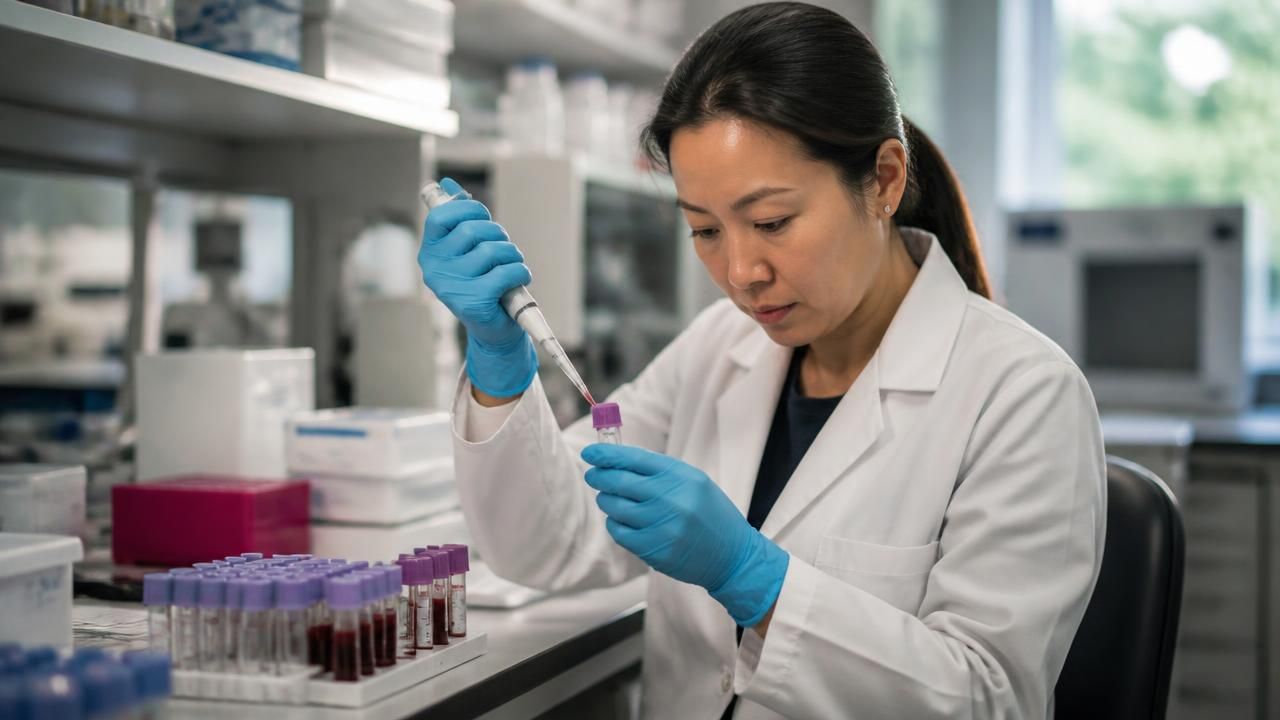
The study, which draws on data from the National Health and Nutrition Examination Survey (NHANES), is among the first to link global greenhouse gas trends with systemic shifts in human blood chemistry. Bicarbonate is produced by the kidneys and plays a crucial role in maintaining acid-base balance. As CO2 levels in the air rise, more CO2 dissolves into the blood, forming carbonic acid. The body compensates by increasing bicarbonate—a process that may explain the observed trend. At the same time, calcium and phosphorus, which are central to bone health and cellular function, have drifted downward. The authors note that these changes are small but consistent and mirror the trajectory of atmospheric CO2, which has risen from about 368 parts per million (ppm) in 1999 to over 420 ppm today.
“Rising carbon dioxide in the atmosphere may be leaving a measurable imprint inside the human body.” — Science Daily
Other experts caution that many factors—diet, medication, and environmental pollutants—could influence electrolyte levels. But the pattern is remarkably coherent across a large, representative sample of the U.S. population. The National Academies recently published a report reviewing evidence for greenhouse gas emissions and their effects on U.S. climate, health, and welfare, reinforcing that the consequences are not just distant or future—they are already embedded in our biology.
A cascade of unexpected effects
The blood chemistry finding is just one of many surprising ways climate change is rewriting the rules of biology and Earth's systems. Here are a few others:
Allergies get worse
Climate change is supercharging pollen and making allergies worse, according to a BBC analysis. Warmer temperatures extend growing seasons and boost pollen production, while higher CO2 directly stimulates plants to produce more pollen grains. For millions of allergy sufferers, that means longer seasons and stronger reactions.
Food loses its nutritional punch
Research highlighted by The Guardian shows that rising CO2 levels are making staple food crops less nutritious. Elevated CO2 reduces the concentration of protein, iron, and zinc in wheat, rice, and other crops, potentially worsening malnutrition for billions of people who rely on these staples.
Drylands turn green
Yale Environment 360 reports that the world's drylands are turning greener in response to CO2 fertilization. Increased CO2 boosts water-use efficiency in plants, allowing vegetation to thrive in arid regions. While that sounds positive, it can also alter fire regimes and water availability.
A stratospheric cool-down
Scientists have also discovered that while CO2 warms the lower atmosphere, it cools the stratosphere—the layer above. This effect has implications for weather patterns and the recovery of the ozone layer, adding another layer of complexity to climate models.
Strange happenings in the Pacific
New Scientist reports that something unusual is occurring in the Pacific Ocean, with unexplained temperature and current anomalies that have researchers puzzled. The episode suggests that climate shifts may be more chaotic than expected.
The shrinking carbon budget
Meanwhile, the window to keep global warming to 1.5°C above pre-industrial levels is closing fast. According to a recent analysis, only about three years' worth of current emissions remain in the carbon budget if the world hopes to hit that target. The Natural History Museum warns that carbon dioxide removal alone won't reverse climate change—sharp emissions cuts are essential.
“The carbon budget for 1.5°C is almost gone.” — Science Daily
Extreme heat events are already stunning even the climate researchers who predicted them, as Bloomberg reported. And a fact check by USA Today confirms that modern warming is the fastest in the last 485 million years—putting today's changes in geological perspective.
A marker of our times
Interestingly, the human body has always recorded environmental history. As BBC pointed out, the atomic bomb tests of the 1950s left a marker in human bones and tooth enamel—carbon-14. That legacy allowed scientists to date tissues and understand human biology. Today's rising CO2 is leaving a more subtle but similarly global fingerprint in our blood.
The road ahead
The human body is effectively a living archive of atmospheric change. The bicarbonate shift is a reminder that those changes do not stop at the skin. As the planet warms, our blood, crops, allergies, and even the air we breathe all carry the signature of a changing climate. While researchers continue to untangle these effects, one thing is certain: the story of climate change is not just about the environment—it's about us.