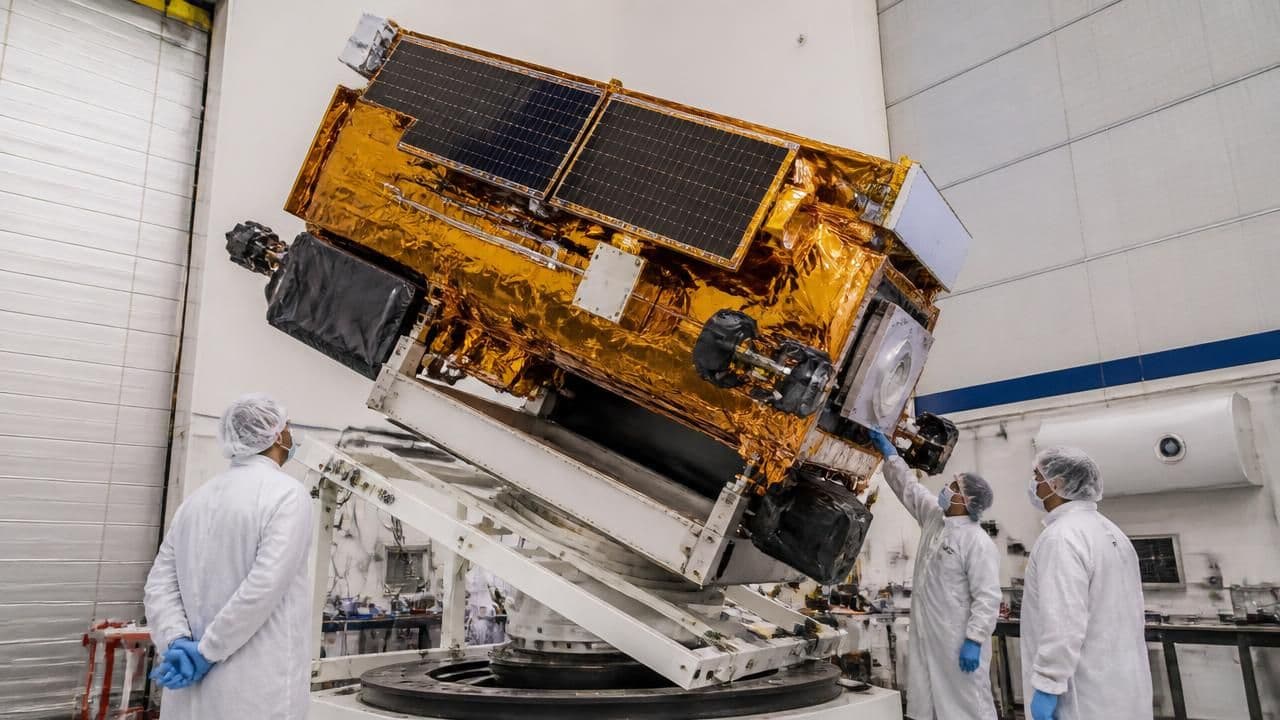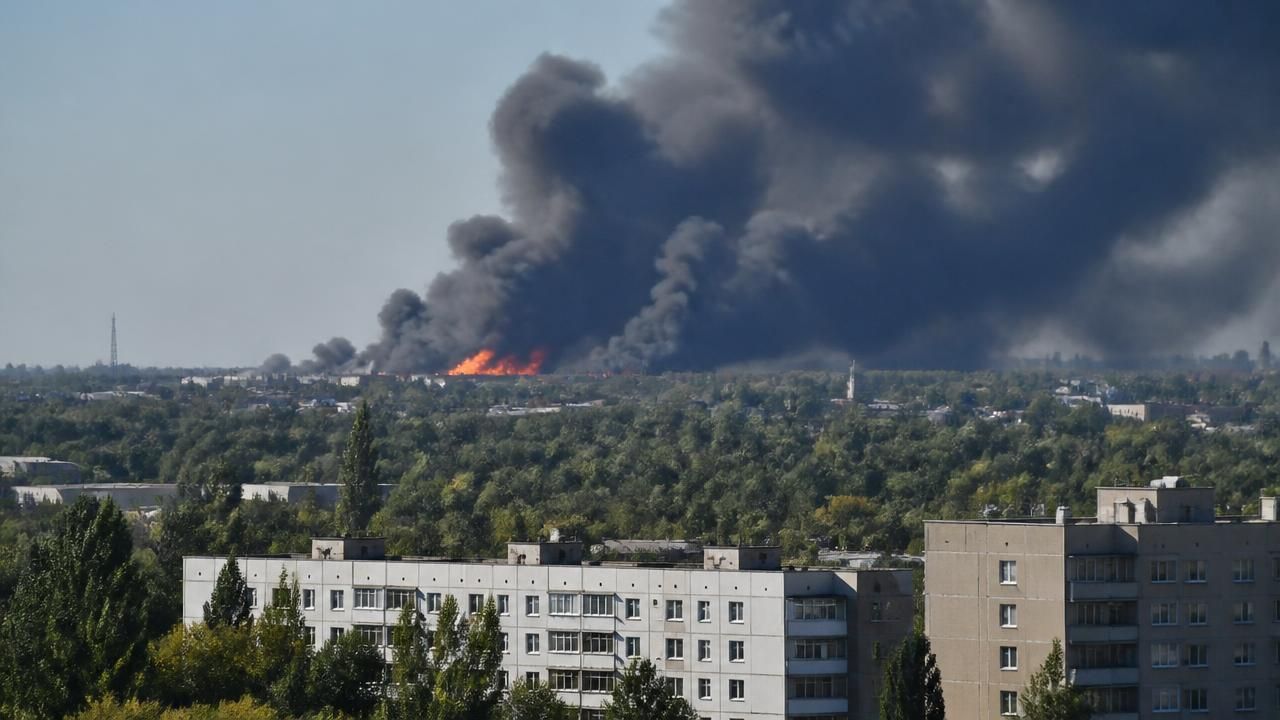
In a significant escalation of its deep-strike capability, Ukrainian President Volodymyr Zelenskyy confirmed on Saturday that Ukraine's military struck the Progress Rocket Space Center in Russia's Samara region using ground-launched cruise missiles. The facility, located approximately 900 kilometers from the Ukrainian border, is one of the most critical enterprises within Russia's space agency, Roscosmos, responsible for assembling the Soyuz-2 workhorse rocket, the newer Soyuz-5, and a range of military satellites.
'In Russia's Samara region, one of the key enterprises within Roscosmos — the Progress Center, which was involved, among other things, in electronics production — was hit,' Zelenskyy said on social media platform X. 'Flamingo missiles were used. A good achievement.' The attack marks one of the boldest Ukrainian strikes inside Russian territory, targeting a facility central to Moscow's space and military infrastructure.
The Progress Rocket Space Center: A Vital Strategic Asset
The Progress Rocket Space Center, located in Samara, is Russia's premier manufacturer of launch vehicles. It has a storied history dating back to the Soviet era, producing the R-7 family of rockets that launched Sputnik and Yuri Gagarin into space. Today, it builds the Soyuz-2, which serves as the workhorse for Roscosmos's commercial and government launches, including crewed missions to the International Space Station (ISS). The facility is also involved in the production of the Soyuz-5, an upcoming medium-lift rocket intended to replace older designs and reduce Russia's dependence on foreign components.
In addition to civilian launch vehicles, Progress is a key defense contractor, manufacturing military satellites for communication, navigation, and reconnaissance. Analysts believe that even a partial disruption to the plant's operations could have cascading effects on Russia's space launch schedule and military satellite deployment, which are already strained under Western sanctions and technological isolation.
The Strike: Details and Tactical Significance
Zelenskyy's statement disclosed that the strike used 'Flamingo' missiles, a ground-launched cruise missile system that has not been widely reported in open sources. The exact range and warhead specifications remain unclear, but the successful engagement of a target 900 kilometers away demonstrates Ukraine's growing ability to strike deep within Russian territory. This is not the first such attack; Ukrainian forces have previously used drones and missiles to hit oil refineries, airbases, and logistics hubs in western Russia. However, the Progress Center strike represents a new threshold, as it was aimed at a facility critical to Russia's space program and military-industrial complex.
The timing of the attack is notable. It comes as Ukraine continues to face intense pressure on the eastern front, and Kyiv has repeatedly sought to shift the war's dynamics by taking the fight to Russian soil. Ukrainian officials have described such strikes as legitimate defense operations aimed at degrading Russia's military capacity.
This strike sends a clear signal that no part of Russia's military-industrial complex is out of reach for Ukrainian forces, said Dr. Emily Chen, a defense analyst with the Center for Strategic Studies. The Progress facility is a critical node in Russia's space and military satellite network, and its disruption could have long-term consequences for Moscow's launch capabilities.
Strategic Implications for Russia's Space Program
The attack on Progress comes at a delicate time for Roscosmos. The agency has been grappling with budget shortfalls, brain drain, and the loss of international partnerships following the invasion of Ukraine. The European Space Agency terminated its cooperation with Roscosmos on several missions, including the ExoMars rover, and other Western partners have pulled back. As a result, Russia's space launch manifest has already shrunk dramatically.
- Soyuz-2 rockets are essential for replenishing Russia's GLONASS navigation constellation and its military reconnaissance satellites.
- The Soyuz-5 rocket is slated to be a key component of Russia's future orbital infrastructure, including potential station modules.
- Progress also produces components for Russia's hypersonic glide vehicles, which rely on advanced electronics that may now be harder to source.
If the strike inflicted significant structural damage, it could delay shipbuilding and testing schedules for months. Even a temporary halt in production could ripple through Russia's space supply chain, affecting the ISS resupply missions that use Progress cargo ships, though those are built at a different facility in Korolev. The psychological impact is also substantial: the strike demonstrates that Ukraine can reach and disrupt Russia's most guarded strategic assets.
Historical Context: Ukraine's Evolving Deep-Strike Campaign
Since the early months of the war, Ukraine has steadily increased the range and sophistication of its attacks on Russian territory. Initially, these were primarily small drone strikes on oil infrastructure, but they have evolved into coordinated campaigns using long-range drones, naval surface drones, and cruise missiles. The Flamingo missile appears to be a recent addition to Ukraine's arsenal, possibly a domestically developed system or a modified version of existing Soviet-era weapons. Western allies have supplied Ukraine with long-range missiles like Storm Shadow/SCALP and ATACMS, but those are typically used within Russian-occupied territory; striking deep inside Russia with ground-launched cruise missiles suggests Ukraine may have developed or acquired new capabilities.
The attack also underscores a strategic shift in Ukraine's approach: instead of solely defending on the ground, Kyiv is actively seeking to debilitate Russia's war economy and technological base. The Samara region is a major industrial hub, housing multiple defense plants, and the Progress Center is a crown jewel. By hitting it, Ukraine is signaling that its long-range arsenal is not merely a tool for retribution but a deliberate strategy to impair Russia's ability to sustain its military operations, including its space-based surveillance and communications.
Reaction and Potential Consequences
Russian officials have yet to comment publicly on the strike, though state media has often downplayed such attacks. In the past, Moscow has threatened retaliation for strikes deep inside its territory, but it has not followed through with any significant escalation against Ukraine's own space-related or critical infrastructure. The Kremlin may be reluctant to overtly acknowledge a security breach of this magnitude, as it would undermine the narrative that the war is being fought only on Ukrainian soil.
International reaction has been muted, with Western governments refraining from direct commentary, likely due to concerns about escalating tensions. However, security experts note that Ukraine's right to self-defense includes targeting military infrastructure that supports Russia's invasion. The International Institute for Strategic Studies (IISS) has previously assessed that Ukraine's deep strikes are legitimate as long as they comply with international humanitarian law, which requires discriminating between military objectives and civilian infrastructure.
Looking Ahead
As Ukraine continues to develop and employ long-range precision weapons, the Progress Center attack may be a harbinger of more strikes to come. Ukrainian officials have hinted that they are preparing additional operations to degrade Russia's military-industrial complex. The success of the Flamingo missile will likely spur further investment in domestic missile programs, reducing Ukraine's reliance on Western-supplied weapons.
For Russia, the strike is a stark reminder that its own territory is not a sanctuary. The Progress facility is not just a rocket factory; it is a symbol of Russian technological pride and military might. Its partial or complete disruption complicates Moscow's ability to maintain its space presence, which is already under threat from sanctions and internal decay. As the war enters its third year, both sides are increasingly reaching beyond the front lines, and the battle for technological infrastructure is becoming as crucial as the territorial battles.
The full extent of the damage at the Progress Rocket Space Center remains unknown, but the political and strategic reverberations are already being felt. Ukraine has demonstrated that it can strike at the heart of Russia's military-industrial foundation, and it has served notice that no target is off limits.