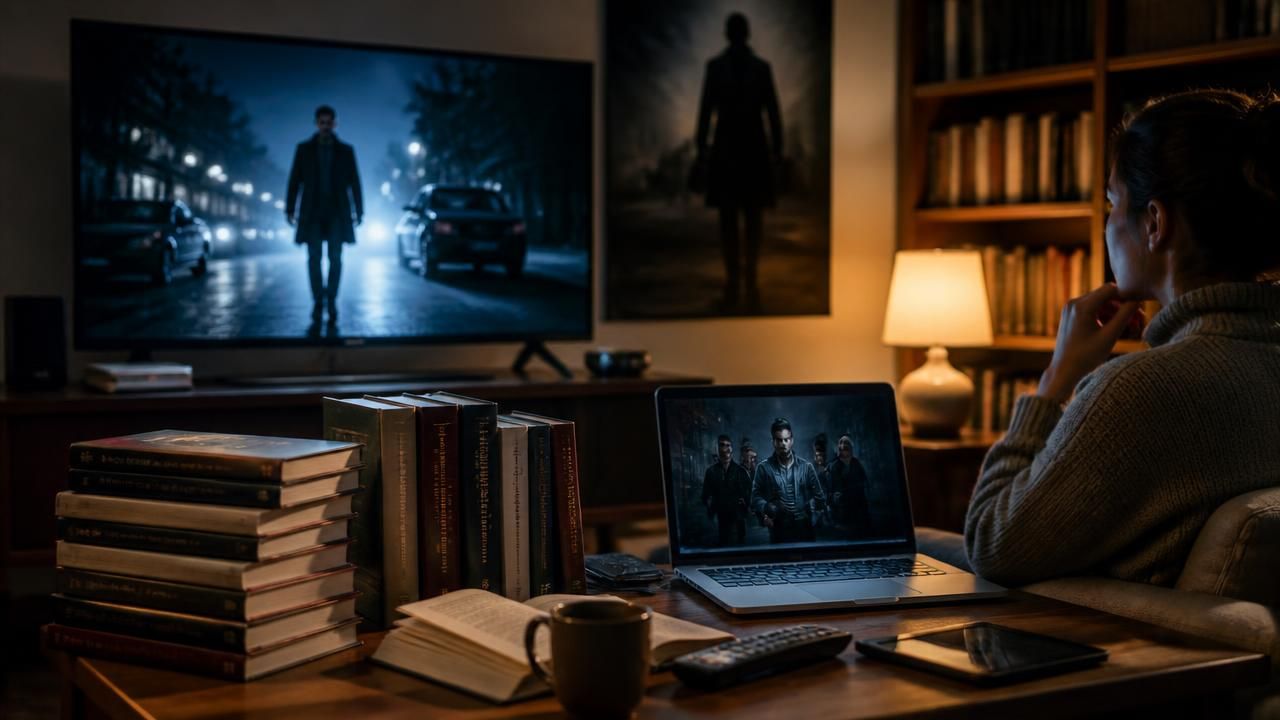
In an era of fragmented media, one genre is uniting audiences across platforms: the thriller. Whether it's a debut crime novel, a binge-worthy streaming series, a pulse-pounding cinematic release, or even a last-lap NASCAR finish, the language of suspense has never been more pervasive. A sweeping survey of recent coverage from outlets as varied as The New York Times, CrimeReads, Hello! magazine, and Rolling Stone reveals a cultural moment where the thriller is not just a genre—it's a shared lens for experiencing the world.
What Makes a Thriller Hook?
The discussion often begins with that crucial first sentence. Tina Jordan, The New York Times Book Review editor, recently challenged herself to guess thrillers based solely on their opening lines, highlighting titles from the paper's acclaimed “50 Best Thrillers of the 21st Century” list. The exercise underscores a truth every writer knows: the first sentence is a contract with the reader, promising tension, mysteries, and a reason to keep turning pages. As Jordan points out, a great opener doesn't just introduce a story—it installs an itch that only reading the whole book can scratch.
That principle is on full display in the wave of new and classic crime fiction flooding bookstores. CrimeReads has compiled the best debut crime novels of June and July 2026, while Parade offers a monumental list of the 110 best thriller, crime, and suspense novels of all time. For readers seeking guidance, Good Housekeeping shares staff favorites that “kept me glued to the page,” and BuzzFeed rounds up 20 Target-friendly thrillers for impulse buyers. Even Oprah magazine, in a feature on “Confessions of a Thriller Reader,” acknowledges the genre's outsized pull on our collective imagination.
Subgenres are flourishing as well. Historical thrillers are championed by best-selling author Rory Clements, who names his five favorites for iNews. Psychological depth is the focus of a CrimeReads list of seven novels that put the “psychology” in psychological thrillers, while another CrimeReads piece celebrates Irish women writers who are reinventing the form. Freida McFadden, a prolific author in the space, has had her entire bibliography ranked by The Everygirl, and a new psychological thriller that blends family drama and suspense is lauded by BookTrib as “The Devil’s in the Details.” Meanwhile, fans of Cormac McCarthy’s The Road can find three similarly haunting reads recommended by The New York Times video team, and a former reporter’s new crime series is set to put La Jolla on the literary map, as reported by the San Diego Union-Tribune.
Small-Screen Suspense: TV Thrillers Take Over
Television is arguably where the thriller genre is most exploding. Hello! magazine—a prolific source on the subject—has been tracking a slew of new and returning series. Viewers were “completely hooked” after the first episode of a new thriller starring a Line of Duty favorite, and the same outlet praises a “gripping” 8-part Apple TV mystery thriller as the perfect new-year binge. Channel 5 is enlisting Line of Duty actor Lee Ingleby for a new thriller, while the BBC has announced a crime thriller featuring actors from Call the Midwife and Death in Paradise.
The BBC is also behind Vigil, starring Martin Compston, which Hello! reports “looks amazing.” International hits are gaining traction too: Savage River, a 6-part Australian crime drama, is being called the ultimate one-night binge, and The Assassin—another 6-part series—is also earning binge-watch accolades. Netflix has added an “overlooked” Liam Neeson thriller that viewers are calling a hidden gem. Even niche outlets are weighing in: The Killing Times delivers a series review of Red Eye Season 2, and The Guardian hails the British Sign Language thriller Reunion as “an absolute revelation.” Viewers who loved a beloved novel are reportedly “hooked” after a two-episode premiere of its adaptation, proving that source material + smart execution still equals appointment viewing.
Big-Screen Chills and Streaming Movie Thrills
Cinema and streaming movies are equally rich with suspense. Variety reviews The Dead of Winter, noting that Emma Thompson “warms the frozen heart of an icy, generic thriller.” Indie and genre outlets are celebrating movies like Hunter Hunter, which one critic calls “the most satisfying and sadistic finale of 2020.” Bloody Disgusting teases the upcoming psychological thriller Mia with a trailer that “blurs the line between truth and madness.” International cinema is represented by reviews of Faceless from The Japan Times and Vadh 2 from NewsBytes, the latter noting the film “doesn’t have enough thrills.” Classics of the genre are also being reconsidered: Rolling Stone has published a definitive list of the 50 best erotic thrillers, and Firstpost looks back at Berlin Syndrome as “one of the most unpredictable, memorable thrillers of this year.” Even a predictable film like The Enforcer, reviewed by The Guardian, generates conversation about the formula that keeps audiences returning.
When Real Life Becomes a Thriller
The genre’s lexicon has even spilled into sports. NASCAR’s Ryan Blaney won a Cup Series “overtime thriller” at EchoPark, and the Stuff recap of State of Origin Game 1 describes New South Wales’ “unlikely comeback” in what it calls a “thriller.” These headlines prove that the word now describes any heart-stopping, nerve-shredding competition—on the page, on the screen, or on the track.
The Broader News Landscape
Amid the cultural fixation on suspense, other important news continues to unfold. The New York Times has released a series of investigative videos covering topics as diverse as the Justice Department’s pursuit of low-level fraud cases, Brazil’s use of disease-fighting mosquitoes, the harms of profit-seeking autism clinics, Argentine fans struggling to afford the World Cup, failures in the organ donation system, and sexual assaults in the Darién Gap. These reports serve as reminders that reality can be more consequential than any fictional thriller—and that staying informed is the ultimate way to keep pace with the plot twists of our time.
From the opening sentence of a novel to the final lap of a race, the thriller genre is demonstrating its remarkable ability to adapt, evolve, and capture our attention. Whether you prefer your suspense in ink, in pixels, or in person, there has never been a better time to lean in and embrace the thrill.