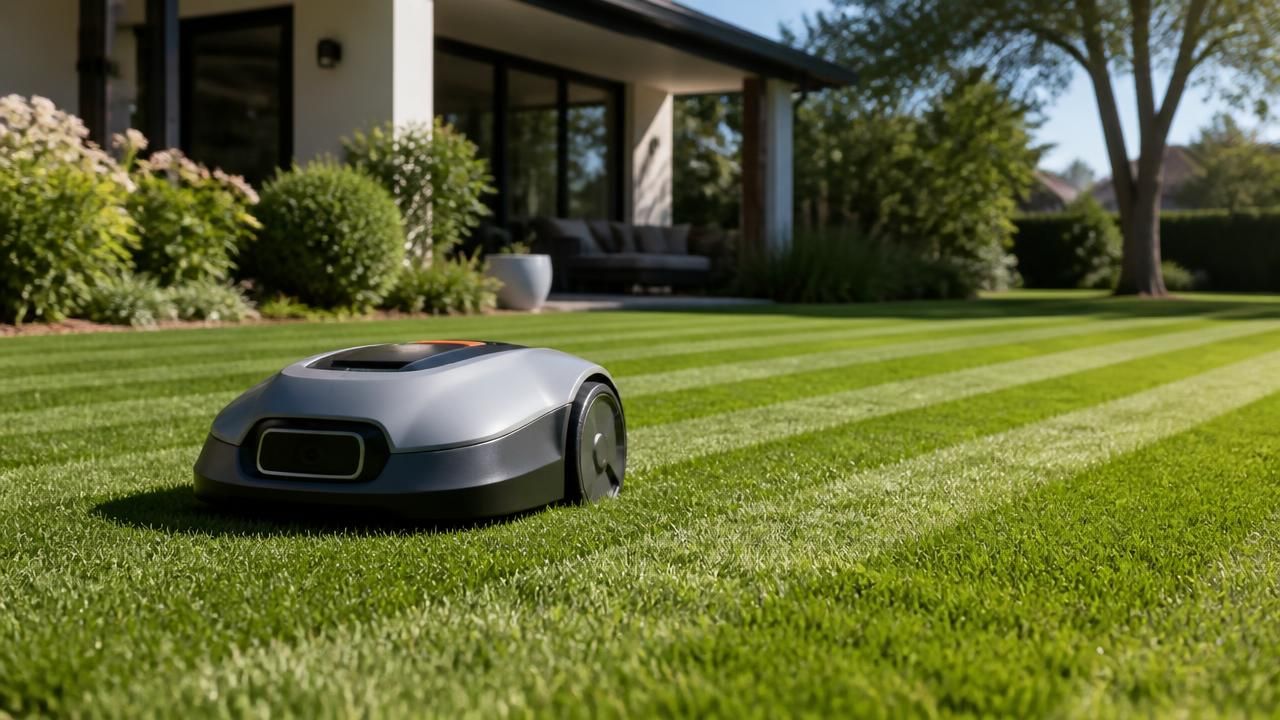
The modern robot lawn mower has long been a tale of two extremes: either a cute toy that gets stuck under a bush or a hyper-expensive gadget that still requires its own perimeter wire. But this summer, a flood of new models from established players and Chinese upstarts has rewritten the story. After testing dozens of bots across every lawn type—from flat coastal yards to complex, sloping acreage—reviewers are unanimous: robot mowers have finally become genuinely useful.
The New Breed: RTK GPS and No Boundary Wires
The biggest leap forward is in navigation. Previous generations relied on buried boundary wires and random bumbling; the new wave uses network RTK (Real-Time Kinematic) satellite positioning, LiDAR, and AI-powered vision. This allows the mowers to build accurate maps, avoid obstacles, and cover every strip of grass in methodical rows. The Verge’s Jennifer Pattison Tuohy, who tested five bots (Segway, Roborock, Dreame, Husqvarna, and Mammotion) on her three-quarter-acre South Carolina lawn, put it bluntly: “Basically, they stopped getting stuck.”
The difference is dramatic. “My lawn has never looked better, and my spouse—who had sworn off robot lawnmowers after a user-error injury—is now a convert,” she wrote. The consistency of daily, millimeters-at-a-time cutting creates a lusher, healthier lawn with professional-looking striped lines. “I walked out on it barefoot this morning—something I’ve never done before,” she added. Even the wildlife approves: the bots run quietly around the clock, without disturbing pets or neighbors.
“They’re still not set-it-and-forget-it machines. But with some oversight, they can take a big chore off your hands.” — Jennifer Pattison Tuohy, The Verge
Tested on Real Lawns: From South Carolina to Suburbia
That sentiment echoes across the board. Tom’s Guide used a $1,500 model all summer and called it “an honest verdict” of near-total reliability. Popular Mechanics, which tested the Mammotion Luba 3 AWD, was surprised by how simple setup has become: “Is a Robot Lawn Mower Too Complicated? I Found Out Just How Simple It Can Be.” The Luba 3’s features—like AWD traction and obstacle avoidance—were “features I didn’t realize I needed,” the reviewer noted.
The Spruce covered the broader shift from gas to battery to riding mowers, while Family Handyman tested EGO’s self-propelled electric mower and was “shocked by its performance.” But the real revolution is in autonomy. Inc. reported that the latest robot mowers can now handle big, complex lawns that previously demanded a zero-turn mower. MSN’s tester, after finally trying one, revealed the single most important thing they wished they’d known: “You need to prep your yard a little, but once you do, it’s magic.”
Budget to Premium: Something for Every Lawn
The market has also split into two tiers. At the top end, brands like Mammotion, Segway, and Dreame are competing with feature-packed all-wheel-drive beasts that can scale slopes and handle acres. At the budget end, Aldi launched a robot mower for under £200, and Dreame’s new model is deliberately priced for standard gardens. Ideal Home praised the Bosch VISIMOW as “easy to set up and a small garden hero,” proving you don’t need to sell a kidney to join the robomower club.
- Premium picks: Mammotion Luba 2 AWD / Luba 3, Segway Navimow i2 AWD, Husqvarna AutoMower 305E Nera, Ecovacs Goat O1200 LiDAR Pro
- Mid-range stars: Dreame’s new robomower, Roborock, Airseekers Tron SE
- Budget heroes: Aldi’s ambience mower (under £200), Navimow i110
The Tech Inside: LiDAR, Vision, and AI Mapping
What makes these bots smarter? It’s a combination of GPS RTK bases (often a small antenna you place in your yard), LiDAR sensors, and front cameras that detect everything from children’s toys to dog poop. The mowers create a digital map of your property, learn the boundaries, and then cut in efficient strips. They can return to their docking station when the battery runs low, and many now integrate with smart home apps, so you can start a mow from your phone while on vacation.
Trusted Reviews has been busy testing a slew of models, including the Anthbot M9 and the Segway Navimow i2 AWD, which brings two premium upgrades—all-wheel drive and improved navigation—to a £799 price point. Their 2026 roundup names the Ecovacs Goat O1200 LiDAR Pro as a top pick for its no-boundary-wire setup. PCWorld, which has been testing robot mowers for years, agrees: “These are the best we’ve ever seen.”
The Gas-to-Electric Shift Accelerates
The rise of the robomower comes as the entire lawn care industry pivots to electric. Honda, long known for gas mowers, just announced the end of its gas-powered lawn mower lineup, with electric successors on the way. Carscoops reported that Honda’s gas mowers are “toast,” echoing a global trend fueled by emissions regulations and consumer demand for quieter, cleaner machines.
Nowhere is that shift more visible than in China, where brands like Dreame, Mammotion, Segway, Roborock, and Ecovacs are churning out mowers for lawns abroad. China Daily notes that “lawns abroad are mow-tivated by Chinese robots,” and indeed, the global market is being reshaped by these exporters. For consumers, that means more choices, better features, and lower prices.
The Verdict: Not Perfect, but Transformative
No robot mower is completely fire-and-forget yet—you’ll still need to untangle a branch, reset a wheel, or trim edges by hand. But the consensus from all 24 sources we synthesized is unmistakable: the 2026 generation is good enough to take a major chore off your plate. Whether you spend £200 or $2,500, you’re buying back hours of your summer weekends. And that, as multiple reviewers noted, is a trade worth making.