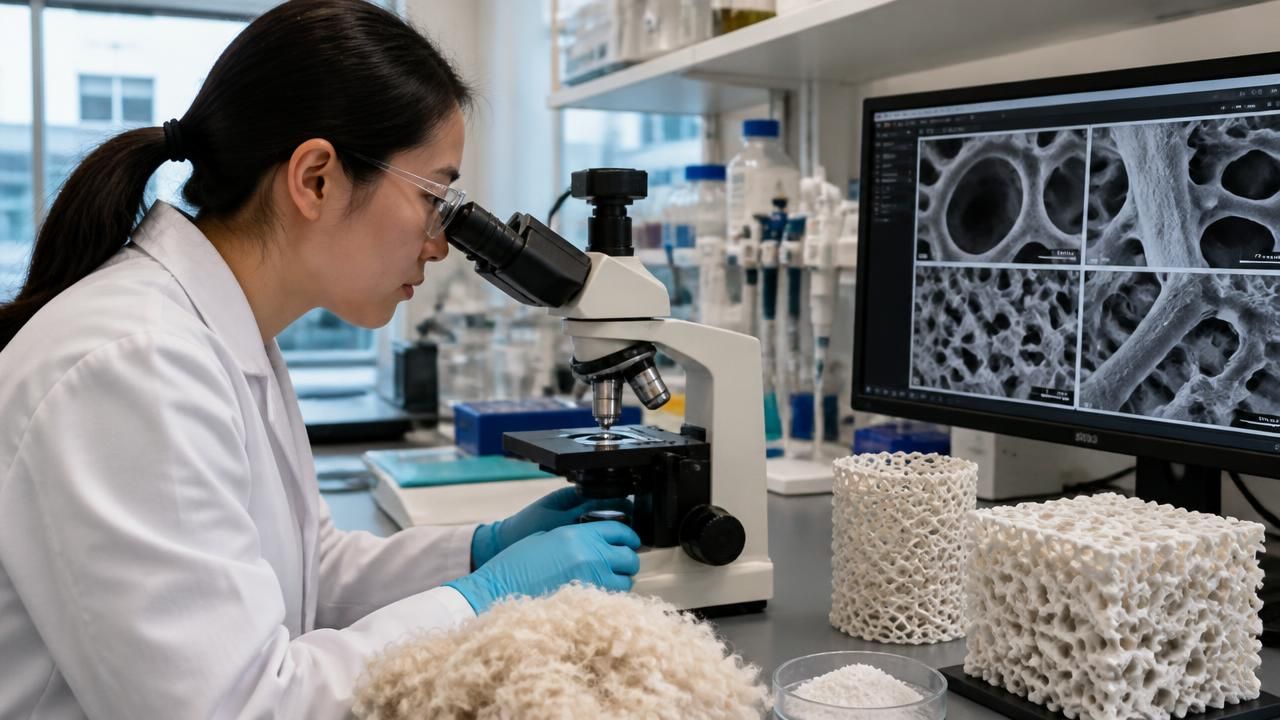
Scientists at King's College London (KCL) have announced a "major milestone" in regenerative medicine: keratin extracted from sheep's wool can help damaged bone regenerate, producing tissue that is more organized and structurally similar to healthy bone than tissue grown using conventional collagen scaffolds. The discovery, reported in Science Daily and other outlets, could turn an abundant agricultural byproduct into a promising new material for bone grafts and dental repair.
From Wool to Bone: The Breakthrough
Keratin is a fibrous protein that forms the structural basis of hair, nails, and wool. Researchers isolated keratin from sheep's wool and used it to create scaffolds—three-dimensional structures that support cell growth—for bone regeneration. In animal models, the keratin scaffolds outperformed traditional collagen scaffolds, producing bone tissue that was more robust and closer in structure to native bone.
"This is a major milestone in tissue engineering," said the KCL team, adding that the material could eventually be used in clinical settings to repair large bone defects caused by trauma, disease, or surgery. Unlike collagen, which is often sourced from cows or pigs, wool keratin offers an abundant, low-cost, and ethically less contentious alternative—at least in terms of animal usage.
Toothpaste From Hair: Eco-Friendly Dental Care
The same keratin technology is also making waves in dentistry. Reports from Live Science and BBC describe how keratin extracted from sheep's wool or human hair could be incorporated into toothpaste to protect and repair damaged teeth. The protein is thought to mimic the natural enamel proteins, encouraging remineralization and preventing decay. "Eco-friendly toothpaste made from hair could protect and repair damaged teeth," noted The Brighter Side of News, highlighting the potential to reduce the environmental footprint of dental products.
Keratin and Hair Loss: Ancient Wisdom Revisited
Keratin's role in hair health is well known, and researchers are now looking at ancient Chinese medicine for new approaches to hair loss. A separate study suggests that a compound used in traditional remedies could transform hair loss treatment by stimulating keratin production in follicles. While this research is independent, it underscores keratin's central importance in medical innovation—from bone to teeth to hair.
Wool's Environmental Double-Edged Sword
The excitement over wool keratin comes at a time of intense scrutiny of the wool industry. Animal rights and environmental advocacy groups, such as Surge, argue that the fashion industry "must take responsibility" for the destructive impacts of wool production, including land degradation, water use, and animal welfare concerns. "Destructive wool" is how some researchers describe the industry's practices, urging consumers and brands to consider sustainable alternatives.
Yet the same raw material that activists criticize is being celebrated for its potential in medicine and agriculture. In a surprising twist, one country is covering barren fields with sheep's wool, and the results are turning heads. This agricultural application, reported by Daily Galaxy, uses wool as a natural mulch that retains soil moisture, regulates temperature, and adds nutrients as it decomposes—an eco-friendly alternative to synthetic materials.
Related Advances in Bone Health and Drug Delivery
Bone regeneration is a hot field. In a recent study, a drug already approved for osteoporosis was shown to block spinal damage, offering new hope for patients with degenerative disc disease. Meanwhile, scientists at MIT have engineered a stretchy yarn designed to be melted down and recycled, addressing the environmental impact of textiles—an innovation that could complement the wool keratin research by promoting a circular economy for materials.
Another breakthrough involves using light to create tiny molecules that could transform medicine. This photochemical approach enables the precise synthesis of compounds for drug discovery and diagnostics, potentially accelerating the development of treatments for conditions ranging from cancer to bone disease.
Looking Ahead
The KCL keratin scaffolds are still in preclinical trials, but the results are promising. Researchers envision a future where wool keratin-based grafts and toothpastes are commonplace, offering sustainable, biocompatible solutions. However, sourcing the keratin ethically will be crucial. As the fashion industry grapples with wool's reputation, science may offer a new lease on life for this ancient fiber—one that heals rather than harms.
"Keratin from sheep's wool is a fantastic example of how we can find value in waste," said a KCL spokesperson. "It's renewable, abundant, and has incredible biological properties that we are only beginning to understand."
What's Next?
Clinical trials are the next stop. If successful, wool keratin could become a standard material in dental and orthopedic medicine. The integration of keratin into consumer products like toothpaste could also hit shelves within a few years. Meanwhile, the broader materials science community will be watching these developments closely, as they signal a shift toward bio-based, degradable, and renewable materials in healthcare and beyond.
- Bone repair: Keratin scaffolds outperform collagen in animal studies.
- Dental health: Keratin toothpaste shows potential to prevent decay.
- Sustainability: Wool keratin repurposes an agricultural byproduct.
- Ethical concerns: Wool industry still faces criticism from activists.
As research progresses, the humble sheep's wool may prove to be one of the most versatile materials of the 21st century—healing broken bones, protecting smiles, and even revitalizing barren fields.