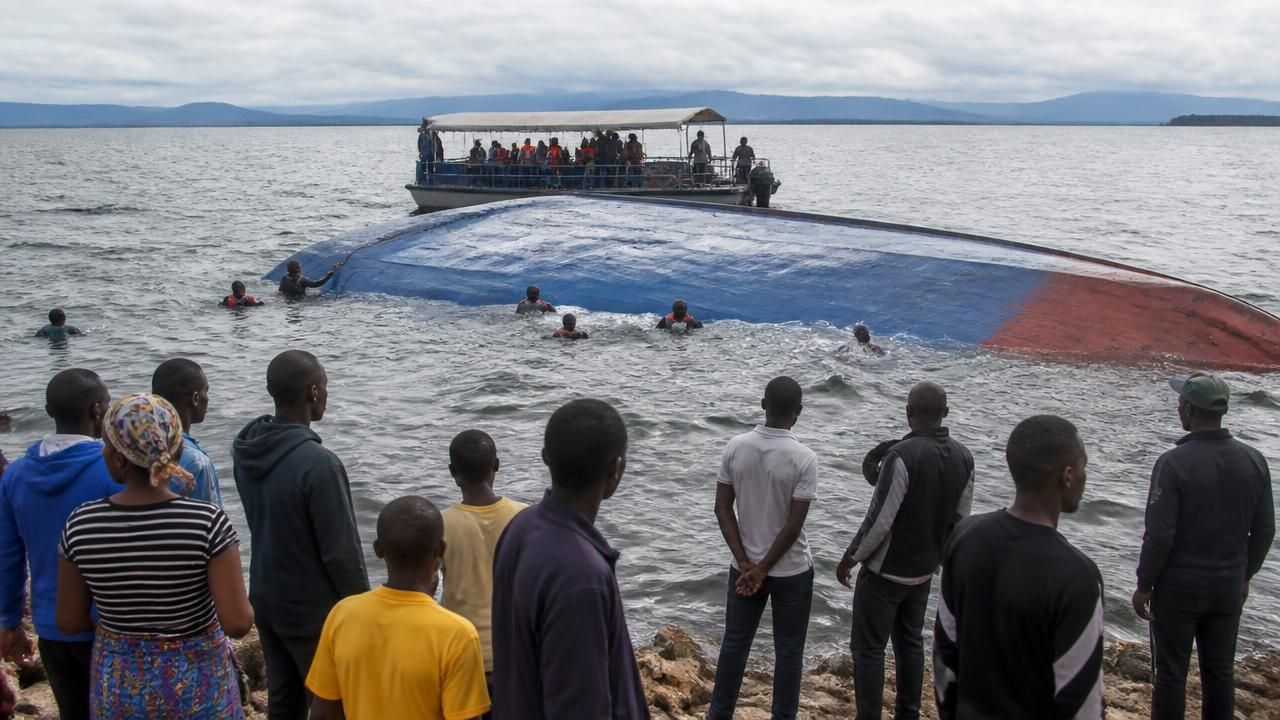
At least 44 people have died after an overcrowded ferry capsized on Lake Kariba in Zimbabwe, police said, with dozens more still missing and rescue operations under way. The boat, which had a capacity of 90 people, was carrying 114 adult passengers, five crew members and an unknown number of children, according to Zimbabwe's civil protection unit (CPU). Survivors reported that they pleaded with the crew to turn back as the vessel struggled against rough waves before it overturned.
The Incident
The tragedy unfolded on Wednesday afternoon on Lake Kariba, the world's largest human-made lake by volume, which straddles the border between Zimbabwe and Zambia. Witnesses said the ferry was severely overloaded, with passengers packed beyond its official limit. According to the CPU, which cited ticket sales, the boat was carrying at least 119 people when it capsized, though the actual number was likely higher because many children may not have had tickets.
“The boat had a capacity of 90 people, but was carrying 114 adult passengers, five crew members and an unknown number of children,” the civil protection unit said.
Emergency teams, including police divers, marine unit officers and local volunteers, worked through the night to search for survivors. By late Wednesday, 67 people had been rescued and taken to hospitals and clinics on the shoreline. The death toll was expected to rise as rescue teams reached the wreckage.
Survivors' Accounts
Survivors described a harrowing ordeal as the ferry began to take on water shortly after leaving the harbor at Kariba town. According to multiple reports, passengers begged the captain to return to shore as waves battered the vessel, but the crew continued. The boat eventually capsized about halfway across the lake, throwing dozens into the water.
One survivor, speaking from a hospital bed, said, “We shouted to the captain to turn back, but he said it was fine. Then the boat started leaning to one side, and in a moment, it was upside down.” Another recalled clinging to floating debris for hours before being pulled from the water by rescuers.
Rescue and Recovery
The rescue operation involved coordinated efforts from the Zimbabwean police, the CPU, and local fishing boats. Helicopters were deployed to scan the vast lake, while divers searched the submerged vessel. The lake's immensity—covering an area of more than 5,000 square kilometers—made the search challenging.
At the town of Kariba, a temporary recovery center was set up, where distraught families gathered to await news of their loved ones. The Zimbabwean government has pledged a full investigation into the cause of the disaster, with an emphasis on why the ferry was allowed to sail with so many passengers.
Context: Lake Kariba and Ferry Safety
Lake Kariba, created by the Kariba Dam on the Zambezi River, is a popular route for passenger and cargo ferries linking Zimbabwe and Zambia. However, maritime accidents are common in the region, often attributed to poor regulation, overcrowding, and a lack of life jackets. This incident echoes a 2016 disaster on the same lake in which at least 20 people died when an overloaded boat sank.
- At least 44 confirmed dead, 67 rescued
- Boat capacity: 90; carrying at least 119 known passengers, plus unregistered children
- Survivors had pleaded to turn back before the vessel capsized
- Rescue operations are ongoing with divers and helicopters
The tragedy has reignited calls for stricter maritime safety enforcement in Zimbabwe. Experts point out that many ferries operating on the lake are poorly maintained, with little to no safety equipment. The CPU has said it will investigate how the vessel was permitted to depart with such a large number of passengers.
Reactions and International Coverage
As news of the disaster spread, condolences came from across the region. Zimbabwe's President Emmerson Mnangagwa expressed sadness over the loss of life, describing it as a "deep tragedy" for the nation. The Zambian government also offered support, given that many of the passengers may have been from both sides of the border.
International media outlets have framed the story in different ways. The Guardian highlighted the overcrowding and the official capacity, while other reports focused on the survivors' desperate pleas to turn back. Some outlets, such as Deccan Herald and The Whistler, gave prominence to the rescue numbers, noting that 67 people had been pulled to safety. MSN and other wire services carried initial breaking news with a focus on the death toll.
Despite the varied angles, all reports converge on the same fundamental fact: an avoidable accident caused by an overloaded vessel on an unforgiving lake has led to a catastrophic loss of life. As the search continues, the nation mourns, and questions mount over how such disasters can be prevented in the future.
The investigation is ongoing, and authorities have said they will release a full list of the deceased once families have been notified. For now, Lake Kariba remains the site of both an active rescue mission and a grim reminder of the dangers that arise when safety is sacrificed for the sake of a quick crossing.