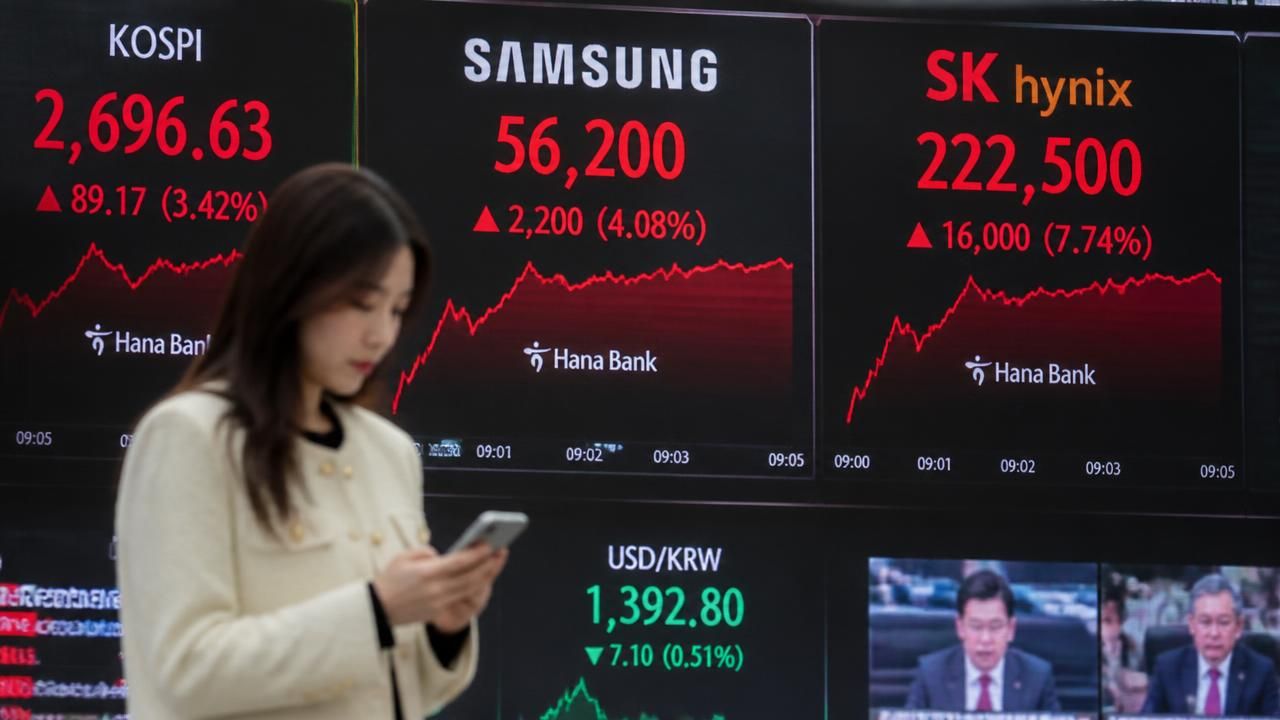
South Korea's semiconductor heavyweights surged in trading on Tuesday after a local media report said Singapore's Temasek Holdings is planning to invest in Samsung Electronics and SK Hynix. The news injected fresh optimism into a sector already riding a wave of AI-driven demand for memory chips, sending the KOSPI composite index sharply higher and lifting U.S.-listed chip stocks including Micron (MU) and Western Digital's SanDisk (SNDK).
The rally marked a dramatic reversal from last month's selloff, when concerns over AI valuations and global trade tensions hammered tech shares. SK Hynix, the world's second-largest memory chipmaker, jumped as much as 8% in Seoul, while Samsung Electronics gained over 4%. The KOSPI posted its best session in months, with analysts attributing the surge to both the Temasek report and a broader resurgence of the AI trade.
Temasek's Potential First Direct Korean Equity Stake
According to an unconfirmed report from a Korean media outlet, Temasek—Singapore's state-owned investment firm managing over S$380 billion in assets—is considering buying shares in both Samsung and SK Hynix. If realized, it would mark Temasek's first direct investment in South Korean equities, a move seen as a strong vote of confidence in the country's chip sector and governance reforms.
“Singapore’s Temasek Holdings is planning to invest in Samsung Electronics and SK Hynix,” the report said, citing unnamed sources familiar with the matter.
Neither Temasek nor the two companies have officially commented on the report. However, market watchers note that Temasek has been gradually expanding its technology portfolio across Asia, and a direct stake in Korea's two largest chipmakers would align with its focus on long-term structural growth driven by artificial intelligence.
The news also resonated globally. U.S.-listed shares of SK Hynix (SKHY) rallied, and the broader memory complex—including Micron and SanDisk—moved higher as investors bet on sustained demand for high-bandwidth memory (HBM) used in AI accelerators.
AI Rally Roars Back, But Shareholders Want More
The Temasek report landed just as the AI trade regained momentum. Samsung and SK Hynix have been among the biggest beneficiaries of the AI infrastructure boom, supplying HBM and DRAM chips to Nvidia and other leading processor makers. Both companies reported record operating profits in recent quarters, driven by soaring prices for memory chips.
Yet, not all investors are celebrating. A separate Reuters report highlighted growing frustration among shareholders over the companies' cash management. Despite generating enormous free cash flow from AI-driven sales, Samsung and SK Hynix have been conservative with dividend increases and share buybacks. Shareholder groups are calling for bigger payouts, arguing that the companies should return more of their AI windfall to investors.
“Shareholders are demanding a larger share of the cash mountain,” one fund manager told Reuters, speaking on condition of anonymity. “These companies are printing money, but the return to shareholders is not keeping pace.”
Peak Memory Fears Add Urgency
Underlying the payout pressure are growing concerns that the memory chip cycle may be peaking. While AI demand remains strong, some analysts warn that memory prices could begin to moderate as supply catches up. That makes the case for immediate cash returns more compelling to investors who fear the boom may not last.
Moneycontrol reported that these “peak memory” fears are shifting the spotlight from earnings growth to capital allocation. Samsung and SK Hynix have historically reinvested heavily in R&D and capacity, but with their shares still trading below perceived fair value, investors are increasingly vocal about alternative uses of cash.
What the Temasek Report Means for the Chip Sector
If Temasek were to take significant stakes, it would be a landmark endorsement of Korea's semiconductor industry and its corporate governance improvements. It could also help stabilize the market during a period of volatility, providing a long-term, institutional anchor.
“Temasek is known for its patient capital approach,” said a Seoul-based analyst who asked not to be named. “A direct investment in Samsung or SK Hynix would not only boost sentiment but also signal to other global investors that these are attractive, well-managed companies.”
The reported investment comes amid a broader realignment of global supply chains, as countries seek to secure chip production and critical technologies. Singare, a joint venture between SK Hynix and Singapore's NXP Semiconductors, already operates a wafer fabrication plant in China, underscoring Temasek's familiarity with the memory industry's supply chain.
Looking Ahead
While the Temasek report has yet to be confirmed, its impact is already being felt across markets. The rally underscores how sensitive chip stocks remain to institutional signals, especially in a high-rate environment where investors are scrutinizing every allocation decision.
For Samsung and SK Hynix, the challenge will be balancing the need to invest in future AI capabilities with growing pressure to reward shareholders. The Temasek news may provide temporary relief, but the underlying debate over capital returns is likely to persist as long as peak-cycle fears linger.
In the coming weeks, investors will watch for official confirmation from Temasek and any subsequent filings with Korean regulators. A confirmed stake could trigger a fresh re-rating of the entire Korean tech sector, while a denial could quickly reverse today's gains.
For now, the market is betting that the AI boom still has legs—and that at least one savvy sovereign investor wants a piece of the action.