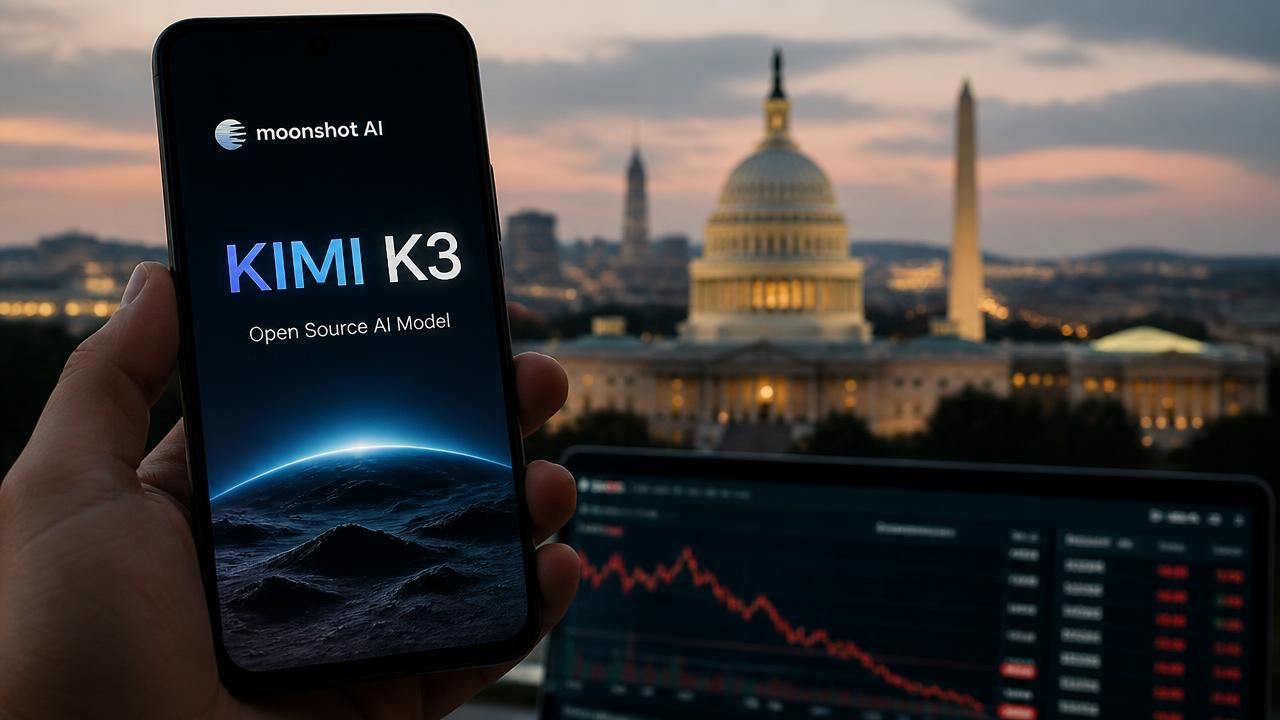
The release of Kimi K3, an open-source artificial intelligence model from Chinese startup Moonshot AI, has triggered what Bloomberg is calling a “China shock” across Silicon Valley and Washington. The model, described as the world's largest open-source system, has sent tremors through global markets and reignited a fierce debate over America's technological supremacy.
The Guardian captures the mood: “Headaches for Silicon Valley as China chips away at the US's lead in the AI race.” The Washington Examiner is blunter, declaring that China's new AI “just blew up Silicon Valley's $1 trillion delusion”—a sharp reminder that the assumptions underpinning AI valuations are no longer secure.
What Is Kimi K3 and Why Does It Matter?
Moonshot AI, a Beijing-based startup, released Kimi K3 as an open-weight model, allowing developers worldwide to download, modify, and build upon it. This is a fundamental break from the closed, proprietary approach favored by OpenAI and Google. According to International Business Times, Kimi K3 is the “world's largest open-source model,” and early benchmarks show it rivaling ChatGPT and other leading Western systems, as the Los Angeles Times reports.
- Kimi K3: Released by Moonshot AI, claimed to be the largest open-source model ever.
- DeepSeek: Earlier Chinese model that showed competitive performance at a fraction of the cost.
- Qwen: Alibaba's open-source family, reported to be triggering a “Qwen Panic” in Silicon Valley.
Together, these models represent an “open-weight insurgency,” as one MSN headline puts it, that is splitting the AI world into two competing camps. The Chinese approach, which prioritizes accessibility and cost efficiency, is challenging the playbook of American labs that have historically guarded their most advanced systems as trade secrets.
Silicon Valley's Divided Response
Within Silicon Valley, the reaction is far from unified. Some see Chinese open-source models as an engine for innovation. Rest of World observed that “The U.S. wants to contain China's AI. Silicon Valley keeps using it.” In fact, Forbes reports that American startups are actively training their AI systems on Chinese models, inadvertently making China's AI smarter. WIRED sums it up: “Silicon Valley Is Completely Divided Over Chinese AI.”
“The U.S. wants to contain China's AI. Silicon Valley keeps using it.” — Rest of World
On one side are companies like Meta, which have long championed open-source AI and benefit from a global ecosystem of developers. On the other are firms like OpenAI, which warn that unrestricted open-weight models could be weaponized or undermine American competitiveness. The New York Times describes the rift: “Silicon Valley Splits Over Closing the Borders to Chinese A.I.” TechRepublic similarly notes that Washington is weighing new controls even as the industry remains split on whether such measures are wise or enforceable.
Washington's Policy Dilemma
The political establishment is scrambling. The White House has accused Moonshot AI of stealing U.S. technology, according to the Washington Examiner. The Hill reports that Kimi K3 “adds pressure on Trump administration's AI policy,” while U.S. AI envoy David Sacks has warned that America risks losing its competitive edge. Meanwhile, The Free Press reports that Trump's shifting stance on China is rattling pro-hawk members of Congress, exposing a widening rift over how aggressively to confront Beijing.
At the same time, Reuters reveals that China is weighing its own “silicon curtain” around its most sought-after AI models—potentially restricting access to the open-source systems that American developers have come to rely on. Such a move would upend the current dynamic, in which Chinese models flow freely across borders while U.S. chip exports to China are heavily restricted.
The Chip Connection
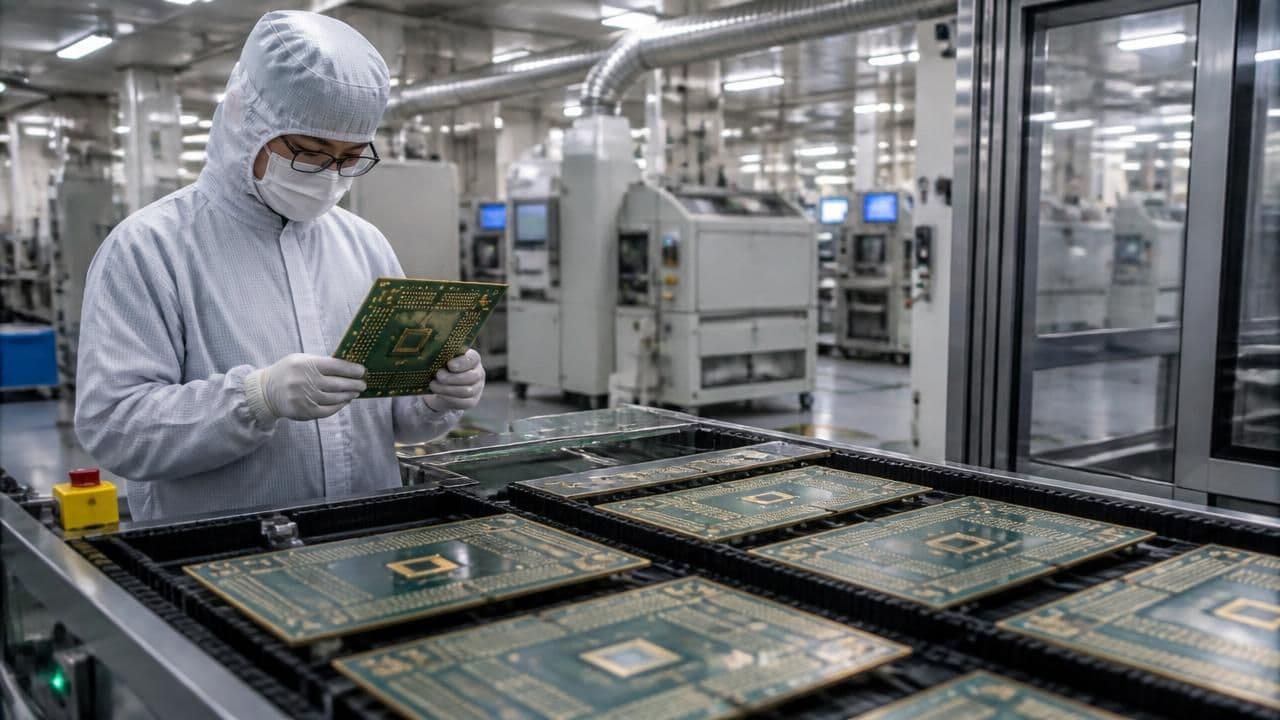
Hardware remains the other front line. The Wall Street Journal reports on “The Silicon Valley Salesman Accused of Helping China Get Nvidia's Top Chips,” highlighting criminal cases tied to alleged smuggling of advanced semiconductors to China. These chips are the lifeblood of AI training, and U.S. export controls have been the primary lever for slowing China's progress. Yet Chinese models like DeepSeek and Kimi K3 have achieved remarkable performance with fewer resources, undercutting the assumption that cutting off chips will preserve America's lead.
The Race to Compete
The immediate consequence is a frantic race to build an American alternative to cheap AI from China, as WSJ describes. U.S. companies are under pressure to match the cost efficiency and open availability of Chinese models. PBS notes that breakthroughs in Chinese AI threaten the U.S. lead in the broader tech race, and markets are waking up to the possibility that the “multitrillion-dollar AI opportunity” may be more competitive—and less profitable—than previously imagined.
What's Next?
As Washington debates a new round of export controls and possible restrictions on open-source distribution, the rest of the world is watching closely. Will the U.S. attempt to build a wall around Chinese AI—and can it even succeed in a decentralized digital ecosystem? Or will it embrace the reality that AI innovation now flows both ways across the Pacific?
One thing is certain: the era of unchallenged American AI supremacy is over. Whether Kimi K3 proves to be a lasting breakthrough or just the latest jolt in a volatile race, it has already forced Silicon Valley and Washington to confront a future they were not prepared for. As WIRED put it, Silicon Valley is “completely divided” over Chinese AI—and that division is only beginning to play out in boardrooms, courtrooms, and congressional hearing rooms across the country.