In a quiet evolution of law enforcement technology, automatic license plate readers (ALPRs) are no longer just capturing plates. New systems can now link your phone, smartwatch, or even AirPods to your vehicle, building a searchable web of movement that investigators can query without ever knowing a plate number. The technology, marketed by defense firm Leonardo as SignalTrace, is designed to run alongside existing plate readers, recognizing clusters of consumer devices that travel together and associating them with vehicle records.
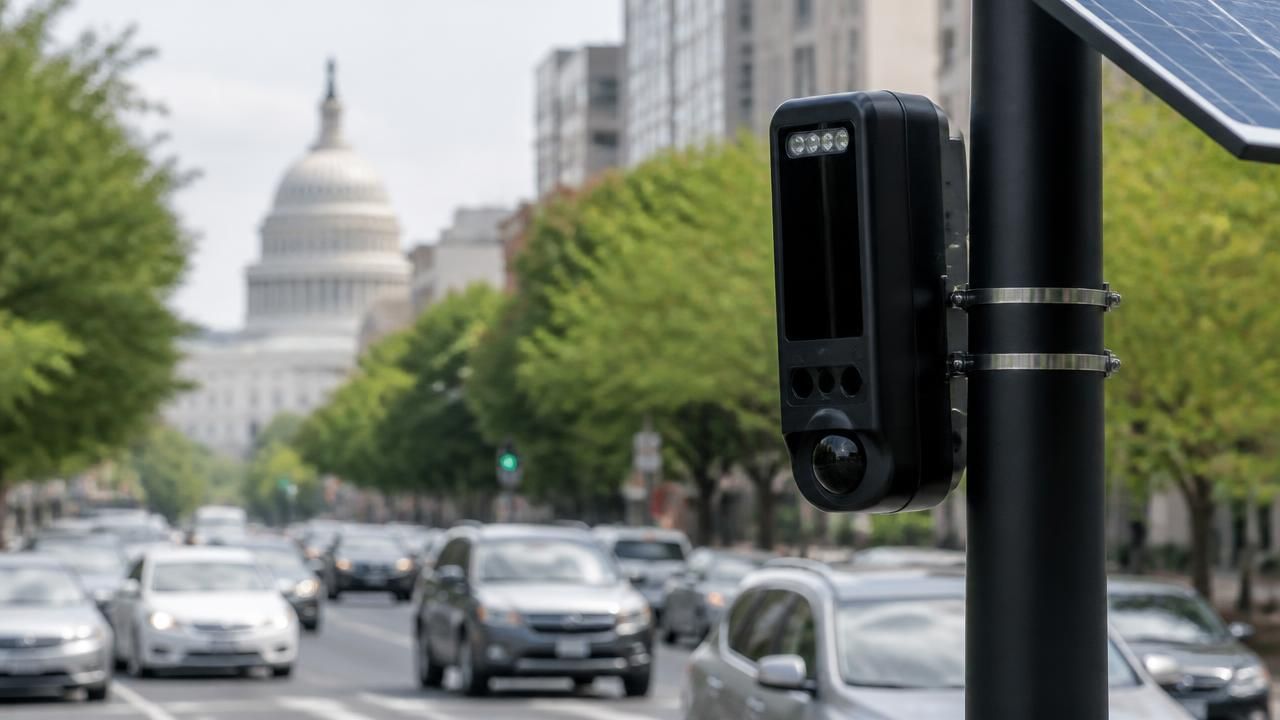
This is just one frontier in a rapid expansion of surveillance tech across the United States. Central to the boom is Flock Safety, a company that has installed tens of thousands of solar-powered cameras nationwide. Flock's devices don't just read plates—they can identify vehicle color, make, and even detect the signals from nearby mobile devices. The company has pitched ambitious programs, including turning Uber and Lyft drivers into a mobile surveillance network, and recently faced scrutiny after a California town found its cameras were wrong 71% of the time. Meanwhile, journalists from 404 Media discovered that Flock had left its AI-powered cameras exposed to the internet, allowing them to track themselves.
As the technology spreads, so does the backlash. The LAPD has paused its use of Flock cameras over 'serious concerns around civil liberties and privacy,' and civil liberties groups are sounding alarms about a system that can be abused to target political opponents, marginalized communities, and even abortion seekers.
How It Works: From License Plates to Device Signatures
Traditional ALPRs capture a timestamped photo of every passing plate, cross-referencing it against databases of stolen cars or wanted persons. Flock and similar systems add a layer of AI, enabling object recognition and pattern analysis. SignalTrace goes further: it detects the unique identifiers broadcast by Wi-Fi and Bluetooth devices—phones, smartwatches, earbuds—and, after several trips, associates them with a known vehicle's plate. 'The signal itself may not contain its owner’s name, but its previous association with a known vehicle gives investigators another clue they can use to work out who was carrying the device,' Ars Technica explains.
Accuracy and Vulnerabilities
The rush to deploy has outpaced oversight. One California town found Flock's plate reads were wrong 71% of the time, a staggering error rate for a tool that can trigger enforcement actions. Security researchers have also exposed vulnerabilities in these systems, demonstrating how public safety agencies responded to major flaws—or failed to. A 404 Media investigation revealed that Flock cameras were exposed to the internet, allowing anyone to locate them and potentially access feeds. The company has since patched the issue, but the incident underscores the fragile security of a network that already handles sensitive location data.
Police Adoption and Community Outcry
Despite the concerns, many agencies are doubling down. Detroit approved $5 million in federal funds to install 100 license plate readers at 25 intersections. San Diego police have proposed adding 500 streetlight cameras plus LPRs. Houston-area agencies use Flock cameras for everything from stolen car recovery to homicide investigations. In Seattle, the adoption of crime-fighting technology has stirred local outcry, with activists warning that such systems disproportionately surveil neighborhoods of color.
“We're fighting mass surveillance tech—and winning,” says the EFF, pointing to victories like LAPD's pause and the growing number of communities demanding transparency. But the wins are piecemeal. A Kansas town used license plate readers to go after a man who wrote an op-ed critical of the police. In Glendale, Arizona, an officer used an ethnic slur as a search term in the plate database.
ICE, Immigration, and the Data Dragnet
The reach of these systems extends far beyond local policing. The Department of Homeland Security and ICE have been integrating ALPR data, facial recognition, and other surveillance tools into immigration enforcement. A recent report from the University of Washington’s Center for Human Rights found that Flock surveillance systems in Washington state expose data to immigration enforcement, despite claims to the contrary. The EFF has detailed how ICE is going on a 'surveillance shopping spree,' while NBC News explored how ICE agents use facial recognition to bring surveillance to the streets. This data sharing creates a chilling effect, as PBS News reported that immigration raids are sweeping in citizens alongside undocumented immigrants.
The Financial Times described a 'Trump-era immigration data dragnet,' and recent Republican budget bills signal a new era of federal surveillance, according to TechPolicy.Press. At the border, surveillance corridors are becoming lethal, as Coda Story reported. These tools are not just passive; they're enabling enforcement actions that can tear families apart.
Beyond ALPRs: The Surveillance Ecosystem
The plate reader is just one node in a broader web. Palantir has secretly tested predictive policing in New Orleans, and its tools pose what The Guardian calls 'an invisible danger.' Microsoft has built a 'police state' infrastructure with its Azure cloud and facial recognition, as The Intercept documented. NYPD's Domain Awareness System integrates CCTV, license plate monitoring, and social media. Internationally, China's cities are blanketed in surveillance nets, and Israel has become a hub for export-focused surveillance tech.
Even consumer products are drawn in: Tile tracking tags, designed to help you find keys, can be exploited by stalkers, as WIRED reported. And during protests, mask bans—promoted in several states—risk undermining free speech, as The Marshall Project warns.
What Can Be Done?
The ACLU has published a guide to 'pump the brakes' on police use of Flock, urging communities to demand transparency, data retention limits, and accountability. The EFF highlights how hackers and activists are fighting back against ICE, and how proctoring apps have sparked a digital rights movement. TechRadar suggests that 'the only hope is a Digital Civil Rights movement'—a call echoed by the growing number of local ordinances restricting ALPR use.
The tension is real: surveillance tools can solve crimes and recover stolen vehicles, but they can also be weaponized against vulnerable populations. As one report from the Center for Human Rights put it, 'leaving the door wide open' to immigration enforcement undermines public trust. The challenge for the coming years will be to harness the benefits of these technologies while fixing the structural flaws—accuracy, security, and oversight—that make them a threat to civil liberties.