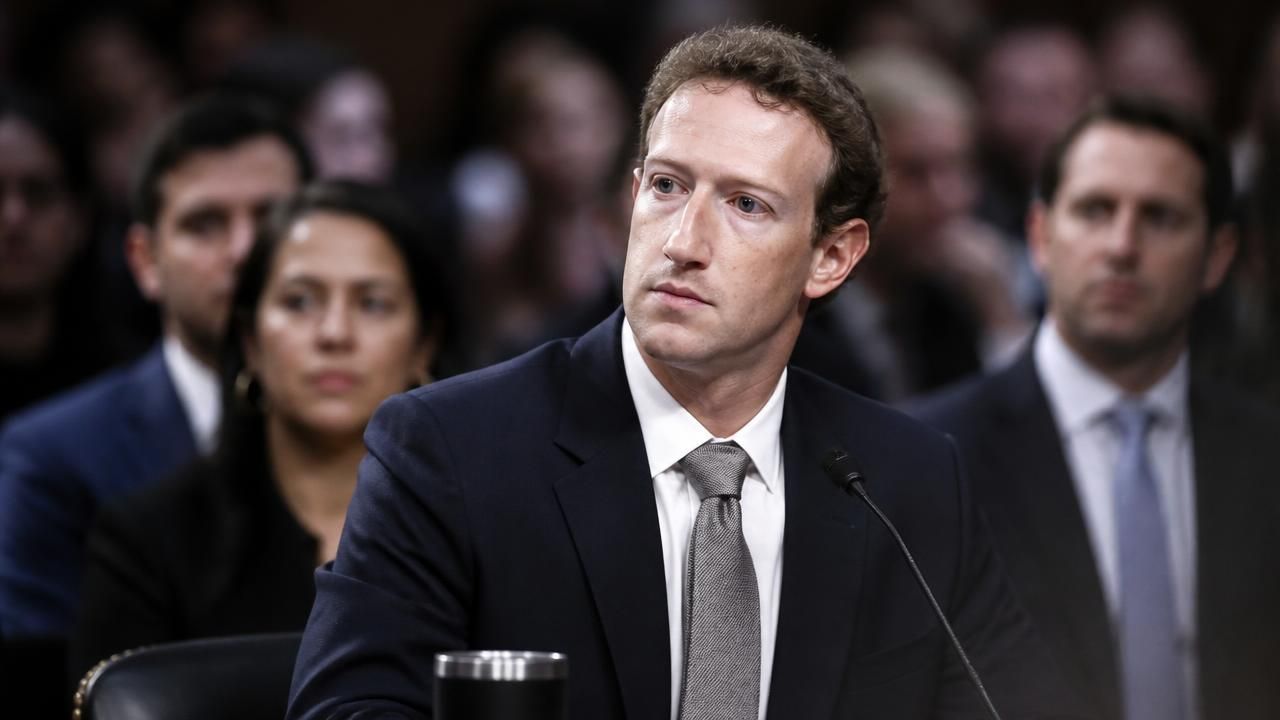
Mark Zuckerberg has spent nearly two decades building the world's most influential social platform, yet a recurring chorus of critics — from tech rivals to columnists to lawmakers — continues to ask a surprisingly simple question: Does he actually understand what he's doing?
The question has taken many forms. "Mark Zuckerberg doesn't understand how to live," declared The Verge, in an essay about Silicon Valley's odd obsession with AI-generated motivational posters. "Mark Zuckerberg doesn't understand free speech in the 21st century," argued The Guardian. The Atlantic ran "Mark Zuckerberg Doesn't Understand Journalism." The New York Times asked, "What Mark Zuckerberg Doesn't Understand About Old People." And after the metaverse's spectacular collapse, Fast Company concluded that Silicon Valley never understood the concept of fun.
This recurring meme has been fueled by a steady stream of missteps, tone-deaf pronouncements, and public clashes — most notably the long-running feud with Elon Musk over the future of artificial intelligence.
The AI Clash: Zuckerberg vs. Musk
In July 2017, the two tech titans engaged in a very public war of words. During a Facebook Live broadcast, Zuckerberg called Elon Musk's doomsday predictions about AI "pretty irresponsible" and dismissed his warnings about a potential AI apocalypse as fearmongering. "I have pretty strong opinions on this," Zuckerberg said. "I think people who are naysayers and try to drum up these doomsday scenarios — I just don't understand it."
Musk fired back on Twitter, writing: "I've talked to Mark about this. His understanding of the subject is limited." That exchange, reported by CNBC, Mashable, Ars Technica, and countless others, became a defining moment in the AI safety debate — one that still echoes today. As Vox noted, the two tech founders were arguing over whether AI is an existential threat or a tool to be embraced.
Years later, Zuckerberg remains steadfast in his optimistic view. At a recent Meta event, he said he was surprised that the "discourse" from AI companies "is so filled with doom," according to Variety. He has also blasted what he calls AI "centralization," opposing a U.S. ban on Chinese models and advocating for open-source development — a stance that puts him at odds with many in the AI safety community.
The Many Critics and Their Frames
The critique is not limited to Musk. Paul Krugman, in his Substack "Meta Thoughts," examined Zuckerberg's approach with skepticism. Wired's cover story argued that "Mark Zuckerberg Believes Only in Mark Zuckerberg," suggesting a reflexive self-assurance that borders on narcissism. Inc. magazine went further, declaring that Facebook's biggest problem wasn't fake news or privacy but "It's Mark Zuckerberg."
Others have focused on his understanding of democracy and public discourse. Siva Vaidhyanathan, writing in The Guardian, accused Zuckerberg of failing to grasp how free speech functions in the digital age — especially when algorithms amplify hate speech and misinformation. The Atlantic's analysis claimed that Zuckerberg treats journalism as a feature to be optimized, not as a cornerstone of democracy. And after the Cambridge Analytica scandal, Zuckerberg admitted to PBS that Facebook "made mistakes," but as Vox observed, he never truly apologized.
"He has consistently refused to recognize the negative externalities of his platform," Vaidhyanathan wrote, "because doing so would call into question his entire worldview."
Congressional hearings only magnified the impression that Zuckerberg doesn't get it — and neither do the people tasked with regulating him. The Guardian's video of senators asking elementary questions about the internet became a viral embarrassment. The Los Angeles Times described how technology baffled an elderly Congress in 2018. Politico, meanwhile, warned that "Democrats still may not understand what they're dealing with" — meaning the enormous power of tech CEOs like Zuckerberg.
The Metaverse, VR, and the Global Ambition
Zuckerberg's grandest failure may be the metaverse. He renamed his company Meta in 2021, predicting a virtual reality future. But the metaverse didn't just flounder — it died, according to critics. Fast Company's post-mortem argued that Zuckerberg and Silicon Valley "don't understand the concept of fun," pointing to sterile virtual worlds that felt like office meetings.
Bloomberg once profiled "Zuckerworld" — Facebook's really big plans for virtual reality — and Wired called his famous VR selfie "a bigger deal than you realize." Yet the promise of a connected virtual universe has yet to materialize. Zuckerberg's willingness to risk live demo failures, as The Verge noted, shows his commitment — but not his competence in understanding why people might prefer the real world.
Philanthropy and the Personal Brand
To hear Zuckerberg tell it, his mission is benevolent. Through the Chan Zuckerberg Initiative, he and his wife Priscilla Chan have pledged billions to scientific research, including $3 billion to "end all disease" and projects like the one National Geographic covered, which in 2017 reported on how "your baby's brain holds the key to solving society's problems." Zuckerberg has also championed immigration reform, such as when he "cared so much about DACA that he actually read the comments" — a Fast Company observation that was as much a joke as a compliment.
But even his personal life has become fodder for the "doesn't understand" narrative. Vanity Fair dissected his shirtless fit pic with mock bewilderment. He collaborated with T-Pain on a "Get Low" remix as an anniversary surprise for Priscilla — a story that Luxurylaunches reported with a tone of bemused disbelief. He once sought to understand the "Zucc" meme, as the Daily Dot reported, leading to an awkwardly self-aware video.
Perhaps the most penetrating critique came from The Verge's essay on why "Mark Zuckerberg doesn't understand how to live." It opens with a rock climber who used AI to create a motivational poster: a bear walking a slackline over a canyon, holding a sign reading "Do cool shit." The essay argues that Zuckerberg's techno-optimism misses the messy, human, unquantifiable things that make life worth living. That's a critique that extends from his AI cheerleading to his metaverse dreams, from his platform's design to his public persona.
What Does Zuckerberg Actually Understand?
For all the criticism, Zuckerberg has shown occasional self-awareness. When asked about the "Zucc" meme, he tried to lean in. He has apologized for some of Facebook's failures, though often in the same breath. His recent AI manifesto, reportedly a wide-ranging document outlining his vision, suggests he still believes he's the one to lead us into the future. But as Jesse Eisenberg — the actor who played Zuckerberg in The Social Network — said, "I'm lying about 90 percent of what I'm talking about in interviews." That line might apply equally to Zuckerberg himself.
What's undeniable is that Zuckerberg now wields power that extends far beyond a social network. As Quartz put it, "Mark Zuckerberg doesn't need to be US president; he can be president of the global world society." He has become a fixture in global politics, whether appearing live with George W. Bush or aligning with other "broligarchs" like Musk and Jeff Bezos in the new Trump term, as Vox reported. The question of whether he understands the consequences of his creations is no longer academic — it's an urgent global issue.
In the end, the most damning critique may be that Zuckerberg understands technology better than he understands humanity. He grasps algorithms, scale, and market dynamics, but not journalism, free speech, community, or even fun. As the AI and metaverse eras accelerate, the public is left to wonder: will he learn — or will his limited understanding define our digital future?