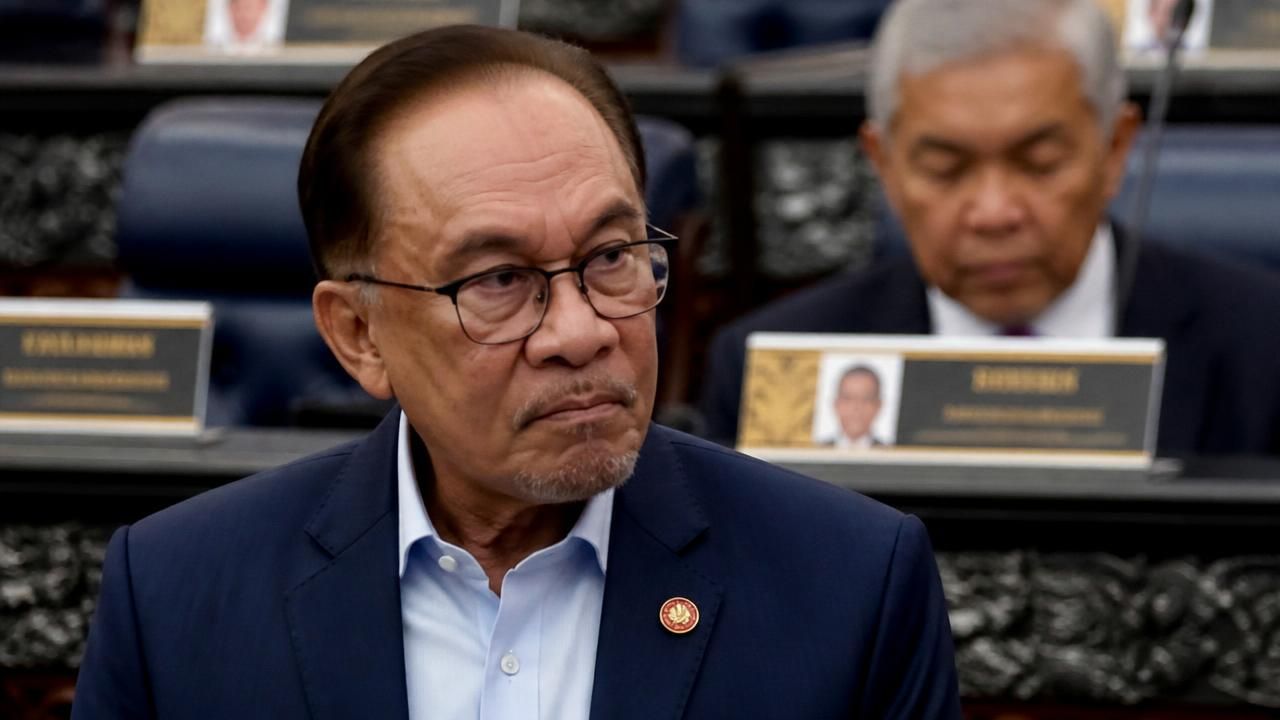
Malaysian Prime Minister Anwar Ibrahim suffered another major political blow this week as a third lawmaker from his own People's Justice Party (PKR) resigned, intensifying speculation about the stability of his unity government. Wong Chen, a veteran parliamentarian who represented the Subang constituency in the state of Selangor, stepped down effective Monday, according to a report from Bloomberg Markets. The resignation adds to a growing wave of defections that is testing Anwar's leadership and raising questions about the durability of his ruling coalition.
Who is Wong Chen and Why Does His Exit Matter?
Wong Chen is a prominent figure within PKR, known for his expertise in economics and international trade. He has served as the Member of Parliament for Subang since 2008, making him one of the party's more seasoned legislators. His resignation is not just a personal career move but a significant political signal. Subang is a largely urban, multi-ethnic constituency in Selangor, one of Malaysia's most prosperous and politically influential states. Losing a seat of this profile could weaken PKR's presence in the country's wealthiest region.
The resignation comes without a stated public reason from Wong Chen, but it is widely interpreted in political circles as a gesture of disillusionment with the current direction of the party and the government. According to the Bloomberg report, he is the third lawmaker to leave PKR this year, indicating an accelerating trend of internal discontent.
A Pattern of Defections
The first two defections earlier in the year set the stage for this latest departure. While their names and circumstances were not detailed in the available sources, the cumulative effect is clear: Anwar's party is hemorrhaging talent. The defections are particularly damaging because they come from a party that was built on the promise of reform and good governance, often espoused by Anwar during his long opposition career. Now that he is in power, he faces the same accusations of political instability that he once directed at his predecessors.
Political analysts suggest that the defections may stem from a variety of factors, including dissatisfaction over policy direction, internal power struggles, or offers from opposition parties. The fact that these are resignations rather than party switches is notable. By resigning, these lawmakers vacate their parliamentary seats, triggering by-elections. This forces the government to defend its majority in closely contested areas, consuming time and resources.
Pressure on the Unity Government
Anwar's government is a fragile coalition of several parties, cobbled together after the 2022 general election produced a hung parliament. He relies on the support of PKR, the Democratic Action Party (DAP), Amanah, and the Malaysian United Democratic Alliance (MUDA), as well as the tacit support of regional parties from Sabah and Sarawak. Any reduction in the number of loyal lawmakers narrows his already slim majority. The prime minister cannot afford to lose many more seats if he hopes to avoid early elections.
The resignation is also a psychological blow. As reported by multiple outlets, including a syndicated piece on AOL and 102.7 WBOW, Anwar is described as 'under pressure amid growing defections.' This framing highlights the narrative that his leadership is being questioned not just by the opposition but from within his own political circle.
The ouster of a third lawmaker within a year is a sign that Anwar's grip on his own party is weakening, even as he tries to project unity on the national stage.
Historical Context
Anwar Ibrahim has been a central figure in Malaysian politics for decades. He was once the deputy prime minister under Mahathir Mohamad, then became the face of the Reformasi movement after his sacking in 1998. He spent years in opposition, leading Pakatan Harapan to a historic election victory in 2018, but that government collapsed in 2020 due to internal defections. Now, as prime minister, he is experiencing the same vulnerability. His government has been marred by controversies over economic recovery, inflation, and ethnic tensions. The recent departures could embolden the opposition, led by the Perikatan Nasional coalition, which has been seeking to portray Anwar's administration as unstable and ineffective.
What's Next for Anwar?
The immediate priority for Anwar is to contain the damage. The party leadership may attempt to negotiate with Wong Chen and other disaffected members, offering positions or policy concessions to prevent further exits. However, the resignation has already taken effect, meaning a by-election for the Subang seat is likely to be held within the coming months. This by-election will be a bellwether for the government's standing among urban voters. A defeat would further erode Anwar's authority and could trigger a chain reaction.
On a broader scale, the defections are part of a volatile period in Southeast Asian politics. While the digital economy and geopolitical shifts dominate headlines, the internal political stability of key nations like Malaysia is critical for the region's investment climate. Although the initial Bloomberg report and other brief references do not explicitly link this event to financial markets, the political uncertainty could affect investor confidence. Malaysia has been trying to attract foreign direct investment, particularly in semiconductors and green energy. A government perceived as unstable may struggle to push through the necessary reforms and budgets.
Regional Perspective
As Bloomberg's ASEAN coverage suggests, the association is watching closely. The resignation of a single lawmaker might seem minor in isolation, but the cumulative effect of repeated defections can destabilize a government and shift policy directions. For now, Anwar retains a working majority, but the math is getting tighter.
Conclusion: A Leadership Test
Wong Chen's resignation is a symptom of a deeper malaise affecting Anwar's coalition. The prime minister must now demonstrate that he can unite his party and govern effectively. The coming weeks will likely see intense behind-the-scenes maneuvering. If he fails to stem the tide, the story could escalate from a steady trickle to a full-blown political crisis. For Malaysians, watching their veteran leaders walk away, the promise of reform that once defined the Anwar era is beginning to feel like a memory.
This article synthesizes reporting from Bloomberg Markets, AOL, and other sources to provide a comprehensive overview of the ongoing political developments in Malaysia.