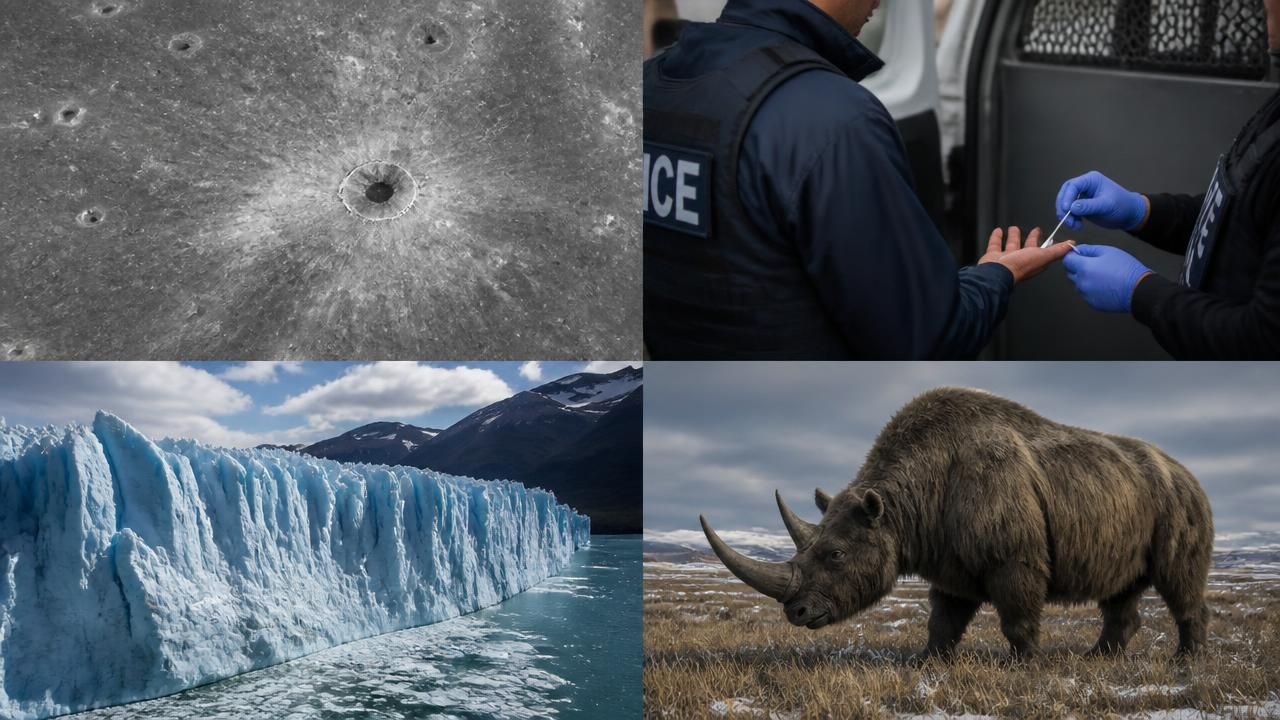
This week, the cosmos delivered a dramatic finale for a forgotten piece of space hardware—a SpaceX rocket that spent seven years drifting through space finally slammed into the moon. Meanwhile, on Earth, new revelations about ICE's DNA collection, fresh research on a critical Antarctic glacier, and a surprising twist in the story of the woolly rhino's extinction all captured headlines. Here's a look at the stories that dominated science and tech discussions this week.
SpaceX Rocket Crashes Into the Moon as Predicted
For weeks, astronomers had been tracking a derelict SpaceX Falcon 9 upper stage, launched in February 2015 from Florida to deploy a space weather satellite. After completing its primary mission, the spent rocket remained in a chaotic orbit, eventually becoming a piece of space junk. On March 4, 2022, it crashed into the far side of the moon, near the equator, at roughly 7:25 a.m. ET, traveling at about 5,700 miles per hour.
The impact was not controlled—the rocket had no guidance system—but it was precisely predicted by scientists. "We were certain it would hit," said an AP report, and NASA's Lunar Reconnaissance Orbiter later captured images of the aftermath, revealing a crater and a moon dust plume. MSN shared images and video showing the crater, with outlets noting that this was one of the few instances of a human-made object unintentionally striking the moon.
"Scientists are certain a wayward SpaceX rocket slammed into the moon as predicted." — Associated Press
While the event was a spectacle for space enthusiasts, it also highlighted growing concerns about space debris and the need for responsible disposal of orbital hardware. The rocket's origin story—launched by SpaceX, then abandoned—raises questions about whose responsibility it is to track defunct objects and mitigate unintended impacts on other celestial bodies.
ICE Collected Nearly One Million DNA Samples Last Year
In a story that sparked alarm over privacy, WIRED reported that U.S. Immigration and Customs Enforcement (ICE) collected nearly one million DNA samples from people in the past year—including young children—and that these samples are stored indefinitely in an FBI database. The collection occurs even for individuals with no criminal convictions, a practice that critics argue violates civil liberties.
The WIRED podcast Uncanny Valley highlighted the issue, noting that the DNA collection often happens during immigration detention. "ICE has been collecting DNA samples of people who have no criminal convictions, including children, which end up in an FBI database indefinitely," the podcast explained. This practice is authorized under a 2005 federal law that was expanded in 2020, but privacy advocates contend it disproportionately targets immigrant communities and that minors' DNA is particularly sensitive.
The story underscores a broader tension between law enforcement powers and individual privacy, with technology amplifying the reach and permanence of such surveillance.
Thwaites Glacier: The 'Cork' That May Pop
In climate science, LiveScience reported on a new study warning that the Thwaites Glacier in West Antarctica—often called the "Doomsday Glacier"—could soon live up to its nickname. The glacier acts like a "cork" holding back the vast West Antarctic Ice Sheet. If it destabilizes, it could trigger a collapse that would raise global sea levels by up to 10 feet (about 3 meters).
The study suggests that warm ocean water is melting the glacier from below, undercutting its ice shelf and causing it to shrink faster than previously estimated. The term "pop" evokes the sudden release of pressure, and researchers fear the glacier could pass a tipping point within decades. Communities along coastlines worldwide would face devastating flooding, making this one of the most critical climate stories of the year.
Woolly Rhinos: Extinction by Climate Change, Not Humans
BBC Newsround reported on a new study that challenges the long-held belief that human hunting drove woolly rhinos to extinction. Instead, research suggests that climate change was the primary culprit. The study, which analyzed ancient DNA and climate models, found that the woolly rhino's decline began well before humans became a major presence in their habitat, and that the warming climate at the end of the last Ice Age shrank the cold, dry grasslands they depended on.
"Woolly rhinos became extinct because of climate change," the study concludes. This finding adds a cautionary note for modern times: as climate change accelerates, species today may face similar challenges, but with the added pressure of human activity. The woolly rhino's fate serves as a reminder of how quickly ecosystems can unravel when climate shifts beyond what species can tolerate.
The AI Backlash Grows
Finally, as WIRED's podcast noted, the backlash against artificial intelligence continues to gain momentum. From algorithmic bias to privacy concerns and the environmental cost of training large models, AI's negative effects are drawing increasing scrutiny. Just as the space industry must reckon with space debris, and governments must balance security and privacy, the tech sector must confront the unintended consequences of its creations. These stories—a crashing rocket, pervasive DNA collection, melting glaciers, and extinct rhinos—all share a common thread: the profound impact of human activity on the world, and the urgent need for responsible innovation.
As this week's news demonstrates, the consequences of our decisions—whether leaving a rocket in space, collecting biometric data, or burning fossil fuels—can ripple across worlds and generations. The question is whether we'll learn from these warnings before it's too late.