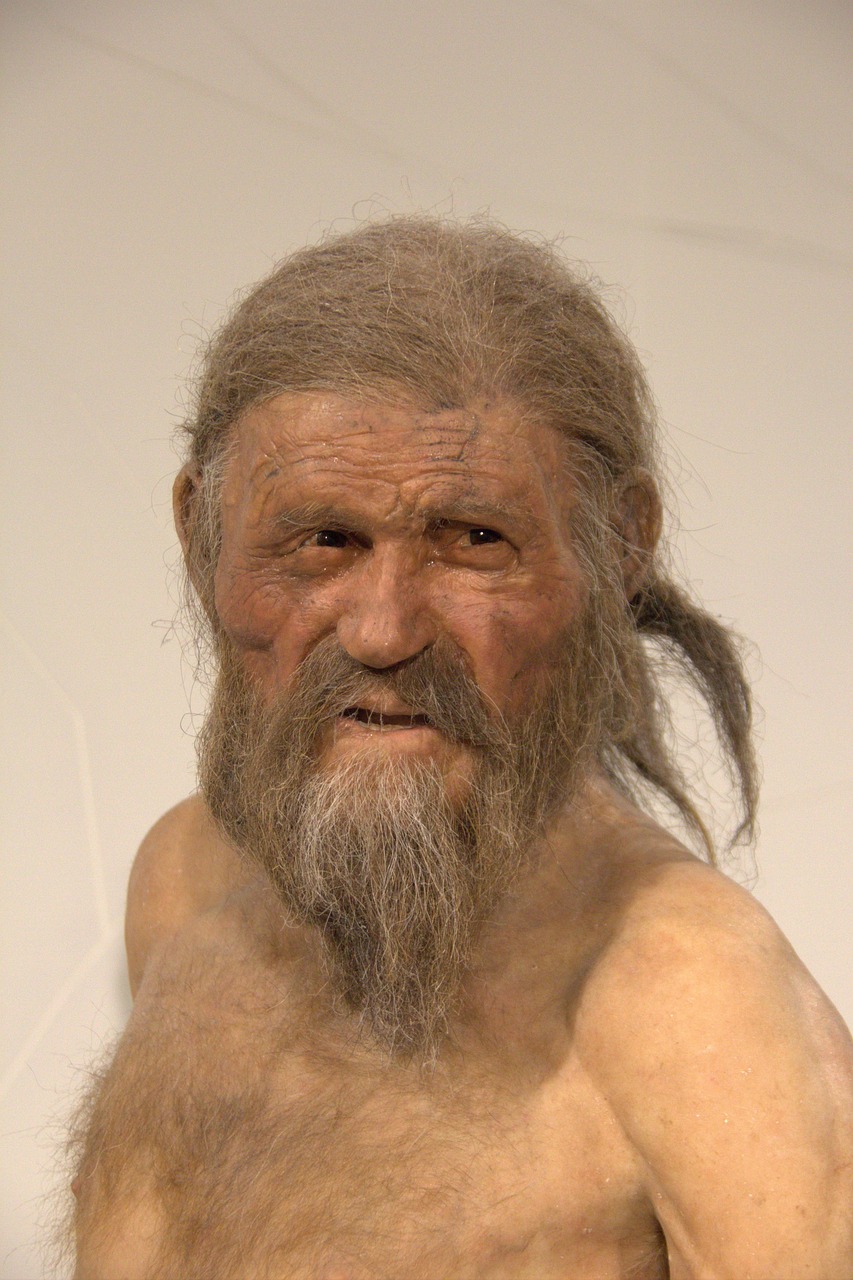
More than 5,000 years after he was felled by an arrow in the Ötztal Alps, Ötzi the Iceman continues to astonish. Researchers probing the famous mummy have discovered unexpected traces of life—some ancient, some modern—that have opened new windows into the past and even produced a loaf of bread. A pair of new studies reveals that Ötzi's body harbors ancient gut microbes and cold-loving yeasts, while a refined genetic analysis paints a more detailed picture of the man himself.
Unexpected life on a prehistoric corpse
In a study published by Science Daily, scientists announced they had successfully separated the microorganisms that lived in Ötzi's body during his lifetime from those that arrived after his death. This painstaking process uncovered remnants of his original gut microbiome alongside strains of yeast that appear to have survived in the glacier alongside his body for millennia.
"Ötzi is still hosting a remarkable mix of ancient and modern microorganisms," the researchers noted.
The discovery is particularly striking because the 5,300-year-old mummy was found in 1991 in a melting glacier at the border of Austria and Italy, and has been preserved in cold storage ever since. The presence of ancient bacteria challenges assumptions about how long such organisms can survive.
Interestingly, some microbes found on the body may have colonized it much later, potentially feeding on chemicals used to preserve the mummy. That finding, reported by Discover Magazine, suggests that even carefully curated museum specimens are dynamic ecosystems.
From mummy's gut to sourdough loaf
Perhaps the most whimsical outcome of this research is that scientists have baked bread using yeast recovered from Ötzi's guts. CBS News and The Guardian both reported on the feat, which involved isolating a strain of yeast known as Saccharomyces cerevisiae—the same species used in modern bread and beer—from the mummy's intestinal tract.
The researchers used the ancient yeast to ferment a sourdough starter, ultimately producing a loaf of bread. While it is unlikely to appear in bakeries anytime soon, the experiment demonstrates that the yeast remained viable after millennia, a testimony to its resilience. The bread itself was described as having a distinct, dense texture, though its taste was not the primary focus.
This creative use of ancient microorganisms bridges microbiology and gastronomy, and has captured public imagination. It also raises ethical questions about bringing ancient life forms back, even inadvertently.
A new look at Ötzi's genetic profile
Beyond the microscopic life on his body, Ötzi's own genome has been re-examined with modern sequencing techniques. Popular Mechanics and Ars Technica both reported on surprising findings: the Iceman was likely balding, stocky, and had dark skin and brown eyes. These traits run counter to the earlier reconstructions that depicted him as a hirsute, pale-skinned wanderer.
"Ötzi was a farmer with ancestry from the Anatolian region, not a nomadic hunter as once thought," the genetic analysis indicates. He also possessed genetic variants associated with male-pattern baldness and an increased risk of cardiovascular disease, adding nuance to our understanding of prehistoric Europeans.
Key findings from the two studies
- Ancient gut bacteria and cold-adapted yeasts were identified on Ötzi's body, some dating to his lifetime.
- Preservation chemicals may have nurtured a second wave of microbial growth post-excavation.
- Yeast from the mummy successfully fermented dough, yielding a sourdough bread.
- Updated DNA analysis shows Ötzi was balding, with dark skin and a farmer's lifestyle.
What these discoveries tell us
The findings underscore that ancient remains are not inert artifacts; they are biological archives that preserve complex ecosystems. Modern scientists are learning to read these archives with increasing precision, separating ancient DNA from contamination and extracting usable organisms from unlikely places.
Moreover, the ability to revive a yeast strain after 5,000 years has implications for biotechnology, from food science to the production of novel compounds. It also raises the possibility that other ancient organisms—perhaps even pathogens—could be resurrected, prompting discussions about biosafety and ethics.
As for Ötzi, he continues to offer an unparalleled glimpse into life and death in the Copper Age. Each new study peels back another layer, revealing what was lost in the glacier for millennia and what can still be brought back to life.