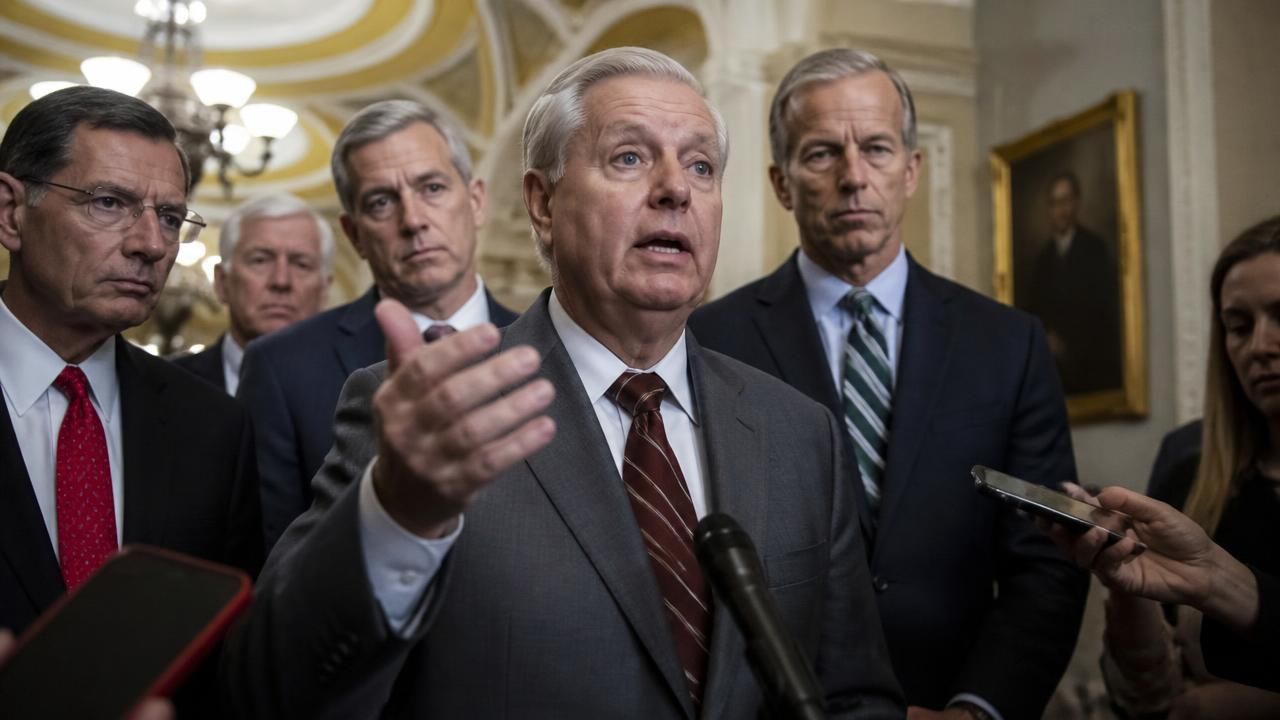
The Senate has overwhelmingly passed a sweeping sanctions bill targeting Russia and Iran, a measure that represents the final legislative mission of the late Sen. Lindsey Graham (R-S.C.). After months of stalling, the legislation cleared the chamber in a bipartisan vote, handing President Trump new tariff authority aimed at crippling Moscow's energy revenues and punishing Tehran for its support of Russia's war in Ukraine.
A Tribute to Graham's Final Mission
The bill, which had been championed by Graham for months before his unexpected death in July, is now being advanced as a tribute to the senator's relentless push to confront America's adversaries. NPR Politics noted that the legislation is "meant to stifle Russia's economy by allowing for tough new tariffs against major importers of Russian energy." The measure passed with the kind of overwhelming support that Graham often commanded in foreign policy debates, with senators from both parties praising it as a fitting memorial.
"The bill is meant to stifle Russia's economy by allowing for tough new tariffs against major importers of Russian energy."
CBS News described the bill as "long-stalled" but said the renewed push after Graham's death gave it new momentum. MSNBC similarly framed it as "Graham's final mission," noting that senators were eager to honor a colleague who had made the fight against Russian aggression a personal crusade.
Key Provisions: Tariffs, Iran, and Presidential Power
Central to the legislation is a novel enforcement mechanism: rather than imposing direct sanctions on Russia, the bill authorizes the president to impose steep tariffs on countries that continue to import Russian energy. This gives Trump significant new trade leverage, effectively allowing him to penalize major buyers such as China and India unless they reduce their purchases of Russian oil and gas.
The bill also includes sanctions on Iran, a provision that drew resistance from some Democrats during negotiations. The Washington Examiner reported that "Democrats resist Trump's push to add Iran to bipartisan Russia sanctions bill," but the final version included both countries, reflecting a broader bipartisan consensus on confronting Tehran. The New York Post headline highlighted the dual nature of the bill: "Senate passes late Lindsey Graham's Russia, Iran sanctions bill."
The measure grants the president expansive tariff authority, a feature that both supporters and critics have scrutinized. Supporters argue it gives the White House flexibility to respond to shifting global energy markets, while detractors worry it could lead to a trade war or undermine existing alliances. Reuters, in a piece titled "Tariff provisions could doom long-awaited Russia sanctions bill," cautioned that the same provisions might create political hurdles. Yet in the end, the Senate moved forward.
Political Hurdles and Democratic Resistance
The road to passage was not smooth. The New York Times reported on a "Dispute Over Trump Tariffs Snarls Russia Sanctions Deal," indicating that senators struggled to reconcile the desire for strong sanctions with concerns about handing the president untrammeled tariff powers. Some Democrats were uneasy about including Iran, fearing that the focus on Tehran might dilute the message to Moscow. Others worried that the tariff authority could be used arbitrarily.
CNN, writing before the vote, noted that the bill "faces hurdles in the Senate despite renewed push after Graham's death." Those hurdles included procedural objections and lingering disagreements over the scope of the tariffs. But ultimately, the desire to honor Graham—and to act against Russian aggression—overcame those obstacles. The Hill reported that the Senate "overwhelmingly passes Russia sanctions bill," and the bill now moves to the House for consideration.
How Different Outlets Frame the Story
The coverage of this bill reflects varying editorial priorities. NPR's headline zeroed in on Graham's personal role: "Senate passes Russia sanctions bill that was long championed by Lindsey Graham." NBC News described it as a tribute to the late senator. In contrast, Reuters focused on the potential pitfalls, emphasizing the tariff provisions that could complicate the bill's future. The New York Post highlighted the broader scope by including Iran in the headline, while the Washington Examiner drew attention to Democratic resistance.
These differences illustrate the multifaceted nature of the legislation: it is at once a legacy-defining tribute, a major trade policy shift, and a geopolitical signal to two of America's most formidable adversaries. Each outlet's framing speaks to a different set of concerns—from national security to economic policy to partisan maneuvering.
Implications for Russia, Iran, and Global Trade
If enacted into law, the bill would significantly alter U.S. sanctions policy. By targeting importers of Russian energy rather than Russian entities directly, it seeks to mitigate Russia's ability to finance its war machine through oil sales. This approach echoes earlier U.S. efforts to pressure companies like Nord Stream 2 and reflects a broader strategy of economic coercion.
The inclusion of Iran, meanwhile, ties the bill to a wider confrontation with Tehran. Iran has been a key supplier of drones and other military hardware to Russia, and the sanctions aim to curtail that relationship. For the Trump administration, the tariff powers represent a new tool to reshape trade relationships, though they also risk straining relations with allies who might view the tariffs as protectionist.
Graham's Legacy
Lindsey Graham was a vocal hawk on Russia and Iran, often breaking with his own party's isolationist wing to advocate for robust international engagement. His death left a void in the Senate, and this bill is in many ways a testament to his leadership. As the legislation moves through Congress, senators on both sides are likely to invoke his memory, framing the vote as a continuation of his work.
The bill's passage is a significant moment, but it is not the end of the story. The House must now take up the measure, and any differences would need to be reconciled. Meanwhile, foreign capitals—particularly Moscow and Tehran—will be watching closely to see whether the United States follows through on this newfound trade weaponry. For now, though, the Senate has spoken, and Graham's final mission is one step closer to the finish line.