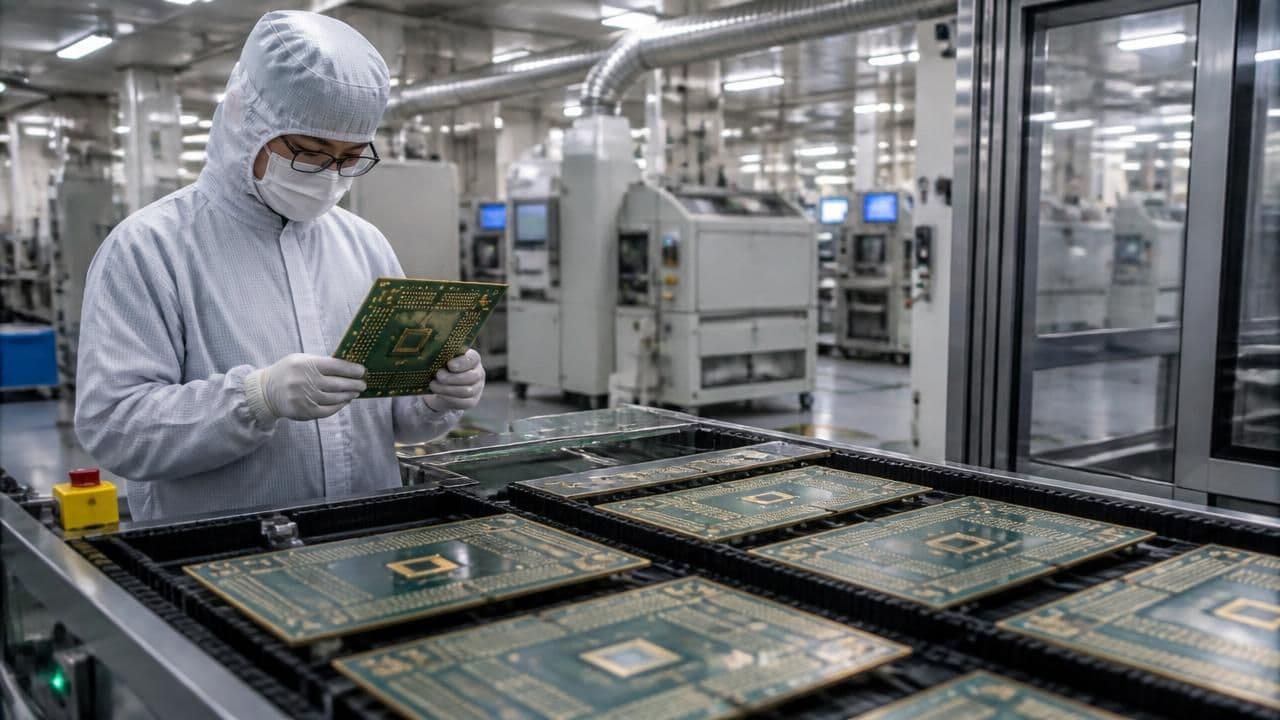
In a bold move that could reshape the global AI landscape, Chinese tech giant ByteDance is training a massive AI model with up to 10 trillion parameters—three times larger than Moonshot's Kimi K3, the biggest Chinese model released so far. This ambitious effort, reported by Ars Technica and The Next Web, aims to rival Anthropic's cutting-edge Mythos system, signaling that Chinese companies are rapidly closing the gap with top US AI labs.
The model is currently in pre-training, a stage that typically spans three to six months, according to three people familiar with the matter. The exact size will only be determined later, but the sheer scale suggests ByteDance is chasing the frontier of AI capability. As one insider told Ars Technica, the company hopes to fine-tune and release the model if all goes well, though the path is fraught with technical and geopolitical challenges.
The Cloud Loophole: Chinese Entities Tap US Chips via AWS
While ByteDance's training hinges on massive compute, Reuters reported that Chinese entities are increasingly turning to Amazon Web Services (AWS) and other cloud providers to access high-end US chips and AI capabilities, circumventing export controls that restrict direct sales. This workaround allows Chinese firms to rent powerful Nvidia GPUs and other restricted hardware through cloud data centers located outside China, effectively bypassing US restrictions while keeping Chinese AI ambitions alive. This strategy is not unique to ByteDance; it reflects a broader pattern where Chinese developers tap into US cloud infrastructure to train and deploy frontier models.
Distillation Controversy: Anthropic Accuses Alibaba, ByteDance Absolves Itself
Amidst this race, model distillation—a technique where smaller models learn from larger, more capable ones—has become a flashpoint. BBC News reported that Anthropic has accused Chinese rival Alibaba of illicitly extracting AI capabilities through distillation, a charge that could escalate tensions between US and Chinese AI firms. Yet ByteDance stands apart. As The Next Web noted, ByteDance banned distillation of rival models in 2023, and it is the one major Chinese lab that Anthropic did not accuse. This deliberate ethical stance has earned ByteDance a measure of credibility in the frontier research community, even as it pushes its own massive training runs.
ByteDance's Founder Rejects the Shortcut
MSN reported that ByteDance's founder, Zhang Yiming, has personally refused to take the distillation shortcut, insisting instead on original research and development. This principled position is rare in an industry where speed often trumps methodology. By avoiding distillation, ByteDance is betting on the long-term value of proprietary innovation, even if it means higher costs and longer timelines. The founder's stance also helps explain why Anthropic has not named ByteDance in its accusations, despite the company's enormous resources and technical ambition.
Implications for the AI Race
The race to build ever-larger models is not just about bragging rights; it has profound implications for AI safety, compute efficiency, and global technological dominance. If ByteDance succeeds, its 10-trillion-parameter model could challenge the capabilities of Anthropic's Mythos, potentially driving down costs and accelerating applications in language understanding, generation, and reasoning. However, such models require exorbitant amounts of energy and data, raising environmental and ethical concerns.
- Scale: ByteDance's model would dwarf most existing systems, with 10 trillion parameters compared to an estimated 1.5 trillion for GPT-4-like models.
- Compute: Training requires tens of thousands of GPUs; cloud access is now a critical enabler for Chinese firms.
- Distillation: Anthropic's accusations against Alibaba highlight growing distrust; ByteDance's clean record sets it apart.
- Regulation: US export controls are being bypassed via cloud, complicating policy enforcement.
Expert Perspectives and Outlet Frames
Different outlets frame the story in distinct ways. Ars Technica focuses on ByteDance's competitive bid to rival Anthropic, framing it as part of the US-China technological race. The Next Web emphasizes the sheer scale of the model and ByteDance's clean distillation record. Reuters highlights the cloud backdoor, underscoring the inadequacy of current export controls. BBC News centers on Anthropic's accusations against Alibaba, placing ByteDance's behavior in a contrasting light. Together, these perspectives paint a complex picture of an industry where innovation, surveillance, and geopolitics are deeply intertwined.
"ByteDance is training a model with as many as 10 trillion parameters—three times larger than Moonshot's Kimi K3, the biggest Chinese model released to date." — Ars Technica
As the AI frontier expands, every major lab is scrambling for an edge. ByteDance's massive investment in original research, coupled with its ethical stance on distillation, could position it as a leader in the next wave of AI breakthroughs. Yet the road ahead is uncertain: compute constraints, international sanctions, and internal technical hurdles could derail even the most ambitious plans. For now, the world watches as ByteDance lays the foundation for what could be the largest AI model ever built—and a symbol of China's unyielding pursuit of technological sovereignty.
With the US tightening export controls and China investing billions in domestic chip research, the race to the top of the AI ladder is escalating. Whether ByteDance's gamble pays off will be one of the defining questions of the decade, with consequences for economics, security, and the future of human-machine interaction.