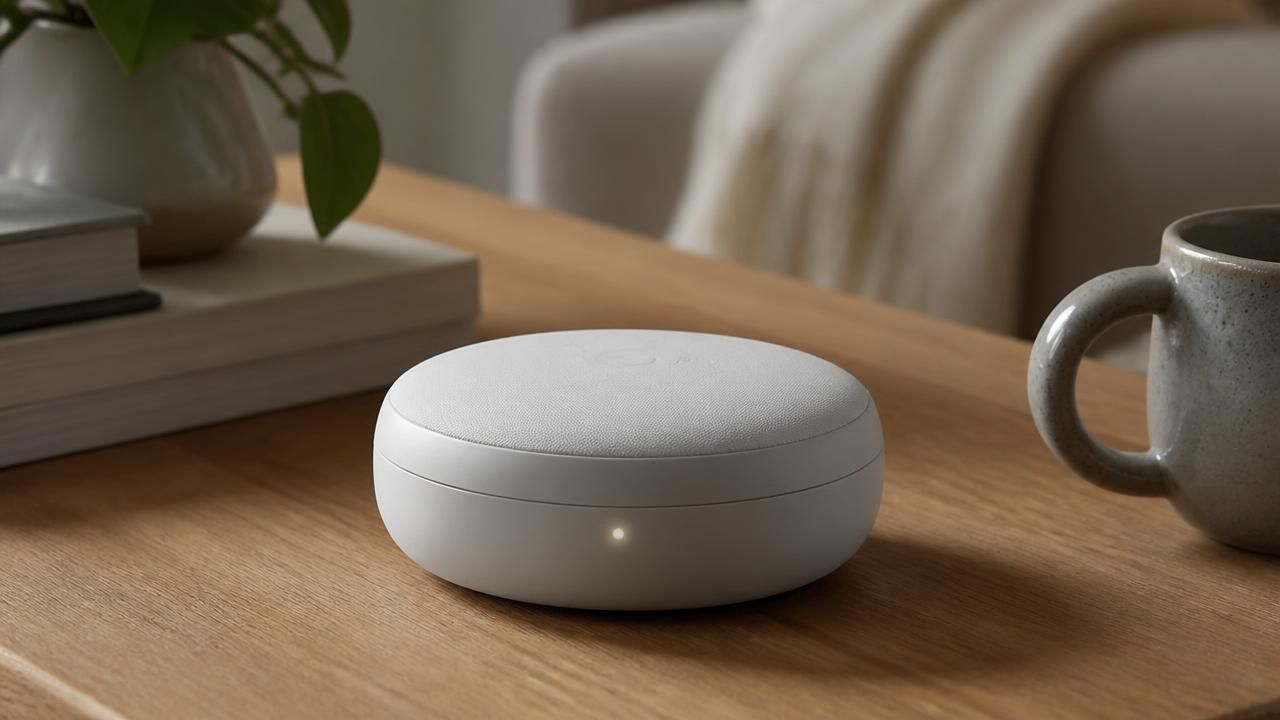
In the ever-evolving landscape of artificial intelligence hardware, a new collaboration is poised to redefine how we interact with AI. According to a flurry of reports from multiple outlets, OpenAI and legendary Apple designer Jony Ive are developing a device that is “essentially a smart speaker without a display” — a battery-powered, doughnut-shaped gadget roughly the size of a hockey puck. Slated for a 2027 launch with a price tag exceeding $300, the device is already generating buzz, skepticism, and a host of questions about privacy, personality, and the future of human-AI interaction.
The Device: Form and Function
Bloomberg reporter Mark Gurman, writing in a recent newsletter, has provided the most detailed look yet at the project. The device, which Gurman says “will have a unique look, complete with moving parts,” is designed to be carried around the home. It will reportedly feature lights, a camera system, and other sensors, but notably lacks a traditional screen. Instead, it uses physical movement and visual cues to communicate with users. Some moving parts will “move on their own to show when the device is responding or interacting with the user,” adding a tactile, almost animate quality to the experience.
The choice of a puck-like shape is deliberate. It deviates from the existing smart speaker market, dominated by cylindrical or hockey-puck-like devices from Amazon and Google, but with a key difference: this is not a passive cylinder waiting for a wake word. The device is engineered to feel alive, a concept that aligns with Ive's design philosophy of creating products that feel personal and approachable. According to a report from The Next Web, the device is “built to feel alive,” with moving parts that mimic the subtle motions of a living creature.
Battery-Powered and Portable
Unlike most smart speakers that require a constant power source, this device is battery-powered. That portability means it can be easily moved from room to room, or even taken on the go. This is a significant design choice, suggesting that OpenAI is positioning the device as a companion rather than a fixed household appliance. The absence of a display further reinforces this: interactions are meant to be voice-led and context-aware, with the device relying on its camera and sensors to understand its surroundings.
Design and Personality: The Jony Ive Touch
Jony Ive, the designer behind the iMac, iPod, iPhone, and many other iconic Apple products, left the company in 2019 to found LoveFrom, his own design studio. His collaboration with OpenAI, led by CEO Sam Altman, was announced in late 2023, but details have been sparse. The latest reports suggest that the project has faced internal debates over the device's “personality” and how it should interact with users.
“Sources familiar with the project say that design discussions have centered on making the device feel like a character, not just a tool.”
One report from msn.com cites sources saying that the project is “stalling over privacy and its 'personality.'” The device's camera and sensors raise obvious privacy concerns, especially in the home environment. How will OpenAI ensure that the device is not constantly recording? What happens to the data it collects? These are questions that are reportedly causing friction between the AI team and the design team, with some insiders worried about the implications of a device that can watch and listen continuously.
Privacy: A Double-Edged Sword
Privacy experts have long warned about the dangers of always-on devices. Amazon's Alexa and Google Home have faced audits and lawsuits over recordings. OpenAI, already under scrutiny for how it handles user data in ChatGPT, will need to be especially transparent. The company has not commented on the specifics, but the reports indicate that they are “working to address these concerns, possibly through on-device processing and user-controlled physical shutters for the camera.” One source told Bloomberg that the device will include a “privacy mode” that disables the camera and requires a physical button to re-enable.
Market Buzz: Prediction Markets Weigh In
Despite the lack of official confirmation, the tech community is rife with speculation. Prediction markets, where people bet on future events, have seen significant activity regarding the device. Questions range from the exact launch date to whether it will support third-party apps. One analyst noted that the buzz is a testament to the star power of both OpenAI and Jony Ive.
- What is it? A screen-free smart speaker with moving parts, lights, camera, and sensors.
- When will it launch? Reportedly 2027, with a price above $300.
- Who is making it? OpenAI and Jony Ive's LoveFrom.
- Why does it matter? It could signal a new era of AI hardware that feels alive and intuitive.
- What are the risks? Privacy concerns and uncertain “personality” could delay or hinder adoption.
Implications for the Tech Industry
If these reports are accurate, OpenAI is not just building a gadget; it is attempting to define the physical interface for its AI ecosystem. Unlike smartphones or smart speakers that are extensions of other platforms, this device is designed to be the interface itself. It represents a bet that the future of AI is not on a screen but in the ambient, physical world around us.
Challenges Ahead
The project is not without its challenges. Reports indicate that the development has been “stalling” at times, with disagreements over the device's personality traits. Should it be cheerful and subservient, like a friendly assistant? Or more neutral and professional, like a utility tool? And how does it handle ambiguous commands? These are not trivial design questions; they strike at the heart of how users will perceive and trust the AI.
Furthermore, launching in 2027 puts OpenAI in a race with other tech giants who are also exploring AI-first devices. Meta has its smart glasses, Apple is reportedly working on a home robot, and Google has been integrating AI into its existing hardware. OpenAI's advantage lies in its cutting-edge AI models, such as GPT-5 (expected by then), but the hardware game requires a different set of skills. That's where Jony Ive's design pedigree becomes crucial.
The Verdict
The idea of a hockey puck-sized AI companion is both intriguing and unnerving. If done well, it could feel like a helpful, animated sidekick that blends into your home. If done poorly, it could be another surveillance device that spies on you. The involvement of Jony Ive suggests that the product will at least be aesthetically and tactilely pleasing — a hallmark of his career. But beauty alone won't solve the deeper questions of privacy and trust.
For now, the world watches and waits. The synergy between OpenAI's AI prowess and Ive's design genius holds immense promise, but as the reports indicate, getting it to live up to that promise is no small feat. As one industry analyst put it, “This is not just a product; it's a statement about how we want to live with AI.” The next few years will reveal whether that statement is one we're ready to hear.
Sources: The Verge, MSN, The Next Web