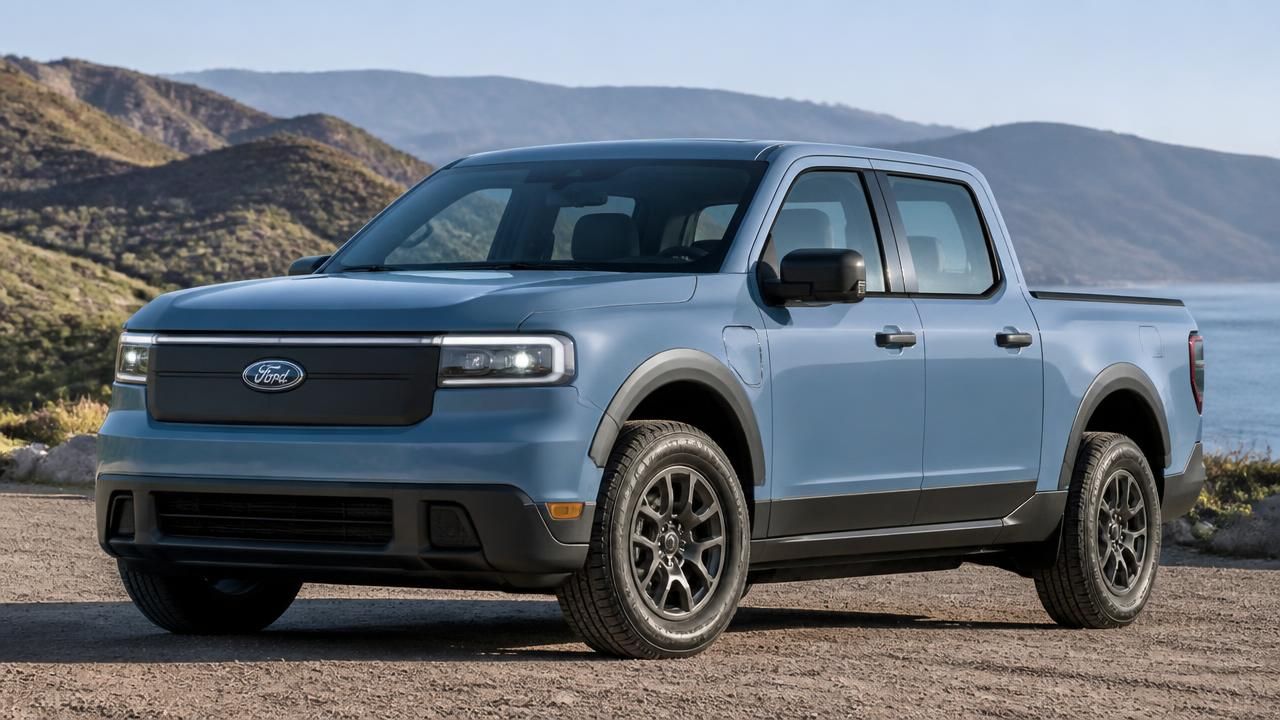
Ford Motor Company has taken a significant step in its electric vehicle reinvention with the announcement of its upcoming affordable pickup truck: the Ford Fathom. Priced from $28,350, the four-door EV represents the first fruit of a secretive California-based skunkworks project tasked with rethinking Ford's approach to electrification from a clean sheet of paper. The name, which evokes depth and exploration, signals a deliberate break from the past as the company seeks to recover from the lukewarm reception of its F-150 Lightning and compete in a rapidly changing global EV market.
A Strategic Pivot After the Lightning's Stumble
Ford's first major EV push centered on electrifying its best-selling F-150 pickup, the Lightning. While initially greeted with enthusiasm, the Lightning has faced slowing sales, high prices, and production challenges. Industry analysts point to a combination of factors, including range anxiety, charging infrastructure gaps, and a price point that remained out of reach for many traditional truck buyers. "The Lightning proved that Ford could build an electric truck, but it didn't prove that the mass market was ready to pay a premium for one," said auto industry analyst Sarah Chen of Mobility Research Partners.
Recognizing the need for a more radical rethink, Ford established a covert skunkworks team in California, staffed by engineers and designers brought in from both traditional automotive backgrounds and Silicon Valley tech firms. Their mandate was to ignore existing conventions and develop a universal EV platform that could underpin a range of vehicles at affordable price points, taking direct inspiration from the rapid innovation coming out of Chinese EV startups and other clean-sheet designs.
The result is the UEV platform (Universal Electric Vehicle), which will serve as the backbone for Ford's next generation of EVs. The first vehicle to use it is the Fathom, a compact yet versatile four-door pickup designed to offer utility and everyday usability at a price that undercuts many rivals.
Zonal Architecture: A Leap in Efficiency
Central to the Fathom's design is a new zonal architecture for its electronics. Traditional vehicles rely on dozens of decentralized electronic control units (ECUs) distributed throughout the car, each responsible for a specific function—from window motors to braking systems. This approach results in hundreds of individual wiring harnesses, adding weight, cost, and complexity.
Ford's new architecture consolidates these functions into a handful of powerful domain computers, each controlling multiple systems within a specific zone of the vehicle. This dramatically reduces the amount of wiring needed—by some estimates, by more than half—and allows for over-the-air software updates to redefine features long after purchase. "The zonal approach isn't just about cost savings," explained EV engineering consultant Markus Vogt. "It's a fundamental shift toward viewing the car as a software platform, which is exactly how companies like Tesla and China's BYD are building vehicles."
The Fathom: Affordable Utility Meets New Thinking
Details about the Fathom's specifications remain scarce, but the announced starting price of $28,350 puts it directly in the crosshairs of budget-conscious buyers and represents a significant undercut of most existing electric trucks. The F-150 Lightning, by contrast, starts around $55,000. Even the compact Chevrolet Colorado EV and Rivian R1T are far more expensive. At this price, the Fathom undercuts many gasoline-powered compact trucks as well, making it a potentially disruptive force in the market.
While Ford has not released battery capacity, range, or performance figures, the company has indicated that the Fathom will prioritize efficiency and practicality over brute torque. It is expected to offer a range competitive with other affordable EVs, likely in the 250-300 mile bracket, and will support fast charging. The four-door cabin is designed to accommodate five adults, with a bed sized for weekend projects and light commercial use.
"This is Ford saying, 'We heard the critics, and we're doing something different.' The Fathom is a bet that American buyers want an EV that's a genuine value proposition, not just a showcase of technology." — industry analyst Sarah Chen
The name "Fathom" itself is a nautical term denoting depth (one fathom equals six feet). It suggests a vehicle that can go deeper—into trails, into communities, and into the future. Ford's marketing team is likely banking on the name's evocative resonance while also conveying a sense of capability and exploration.
Learning from the Global Market
Ford's decision to study Chinese EV startups is telling. In China, the world's largest EV market, manufacturers like BYD, NIO, and XPeng have rapidly iterated on vehicle architectures, battery technology, and in-car digital experiences. Often, these vehicles achieve cost advantages through vertical integration and a relentless focus on manufacturing efficiency. "The Chinese playbook is to build simpler, more software-defined vehicles that are cheaper to produce and easier to update," noted Vogt. "Ford's skunkworks appears to have internalized that approach."
The Fathom's zonal architecture is a direct translation of that philosophy. By reducing physical complexity, Ford not only cuts costs but also enhances reliability and enables faster software development cycles—a key differentiator in a market where tech features increasingly drive purchase decisions.
Implications for Ford and the EV Market
The success of the Fathom is crucial for Ford's future profitability in EVs. The company has invested heavily in EV production capacity but has yet to achieve consistent unit profitability on its electric lineup. An affordable, high-volume model like the Fathom could change that narrative, especially if it can be sold in large numbers to commercial fleets and individual buyers alike.
Ford's aggressive pricing also sends a message to competitors, both traditional automakers and startups. As the EV market becomes increasingly crowded, price is becoming the key battleground. A $28,350 electric truck could force others to reevaluate their pricing strategies or risk being left behind.
Potential Challenges Ahead
Despite the optimism, the Fathom faces significant hurdles. Ford will need to manage battery supply chains and production ramp-up without the cost overruns that have plagued other EV launches. It will also need to convince skeptical truck buyers that an electric workhorse can be just as reliable and capable as its internal-combustion predecessors. The lack of traditional truck attributes, such as high towing capacity and off-road ruggedness, could be a stumbling block. However, Ford has a long history of building tough, capable vehicles, and the Fathom's design is expected to reflect that heritage.
Dealerships will also require training and infrastructure upgrades to service the new platform. And the federal EV tax credit, currently available on many EVs, could further lower the effective price of the Fathom to under $21,000 for qualifying buyers—a figure that would be truly transformative for EV adoption.
What's Next?
Ford is expected to officially unveil the Fathom in the coming months, with production slated to begin next year. The vehicle will likely be built at one of Ford's U.S. plants, with the company emphasizing domestic manufacturing and job creation.
The broader UEV platform will underpin a range of future vehicles, including a compact SUV and possibly a small van for commercial fleets. Ford has also hinted that the platform is designed to accommodate different battery chemistries and drive configurations, allowing for flexibility as technology evolves.
- Starting price: $28,350 (before any tax incentives)
- Body style: Four-door pickup truck
- Platform: New UEV (Universal Electric Vehicle) architecture
- Electronics: Zonal architecture with centralized computing
- Development: Ford's California skunkworks team
The Fathom represents more than just a new model—it's a litmus test for Ford's ability to adapt to the electric era. If the company can deliver on its price and quality promises, it could become the industry's benchmark for accessible EVs, proving that the transition to electric doesn't have to be a luxury purchase.
As one auto executive put it on condition of anonymity, "The Fathom is Ford's attempt to thread the needle: a vehicle that's truly affordable, genuinely useful, and built for the future. If it works, it could reshape the market. If it fails, it will be a costly lesson."
For now, the automotive world is watching with a mixture of skepticism and anticipation. Will the Fathom live up to its name and find the depth of demand that Ford is hoping for? Only time and the market will tell.