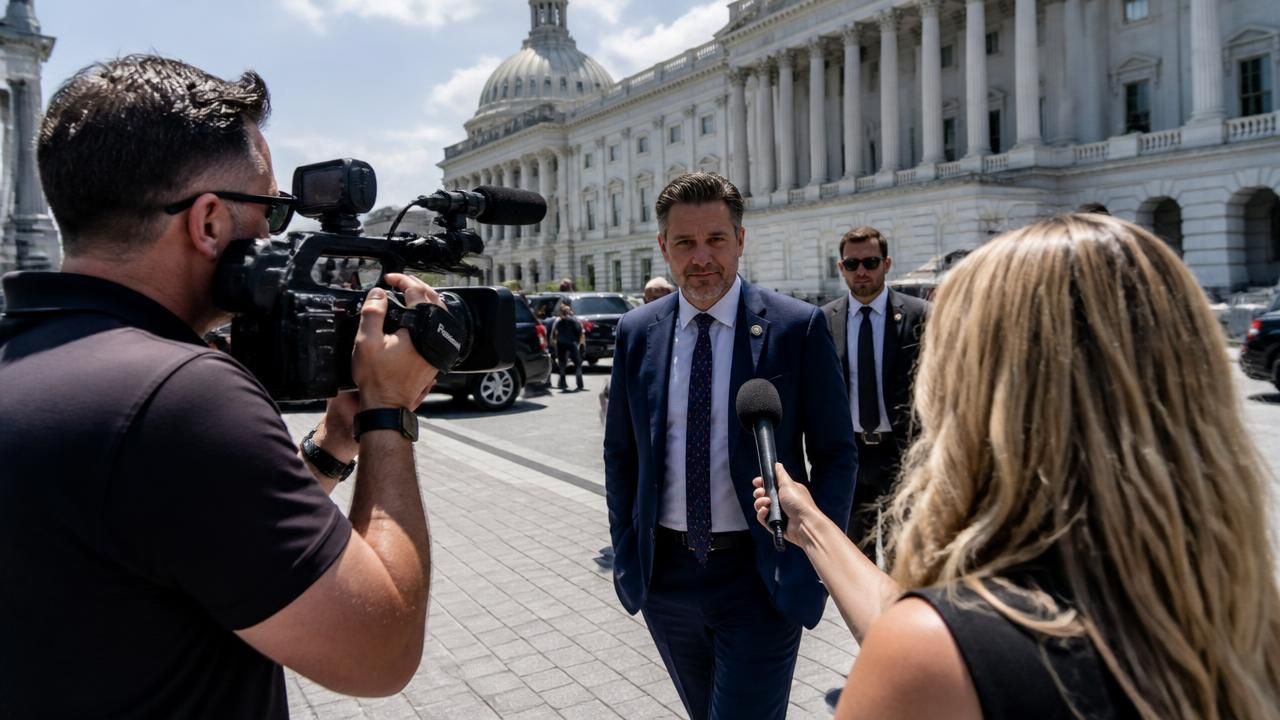
When TMZ launched its Washington, D.C. bureau in April, it signaled a new era in political coverage. The online tabloid, known for breaking celebrity scandals and flashing camera bursts, is now training its lens on the halls of Congress. With a two-man crew and a fleet of tipsters, TMZ is approaching lawmakers as if they were Hollywood starlets—tracking their movements, probing their personal lives, and turning floor votes into watercooler gossip. NPR notes that the bureau's "unconventional reporting style" has already made waves on the Hill, and The New York Times describes how TMZ is siccing its tipsters on a "new breed of celebrity villain: Members of Congress."
The move has been met with a mix of amusement and unease. Vanity Fair cheekily highlights TMZ DC's signature tough questions—"Whither a gay president? Are Katy Perry and Justin Trudeau going the distance?"—while The Bulwark observes that TMZ DC "knows it's not above what it covers." The staff started with a flourish, as TMZ itself announced "TMZ DC Staff Starts Today!!!" with the kind of breathless enthusiasm usually reserved for a red-carpet premiere.
The Intersection of Reality TV and Real Politics
TMZ's expansion into Washington is not just about scandal; it reflects a broader blurring of entertainment and governance. The tabloid has already found a rich vein of stories in figures who straddle both worlds. Angie Katsanevas, a star of The Real Housewives of Salt Lake City, is set to become the first Housewife to testify before Congress, a story that TMZ broke with its trademark urgency. Meanwhile, Luke Gulbranson, a reality TV personality, is reportedly running for office, and he insists that "voters care about gas prices, not reality TV past." TMZ's coverage of such figures underscores how celebrity culture has permeated political life—and how the outlet is uniquely positioned to exploit it.
This is not merely a stunt. TMZ's D.C. bureau is part of a strategic pivot by founder Harvey Levin, who has transformed a gossip site into a media powerhouse. The Guardian, in a sweeping profile, calls Levin the "high prince of sleaze" who became the "King of Hollywood," and his foray into political news is a natural extension of his appetite for raw, unfiltered storytelling. By treating Congress as a "reality show," TMZ is both reflecting and shaping a political landscape that increasingly values spectacle over substance.
The Ethics Question: Tipsters, First Responders, and Sourcing
TMZ's methods have always been controversial, and its D.C. expansion has rekindled debates about tabloid ethics. Actor Randy Quaid has accused TMZ of paying first responders in California to tip them off before starting CPR or arresting a celebrity. While these allegations remain unproven, they highlight the aggressive tactics TMZ has used to secure scoops. The Bulwark's analysis suggests that TMZ DC is aware of its reputation, but that self-awareness does little to temper criticism from traditional journalists who question whether the outlet's approach undermines democratic discourse.
What TMZ's D.C. Presence Means for the News Landscape
As TMZ entrenches itself in Washington, it is also competing for attention with the rest of the news cycle. On any given day, a federal judge in Providence grills the DOJ over voter data, an international sports federation rallies around its president, and a local art exhibit celebrates Bahamian culture. These are the stories that traditional outlets cover with earnest seriousness. But TMZ's lens—focusing on the personalities, the feuds, and the optics—threatens to overshadow them. The tabloid's coverage of Congress as a reality show may attract new audiences, but it also risks trivializing the legislative process and reducing complex policy debates to gossip-worthy soundbites.
At the same time, TMZ has not abandoned its roots. The death of Storage Wars star Darrell Sheets at 67 was covered with the same tabloid fervor as any D.C. scandal. This dual focus—celebrity death and political intrigue—demonstrates that TMZ is capable of dominating both entertainment and political news cycles, often simultaneously.
The Road Ahead
With its D.C. bureau up and running, TMZ is poised to become a permanent fixture in political media. The question is whether its brand of "gotcha journalism" will inspire other outlets to follow suit, or whether it will remain an outlier in a news ecosystem still grappling with the blurring lines between information and entertainment. What is clear is that TMZ has brought its tipsters, its cameras, and its unapologetic attitude to Capitol Hill—and Congress may never be the same.