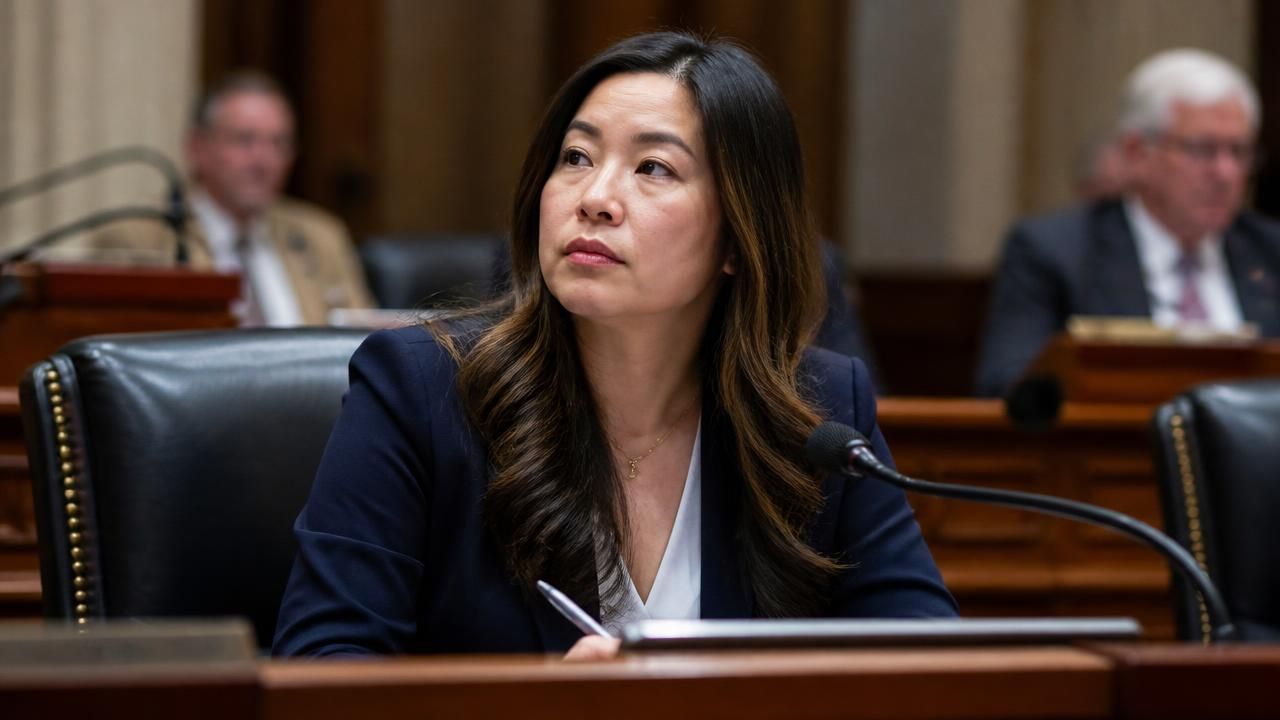
When Wisconsin state Rep. Francesca Hong entered the Democratic primary for governor earlier this year, she was widely seen as a rising progressive star—a small-business owner, the first Asian American woman in the state legislature, and a vocal champion of rent control, public transit, and universal health care. But a fresh examination of her old social media activity is now threatening to derail her campaign before voters cast a single ballot.
The controversy centers on a series of posts from several years ago, unearthed by conservative outlets and shared across political media. In one post, Hong wrote, “Cancel Thanksgiving.” In another, she mused that “VDay” brings out “the worst of humanity.” Most damaging, according to reports, are comments involving “whiteness” that critics say pulled in her own family—prompting accusations of what one headline called “weirdo racism.”
The Controversial Posts
The New York Times first surfaced the “Cancel Thanksgiving” remark in a feature headlined: “Francesca Hong Said Thanksgiving Should Be Canceled. Can Wisconsin Voters Forgive Her?” The piece detailed how Hong’s old social media activity has become a fresh line of attack in the closing stretch of the primary, with opponents casting her as an extremist out of step with Midwestern values.
“Cancel Thanksgiving,” she wrote. “VDay” brings out “the worst of humanity,” she mused.
Those words, dug up from years ago, now sit uneasily alongside her campaign’s message of unity and economic fairness. But it was the “whiteness” comments that delivered the sharpest blow. A Yahoo News report with the headline “Left’s latest socialist darling dragged over ‘whiteness’ comments pulling in her own family: ‘Weirdo racism’” highlighted how Hong’s remarks reached into her personal life, drawing her relatives into the controversy. The piece, written in a combative tone, framed Hong as part of a far-left trend of racial essentialism.
Neither Hong nor her campaign has disputed the authenticity of the posts, but they have argued that the remarks were taken out of context and that the candidate has since grown and evolved. In a statement, a campaign spokesperson said: “Francesca has spent her career fighting for working families. These old posts do not reflect who she is today, and voters will see through this distraction.”
Political Fallout
The story has reverberated across the political landscape, from conservative blogs to mainstream outlets like Politico’s influential Playbook newsletter, which noted the developing narrative. While the reaction has been most intense in right-leaning media, some Democrats worry privately that the controversy could hurt Hong in a general election, especially in a state where rural and suburban voters are skeptical of progressive rhetoric.
Wisconsin’s Democratic primary is a multi-candidate affair, with Hong positioned to the left of establishment-backed rivals. Her campaign has drawn comparisons to Alexandria Ocasio-Cortez and other democratic socialists who have successfully weathered similar attacks. But Wisconsin is not New York, and the “Cancel Thanksgiving” comment carries particular weight in a state where traditions run deep.
“This is a classic opposition-research hit, but it works only if the candidate lets it define them,” said a Democratic strategist with knowledge of the race, speaking on condition of anonymity. “Hong needs to acknowledge the posts, explain them, and pivot to her message. If she tries to ignore it, it will follow her to November.”
A Progressive Candidate Under Fire
Hong’s rise has been rapid. First elected to the state Assembly in 2020, she quickly became known for her unapologetic left-wing stances and her willingness to challenge party leadership. Her campaign for governor has centered on a $15 minimum wage, a state-level Green New Deal, and taxing the rich to fund public programs—policies that energize the base but invite scrutiny from moderates.
The “whiteness” remarks, as reported by Yahoo News, allegedly went beyond generic anti-racist language and veered into personal territory, referencing her own family’s racial dynamics in a way that critics described as self-loathing or performative. The headline's phrase “weirdo racism” encapsulates how the right is seeking to weaponize the comments: casting Hong as someone who applies racial stereotypes even to family members.
Supporters, however, see a different picture. They point to Hong’s record of working across racial and partisan lines on issues like food security and housing. “She’s authentic. She says what she means,” said a volunteer at a Hong event in Madison. “These attacks are from people who don’t want real change.”
The Broader Context
This is not the first time a progressive candidate has faced backlash for social media activity. In recent election cycles, old tweets and posts have doomed campaigns at every level. The difference here is the nature of the comments: they are less about scandalous behavior and more about ideology and identity—which makes them harder to dismiss as youthful indiscretions.
For Hong, the path forward is narrow. She must convince primary voters that she is the strongest champion of progressive values, while also reassuring the broader electorate that she is not a fringe figure. The “Cancel Thanksgiving” remark, whatever its original intent, now serves as a convenient shorthand for her critics: a symbol of someone who despises American traditions.
Looking Ahead
The primary is set for August 13. Polls show Hong in a competitive position, but with a significant share of undecided voters. Her ability to absorb this controversy and refocus the race on economic inequality will determine whether she survives.
In the meantime, the political world watches with a mixture of fascination and caution. The Wisconsin governor’s race is one of the most closely watched in the country, and Hong’s candidacy represents a test of whether the far-left can win in the Upper Midwest. If she stumbles, it will be a cautionary tale for progressive hopefuls everywhere: the past is never truly forgotten.
As for the “Cancel Thanksgiving” comment, Hong has not publicly walked it back. But in a recent radio interview, she emphasized her love for the holiday and her focus on bringing people together. Whether voters believe her is another question entirely.