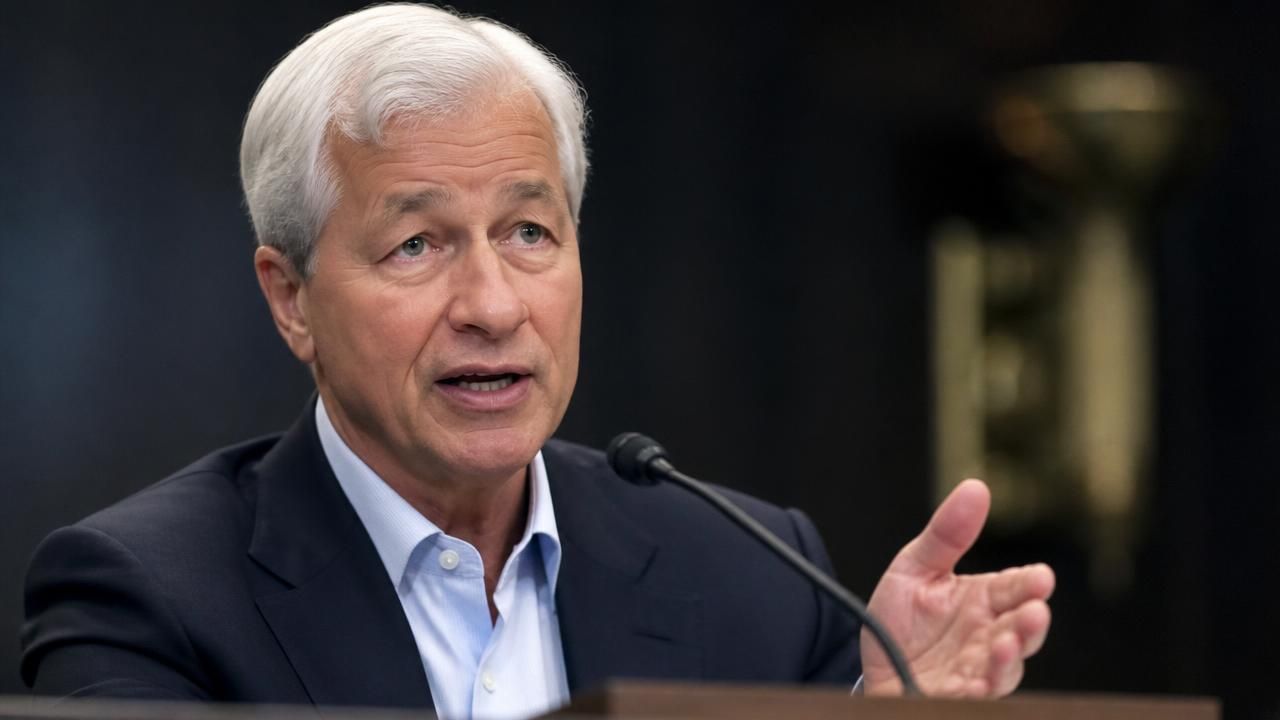
JPMorgan Chase Chief Executive Officer Jamie Dimon delivered a stark warning to investors on Tuesday, saying that leverage across financial markets remains dangerously high and that hidden borrowing could trigger a major market disruption. The comments came as the bank posted a record quarterly profit, underscoring the disconnect between strong bank earnings and growing systemic risks.
Speaking to analysts and reporters, Dimon cautioned: "Somebody will disrupt the market. Leverage is pretty high." His remarks, carried by CNBC and Bloomberg, signal that even as JPMorgan reaps outsized trading gains, the broader financial system is vulnerable to a sudden unraveling of debt-fueled positions.
A Record Quarter, a Stark Warning
JPMorgan's results were nothing short of spectacular. The bank reported a record profit, powered by a $6 billion stock-trading haul—one of its best quarters in equities. Yet Dimon pointed to a series of mounting risks, including high leverage, geopolitical tensions, and a shifting economic landscape. "Several risks are shifting," he said, according to MSN, a understated warning from the leader of America's largest bank.
The juxtaposition of record profits and dire warnings is a recurring theme for Dimon, who has repeatedly flagged potential storm clouds even during periods of market calm. His latest comments, however, carry extra weight because they come amid historically high asset prices and a surge in borrowing across both traditional and non-bank financial institutions.
Leverage in Focus
Dimon specifically highlighted the hidden accumulation of debt, noting that "hidden borrowing could amplify market disruptions." This is not limited to banks; it includes hedge funds, private credit funds, and other shadow-banking entities that have taken on significant leverage in recent years. The CEO's warning is particularly pointed at the $2 trillion industry that has grown rapidly outside traditional banking regulation—a corner of the financial system that Investopedia notes is increasingly influential on Wall Street.
Dimon's reference to a "$2 trillion industry" is widely interpreted as a nod to the private credit and leveraged lending markets, which have expanded exponentially as banks pulled back from riskier activities after the 2008 financial crisis. These vehicles often operate with less transparency and higher debt loads, making them a potential flashpoint in a downturn.
The Hidden Risks in the System
Leverage itself is not necessarily dangerous, but when it is concentrated in illiquid assets or hidden off balance sheets, it can turn a market correction into a systemic event. Dimon's warning suggests that the current level of leverage is reminiscent of periods preceding past crises, when seemingly isolated defaults triggered cascading losses.
"Somebody will disrupt the market. Leverage is pretty high." — Jamie Dimon, CEO, JPMorgan Chase
He did not specify which sector might be the catalyst, but his comments echo those of other financial leaders who have warned about the opacity of private market debt and the potential for a liquidity crunch when rates stay higher for longer.
Stocks and Treasurys: "I Wouldn't Buy Them"
Dimon was equally blunt about current valuations. According to a CNBC report, he said that markets are underestimating risks, and that he "wouldn't buy stocks or Treasurys at current prices." This is a striking admission from a man who runs one of the world's largest asset management and trading desks.
His skepticism is rooted in several factors: persistent inflation, the possibility of further Federal Reserve rate hikes, and the sheer amount of government debt that will need to be absorbed by the market. With Treasury yields still elevated, Dimon suggests that the risk-reward for fixed income investors is unattractive. Equities, meanwhile, have rallied on the back of AI optimism and resilient earnings, but Dimon believes that the downside risks are underappreciated.
Market Reaction and Investor Takeaway
Dimon's comments did not move markets dramatically, but they reinforced a growing sense of unease among institutional investors. The S&P 500 remains near record highs, but volatility has crept higher in recent weeks as traders parse mixed data on consumer spending, employment, and corporate guidance.
For retail investors, the message is one of caution: do not chase momentum, keep cash on hand, and be prepared for a possible correction. Dimon's track record as a forecaster is mixed—he missed the 2008 crisis but also warned repeatedly about trade tensions and geopolitical risks that did not fully materialize. Nevertheless, his warnings about leverage have proven prescient in the past, and his current tone is more urgent than ever.
The Bigger Picture
The tension between JPMorgan's record profits and Dimon's gloomy outlook highlights a bifurcated financial system. On one hand, the biggest banks are flush with capital and generating massive returns from trading and investment banking. On the other hand, the system as a whole is built on layers of debt that could unwind quickly if a shock occurs.
Dimon's call for regulators and investors to pay attention to "hidden borrowing" is a reminder that the post-2008 financial architecture has not eliminated systemic risk—it has only shifted it into less-regulated corners of the market. With a $6 billion trading haul fortifying its balance sheet, JPMorgan might weather a storm better than most, but the same cannot be said for the broader market.
For now, Dimon's credibility ensures that his words will be analyzed at boardrooms and trading desks across the globe. Whether the market heeds his warning or treats it as just another overly cautious CEO's lament will determine how prepared investors will be when the next disruption arrives.