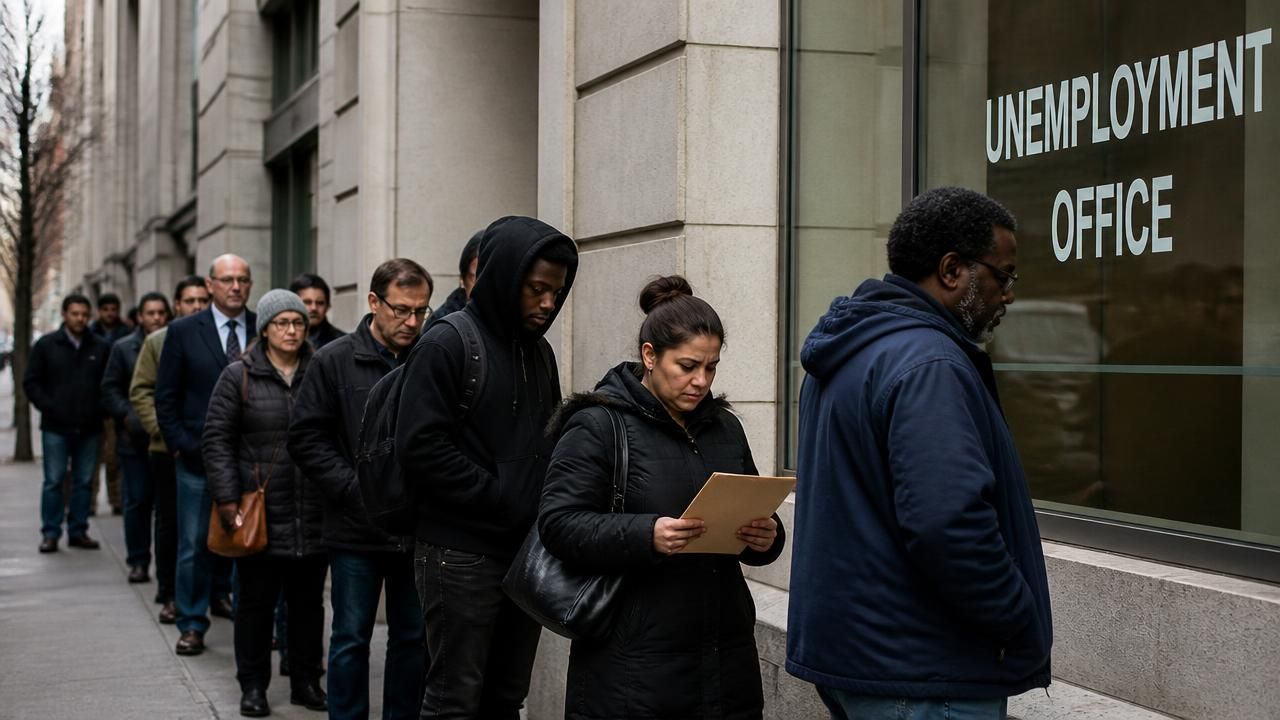
The US labor market is losing momentum at an alarming pace. Private employers added just 44,000 jobs in July, according to ADP Research Institute data released Wednesday, sharply missing forecasts and signaling that the economy is cooling faster than many had expected. The soft reading — which followed a downwardly revised 95,000 gain in June — came on the heels of a government report showing the economy added only 57,000 jobs in June, less than half the number analysts had anticipated.
By August, the situation had deteriorated further. The Bureau of Labor Statistics reported that nonfarm payrolls rose by just 22,000, while the unemployment rate climbed to 4.3%, prompting worries that the Federal Reserve has waited too long to cut interest rates.
ADP Report: Private Sector Hiring Collapses
The ADP national employment report, often viewed as a precursor to the government's monthly jobs report, showed that private payrolls increased by 44,000 in July — a significant miss against consensus expectations and a sharp deceleration from the previous month. June's figure was revised down from an initially reported 98,000 to 95,000, reinforcing the picture of a labor market in retreat.
“The slowdown is broad-based,” said Michael McKee, Bloomberg Television's economics correspondent, noting that the ADP data reflect weakness across industries, including goods producers and service providers.
Analyst Reactions
Markets reacted cautiously to the ADP report. Gold prices held near session highs as investors sought safe havens, according to Kitco News. Treasury yields fell as traders priced in a higher probability of Fed rate cuts. The ADP figures, along with a series of weak economic indicators, have intensified calls for the Fed to begin easing monetary policy as early as September.
Government Jobs Report Misses Big
The delayed but more comprehensive nonfarm payrolls report for June painted a similarly grim picture. The US economy added just 57,000 jobs in June, half the 100,000+ that economists had expected, according to the Bureau of Labor Statistics. That followed a string of strong months, including a surprising 850,000-job surge in June 2021 during the post-pandemic rebound, highlighting how far the labor market has cooled.
Unemployment Rate: A Mixed Picture
Despite the weak headline number, the unemployment rate actually fell to 4.1% in June, suggesting that an "orderly slowdown" might still be underway. However, the unemployment rate rose to 4.2% in July and 4.3% in August, erasing that optimism. The divergent signals have made it difficult for economists to gauge whether the economy is merely slowing or heading toward recession.
Massive Downward Revisions Raise Concerns
Complicating the picture further, the BLS announced that its benchmark revision would cut previously reported job growth by a staggering 818,000 for the 12 months through March 2025. That means the labor market has been considerably weaker than initially thought for over a year. The revision has fueled criticism that official data have been overstating the economy's resilience — and some political figures have seized on it.
"The jobs numbers are a brutal reality check for the administration," said one analysis in Yahoo Finance, reflecting skepticism about the White House's economic messaging.
President Trump's response to the weak data has been controversial. According to the BBC, Trump fired the lead official at the Bureau of Labor Statistics responsible for economic data, amid a market selloff triggered by his tariff policies. The move raised concerns about political interference in economic statistics.
What the Numbers Mean for the Federal Reserve
For the Federal Reserve, the weak labor market data are a double-edged sword. On one hand, slowing job growth and rising unemployment argue strongly for interest-rate cuts. On the other, wage gains remain relatively strong — some reports show average hourly earnings up 3.6% year-over-year, while others note that wage growth is decelerating. The Fed must balance inflation risks against a rapidly weakening labor market.
Meanwhile, weekly jobless claims rose less than expected, offering a hint of resilience in the labor market. However, the overall trend remains concerning. A separate ADP report for August showed private payrolls increased by 54,000, a slight uptick from July's 44,000 but still far below the 100,000 level needed to keep up with population growth.
Market Expectations
Futures markets are now pricing in a near-certainty of a rate cut at the Fed's next meeting, with some investors calling for a larger 50-basis-point move. The stock market has remained volatile, with major indices swinging on every data release.
Broader Context
The current slowdown marks a sharp reversal from the hiring boom of 2021-2023, when the US economy added an average of more than 400,000 jobs per month. Even earlier in 2025, January's report showed 130,000 jobs added, but by summer the pace had fallen to a trickle. The labor market is now showing signs of cracking under the weight of high interest rates, persistent inflation, and growing uncertainty around trade policy.
The weak jobs figures also have global implications. A slower US economy means less demand for imports, which could weigh on growth in trading partners. Countries like China and European nations are already struggling, and the US slowdown could tip the global economy into recession.
The slowdown has been particularly acute in the government and foreign-born worker segments, according to some analyses, underscoring the breadth of the deterioration.
Looking Ahead
All eyes will be on the next ADP and BLS reports, as well as on the Fed's response. Economists are divided on whether the economy will see a soft landing or a hard one. The one thing they agree on: the risks are growing.
As one Reuters analysis put it, "US labor market cracks widen as job growth hits stall speed." The question now is how deep those cracks go.
- ADP private payrolls: +44,000 in July (revised 95,000 in June)
- Nonfarm payrolls: +57,000 in June, +73,000 in July, +22,000 in August
- Unemployment rate: 4.1% in June, 4.2% in July, 4.3% in August
- Benchmark revision: 818,000 fewer jobs than originally reported
Reporting for this article was drawn from Bloomberg, Reuters, The Wall Street Journal, BBC, NBC News, The Guardian, Yahoo Finance, and other sources.