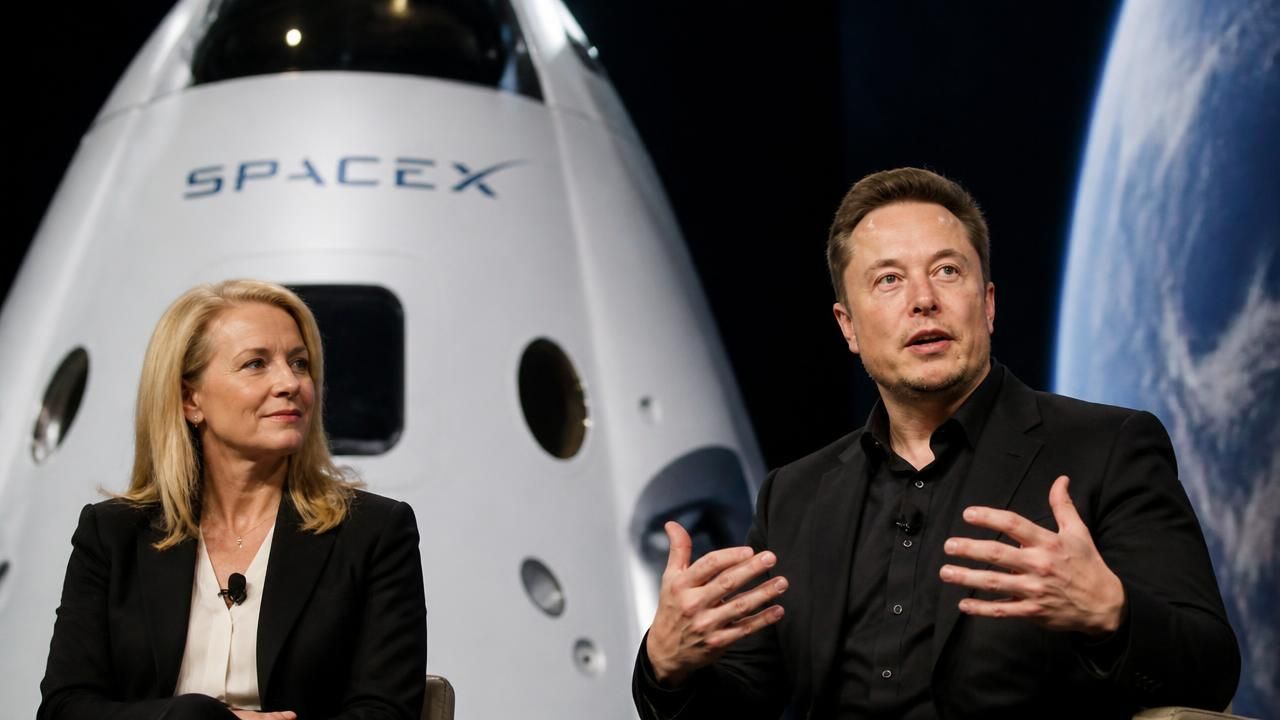
SpaceX has made clear its ambitions to challenge the dominance of America's largest wireless carriers. During the company's first-ever earnings call, President Gwynne Shotwell and CEO Elon Musk revealed plans to build a terrestrial mobile network alongside Starlink's satellite constellation, positioning SpaceX to compete head-to-head with T-Mobile, AT&T, and Verizon. The statement sent ripples through the telecom industry, prompting immediate market reactions and sharp responses from incumbent carriers.
A New Hybrid Network
Shotwell told investors that SpaceX intends to use spectrum acquired from EchoStar, which includes terrestrial components, to offer mobile services directly to consumers. "The spectrum that we purchased from EchoStar does have terrestrial components, so we definitely intend to build out the terrestrial component," she said. "You will have not only the capacity from the satellites themselves, but you will have a buildout of the terrestrial, basically the hardware and systems necessary to provide a seamless experience."
This strategy would allow SpaceX to offer a hybrid satellite-terrestrial service, potentially giving users coverage in areas where traditional cell towers are absent or unreliable. Musk added that the company aims to "acquire quite a few" customers currently subscribed to T-Mobile, AT&T, and Verizon, signaling a direct challenge to the incumbents' customer base.
Market Reaction and Carrier Responses
The announcement immediately weighed on telecom stocks. Shares of AT&T, Verizon, and T-Mobile fell as investors digested the implications of a well-funded new entrant with vertical integration from space to ground. While the declines were modest, the symbolic impact was clear: SpaceX is no longer just a satellite internet provider, but a potential mobile network operator.
Verizon's CEO pushed back against the notion that SpaceX could easily disrupt the market. In a separate call, he dismissed talk of a Starlink MVNO (mobile virtual network operator) arrangement, instead highlighting Verizon's strong second-quarter comeback. The carrier is betting on its own network investments and spectrum holdings to maintain competitiveness. Meanwhile, AT&T and Verizon have already expressed concerns about T-Mobile's existing partnership with Starlink, which allows T-Mobile customers to send texts in dead zones via direct-to-cell satellite. The two rivals have argued that such a service could interfere with their own networks and have petitioned regulators to scrutinize it.
The Battle Over Satellite-to-Phone
T-Mobile and Starlink launched a direct-to-cell service earlier this year, giving T-Mobile users satellite-based texting in areas without coverage. This partnership has been both a pioneering achievement and a source of contention. AT&T and Verizon have urged the Federal Communications Commission (FCC) to impose stricter rules on satellite transmissions, citing interference risks. SpaceX's new terrestrial ambitions may escalate this conflict, as the company now has the ability to bypass carriers entirely by building its own ground network.
SpaceX is reportedly working with Apple, Google, and Samsung to integrate Starlink connectivity directly into their devices. If these partnerships materialize, consumers could potentially access Starlink services without going through a major carrier, undermining the traditional carrier-device relationship.
Rural Customers Stand to Benefit Most
Industry analysts note that the most significant impact of a SpaceX mobile service could be in rural and underserved areas, where the big three carriers have long faced criticism for spotty coverage. A satellite-terrestrial hybrid network could provide seamless connectivity across vast geographic regions, ending the era of dead zones. For rural customers, this could mean genuine competition and better service at potentially lower prices. However, it remains unclear how SpaceX will price its service or whether it will offer unlimited data plans that can compete with existing unlimited offerings.
Regulatory Hurdles and Financial Concerns
The path forward is not without obstacles. SpaceX would need FCC approval to use EchoStar's terrestrial spectrum for a commercial mobile service, a process likely to be contested by incumbents. Additionally, building out a terrestrial network is capital-intensive, requiring significant investment in towers, backhaul, and other infrastructure. EchoStar's spectrum is a valuable asset, but it covers a limited amount of licensed territory, and new spectrum auctions may be required for nationwide coverage.
Investors are also weighing the impact on carriers like Verizon, which offer high dividend yields—currently around 7%—as a lure for income-focused shareholders. The SpaceX threat adds a new layer of risk to that investment thesis. If SpaceX captures a meaningful share of postpaid customers, carriers could see revenue erosion and increased churn, forcing them to invest more to defend their networks.
What This Means for Consumers
While a full-blown SpaceX mobile network is likely years away, the announcement signals a shift in the competitive landscape. Carriers are already under pressure to justify their pricing, especially after Verizon's recent price hikes on multi-device plans drew consumer ire. The prospect of a disruptive new entrant could accelerate the movement toward more flexible, affordable plans and better coverage guarantees.
As Shotwell emphasized, the company's goal is to offer a service that works "seamlessly" between satellite and terrestrial networks. If successful, this could redefine the mobile experience, making connectivity as ubiquitous as sunshine. For now, T-Mobile, AT&T, and Verizon are on notice: the space race for telecom has officially begun.