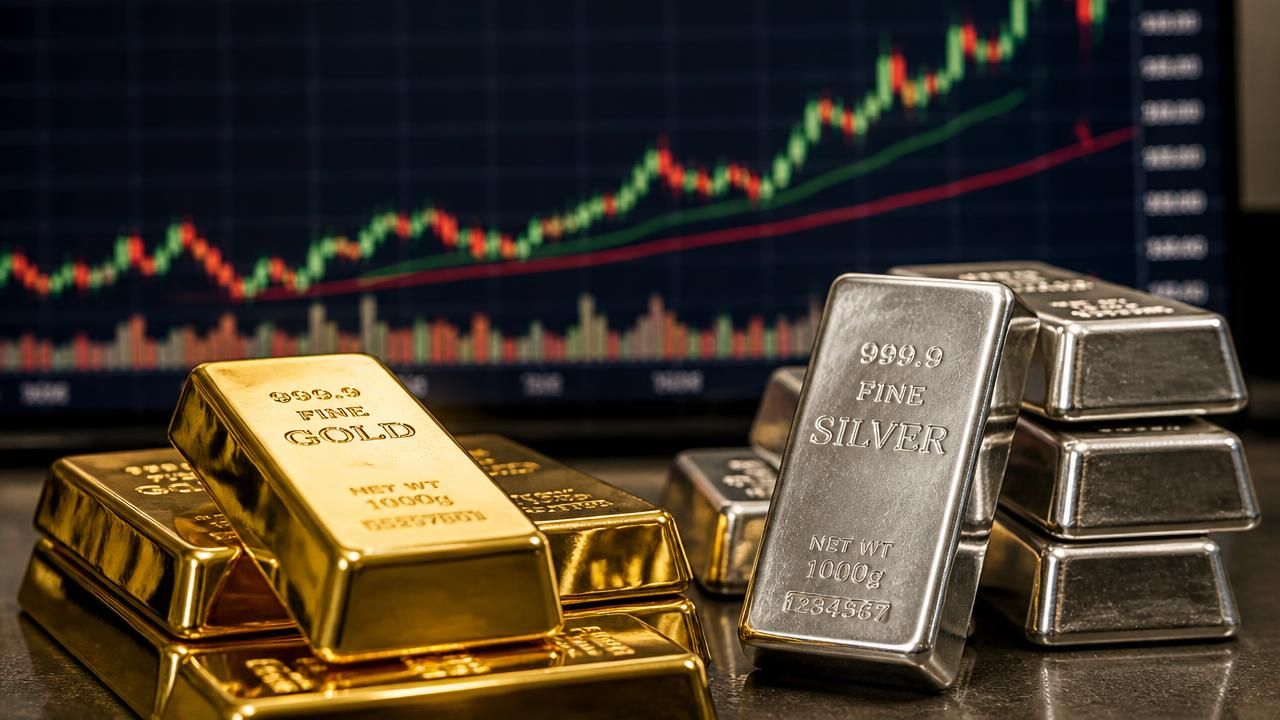
Gold prices jumped for a third consecutive session on Tuesday, with silver posting sharp gains, as markets tracked diplomatic efforts to reopen the Strait of Hormuz. The prospect of an interim US-Iran deal eased concerns about oil-driven inflation, in turn reducing the odds that the Federal Reserve will raise interest rates and reviving bets on rate cuts. Comex gold futures surged by $73 an ounce, while silver advanced by $2.55, according to MSN data.
The moves came amid a complex backdrop: oil prices remain on track for a record monthly surge as the Iran war disrupts global energy markets, but the emerging hopes for a reopening of the critical waterway—through which about 20% of the world's oil passes—have tempered the most extreme inflationary scenarios.
A Geopolitical Pivot in the Strait of Hormuz
The Strait of Hormuz has long been a flashpoint for global markets. When tensions between the US and Iran escalated into military conflict, oil prices spiked sharply, sending ripple effects through inflation expectations and monetary policy outlooks. The Guardian reported that oil is on track for its steepest monthly surge in history, a testament to how seriously traders viewed the supply disruption risk.
However, the narrative shifted this week as reports emerged that Washington and Tehran were exploring an interim deal to reopen the strait. Bloomberg Markets noted that gold climbed with silver as the prospect of such a deal eased concerns about the inflation outlook. If the strait is reopened, oil supply fears recede, which would remove a major driver of consumer price increases across the globe.
Yet not all headlines aligned. Investing.com reported that President Trump halted the Hormuz reopening push, adding an element of uncertainty to the negotiations. This divergence in reporting highlights how fluid the situation remains—and how sensitive markets are to every twist in the geopolitical story.
The Real Driver: The Federal Reserve
While the Iran headlines provided the immediate catalyst, some analysts argue that the underlying force behind the gold rally is the Federal Reserve's monetary policy trajectory. Goldsilver.com's headline put it succinctly: “Gold Jumps on Iran Deal Hopes. The Real Driver Is the Fed.” Indeed, as inflation fears abate, the case for the Fed to maintain a restrictive stance weakens. Traders have increasingly priced in the likelihood of rate cuts later this year, which diminishes the opportunity cost of holding non-yielding bullion.
Silver, which often outperforms gold in a bullish precious metals environment, also benefited from the shift. The XAG/USD pair jumped as the US dollar softened on revived Fed rate-cut bets, according to Mitrade. A weaker dollar makes dollar-denominated metals more affordable for foreign buyers, adding another tailwind.
But not all signals are in agreement. Goldsilver.com also warned that “Oil Futures Disagree With Stock Markets,” suggesting that while equity investors are cheering the prospect of peace, commodity traders remain cautious. That divergence could mean the recent rally in precious metals is built on fragile geopolitical hopes rather than a robust fundamental consensus.
How Different Outlets Frame the Story
The variance in framing across major financial media is striking. Kitco News, a leading precious metals outlet, simply declared: “Gold jumps on Iran peace deal.” This echoes the immediate geopolitical catalyst. In contrast, goldsilver.com's analysis digs deeper into monetary policy, arguing that the Fed's next move will ultimately determine gold's direction, irrespective of what happens in the Persian Gulf.
The Guardian's coverage, meanwhile, remains focused on the oil market, noting that crude's record surge is a continuing threat to the global economy. Even as gold rallies on peace hopes, the oil market's historic volatility serves as a reminder that the underlying conflict has not been fully resolved.
Market Reactions at a Glance
- Gold: Comex front-month futures rallied by $73 per ounce, marking a third consecutive day of gains.
- Silver: Prices advanced by $2.55 per ounce, with the metal benefiting from both its precious and industrial demand profiles.
- Crude oil: Still on track for a record monthly surge, though intraday prices slipped as Hormuz reopening hopes gained traction.
- US Dollar: Softened amid revived Fed rate-cut bets, adding further support to bullion.
Looking Ahead: What to Watch
Investors are now focused on several key questions. First, can negotiators actually deliver an interim deal to reopen the Strait of Hormuz? The conflicting reports about President Trump's stance underscore the fragility of the process. Second, how will the Federal Reserve respond to the evolving inflation picture? If price pressures ease due to lower oil costs, the central bank may find room to cut rates sooner than previously expected.
Third, the relationship between oil futures and equity markets warrants close attention. If stock markets continue to price in a de-escalation while oil traders remain defensive, a correction could be in store. For precious metals investors, the near-term path depends on a delicate balance between geopolitical headlines and central bank signals. As several analysts note, the Fed is likely to be the ultimate driver for gold and silver, with geopolitics providing the sparks along the way.
“The immediate catalyst is geopolitical, but the sustained bid in gold will come from the Fed’s next move.” — Synthesis of analyst views across Bloomberg, Kitco, and Goldsilver.com
For now, the rally is intact. But in a market shaped by war, diplomacy, and central bank policy, conditions can change in an instant. Traders would do well to keep one eye on the Strait of Hormuz and the other on the Federal Reserve.