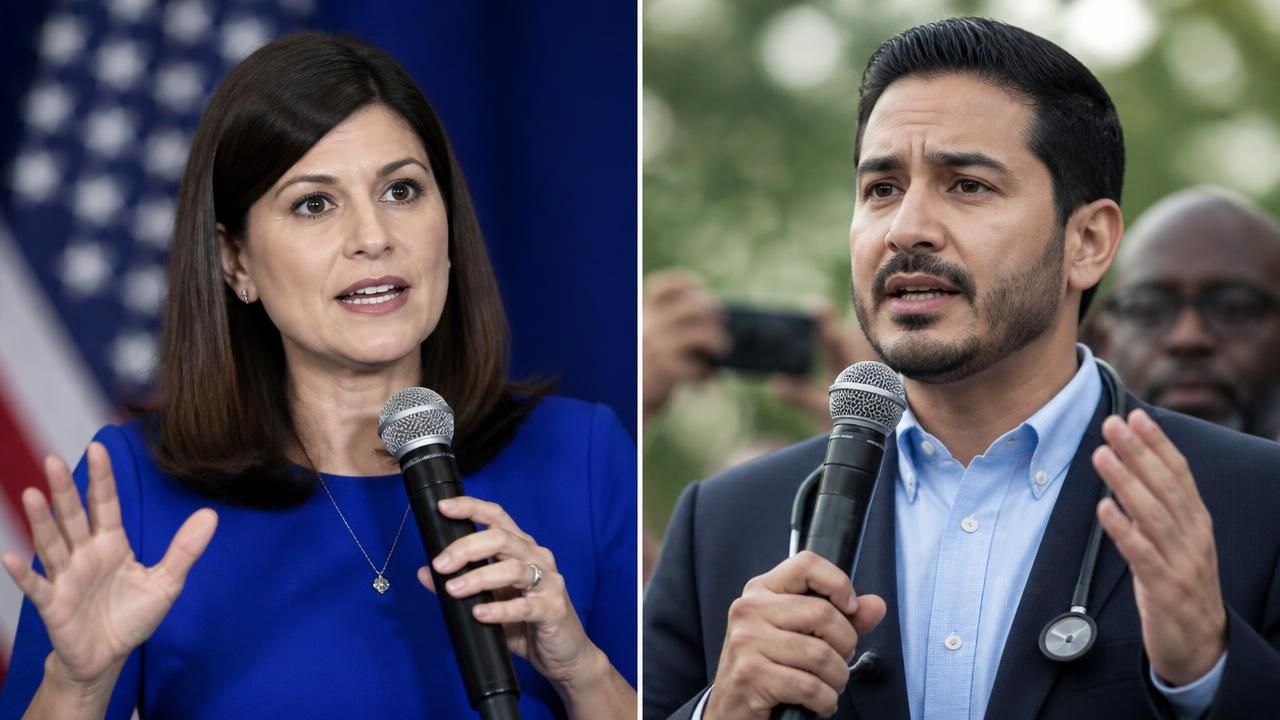
When Michigan Democrats head to the polls on August 6, the state’s open U.S. Senate primary will be more than a battle between two candidates—it has become a national proxy war over the influence of pro-Israel money in the Democratic Party. The contest between Rep. Haley Stevens, a two-term moderate congresswoman, and Dr. Abdul El-Sayed, a progressive physician and former Detroit health director, is being defined by an unprecedented influx of outside cash, most notably from AIPAC and its affiliated super PAC, and by deep fractures over the war in Gaza.
A Record-Shattering Spending Blitz
According to CBS Detroit, AIPAC has spent nearly $30 million to boost Stevens—its largest single-race investment in history. The money flowed through the United Democracy Project (UDP), AIPAC’s super PAC, which has flooded Michigan airwaves with ads supporting Stevens and attacking El-Sayed. The scale of spending is staggering: as the Detroit News reported, Stevens holds a “lopsided spending advantage” over El-Sayed, fueled not only by AIPAC but by other pro-Israel groups and hidden donors. OpenSecrets, which tracks campaign finance, labeled the race a “super PAC battleground,” noting that outside groups have poured in tens of millions, overwhelming the candidates’ own fundraising totals.
El-Sayed has sought to turn this spending into a political liability, hammering Stevens for accepting what he calls “dark money” from groups that refuse to disclose their donors. At the final debate, he argued that Stevens’s reliance on AIPAC essentially buys her loyalty to a foreign policy agenda that many Michigan Democrats reject. “There is one name on the check, and it’s AIPAC,” El-Sayed said, according to reports. Stevens, for her part, defended her record, insisting she is not beholden to anyone and that her support for Israel aligns with long-standing bipartisan U.S. policy.
The Candidates and the Stakes
Stevens, a 47-year-old former auto industry official who represents suburban Detroit, has positioned herself as a pragmatic lawmaker with a strong record on manufacturing and job creation. El-Sayed, 44, an Egyptian-American who gained national attention for his progressive health care ideas, has championed Medicare for All, a ceasefire in Gaza, and conditioning U.S. aid to Israel on human rights standards. The two also differ on domestic issues: Stevens supports incremental health care reforms and has emphasized her ability to work across the aisle; El-Sayed calls for bold structural change, arguing that “incrementalism is complicity” in a system that leaves too many behind.
The race is neck-and-neck, according to several polls cited by Arab News and WDET. That outcome is being watched far beyond Michigan because it is the clearest test yet of whether AIPAC’s massive investment can topple a progressive candidate who openly criticizes Israeli government policies. “This is a referendum on the future of the Democratic Party,” noted the Forward, a Jewish news outlet. “Is it the party of AOC or AIPAC?”
Debate Clashes Over Israel and Money
The most heated moments of the campaign have come in the debates, particularly the final one broadcast across the state. The Michigan Advance described “transparency” as the biggest issue, as El-Sayed repeatedly pressed Stevens to call for disclosure of the donors behind the pro-Israel super PACs supporting her. Stevens fired back, accusing El-Sayed of using inflammatory rhetoric that paints Jewish Americans as a monolithic bloc controlling politics. According to the Detroit News, the two sparred over a claim that El-Sayed blames Jewish Americans for Stevens’s positions; El-Sayed called the charge “offensive” and insisted he only criticizes the Israeli government, not Jewish people.
The exchange reflects a broader national dynamic: as the Israeli offensive in Gaza continues, Democratic primaries have become battlegrounds over the party’s stance on Israel. CNN noted that the Michigan and Missouri primaries “will again lay bare the Democratic divide over Israel.” In Illinois, a similar clash unfolded, though as The New Republic reported, neither the AIPAC-aligned nor the progressive faction won a clear victory—a sign that the ideological tug-of-war is far from settled.
Voters Weigh In
Despite the intensity of the debate, many Michigan voters say AIPAC’s spending is not their top concern. A report from MSN found that voters were more focused on issues like the economy, abortion rights, and housing than on the Israel-Palestinian conflict. “It’s all over my TV, but it’s not what I’m thinking about at the ballot box,” one voter said. Still, the financial imbalance is hard to ignore. The Guardian framed the race within a broader story of “Democrats split as Israel’s war in Gaza dominates US midterm races,” and Turkish outlet Türkiye Today wrote of AIPAC’s “growing backlash” across the country.
Broader Implications
The outcome in Michigan will send a powerful signal about the effectiveness of AIPAC’s strategy. If Stevens wins despite El-Sayed’s critique, other moderate Democrats may embrace pro-Israel money without fear of political cost. If El-Sayed prevails, it could embolden progressives to challenge AIPAC head-on, potentially reshaping the party’s approach to foreign policy and campaign finance.
Historically, AIPAC has been a bipartisan force, but its recent focus on Democratic primaries—often backing candidates who support Israel unconditionally—has made it a lightning rod. The war in Gaza has intensified that focus, with groups like the UDP spending to defeat progressive critics. The Michigan race is the biggest test yet, with implications that extend well beyond one state.
For voters like Karen Mitchell, a Detroit resident who attended a recent rally, the choice is personal. “I want someone who will stand up for the people, not the checkbook,” she said. “This race is about whether money or the people’s voice wins.” As Michigan heads to the polls, that question hangs in the balance.