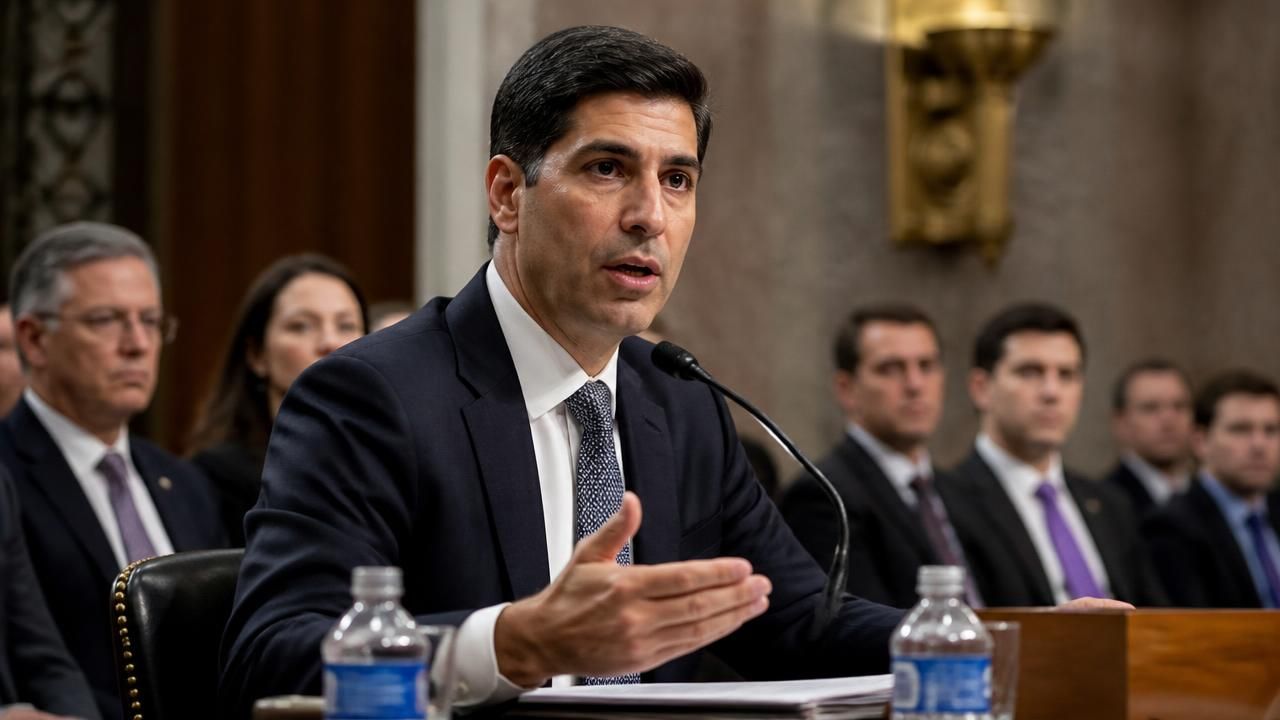
In a week of high drama at the Federal Reserve, new Chairman Kevin M. Warsh delivered a message that echoed far beyond the marble hallways of the Eccles Building: monetary policy is undergoing a 'regime change.' The phrase, repeated in his first official meeting as chair, signaled a decisive break from the accommodative era that preceded him, and it immediately rattled markets, reshaped interest-rate expectations, and ignited a political firestorm.
A Hawk Takes the Helm
Kevin Warsh, a former Fed governor and Wall Street insider, was appointed by President Donald Trump to lead the central bank at a time when inflation, while cooled from its 2022 peaks, remains stubbornly above the Fed's 2% target. In his opening remarks, Warsh framed inflation as a direct tax on the American people, vowing to restore price stability with what CNBC described as a 'regime change' approach. He said the Federal Reserve would no longer tolerate the complacency that allowed prices to spiral, and he hinted at a new partnership with the Treasury Department to coordinate fiscal and monetary responses.
According to TheStreet, Warsh's first meeting reset bets on interest-rate cuts. Investors had expected a dovish pivot as the economy showed signs of slowing, but Warsh held off on any immediate rate hike—despite his hawkish language—choosing instead to bet that supply chains would eventually catch up with demand. Seeking Alpha confirmed that Warsh is 'holding off' on a hike, preferring a wait-and-see approach that leaves the door open for future tightening.
Markets Demand a Reset
The immediate reaction was volatility. The New York Times reported that after Warsh's latest appearance, markets began 'demanding a reset' as they grappled with mixed signals about his commitment to fighting inflation. Equities sold off, bond yields swung, and traders scrambled to price in a slower path of rate cuts. TheStreet noted that the first Fed meeting under Warsh effectively 'reset interest-rate cut bets,' with futures markets pushing back expectations for a reduction until mid-2027.
Fox News and local affiliates like FOX61 highlighted the practical question on every household's mind: 'Will interest rates be lowered?' Warsh is likely to provide hints in his post-meeting press conference, but so far he has been deliberately vague. MSN reported that Warsh made a 36-word statement that could forever change the Fed's relationship with the stock market—a thinly veiled warning that the central bank will no longer rush to rescue equities whenever they dip. This is a stark departure from the so-called 'Fed put' that investors have relied on for years.
Political Crosscurrents: Bessent, Krugman, and Buffett
Warsh's pivot is not happening in a vacuum. Treasury Secretary Scott Bessent has called for 'big changes' at the Fed, according to Reuters, suggesting that the administration wants a more cooperative and less independent central bank. This has raised concerns about political interference in monetary policy—a theme amplified by Nobel laureate Paul Krugman, who published a sharp critique titled 'Kevin Warsh is Trump's Sock Puppet.' Krugman argued that Warsh's every move is designed to please the president, undermining the Fed's credibility.
“Warsh’s hawkish turn may be genuine, but the optics are terrible. He is giving Trump exactly what he wants: a Fed that blinks in the face of political pressure,” Krugman wrote.
Investor legend Warren Buffett also weighed in, delivering a powerful two-word judgment on Warsh that sent ripples through the financial community. While the exact words were not captured in full, TheStreet described it as a concise and biting assessment of the new chairman's approach, likely questioning his independence or his focus on inflation over employment. Buffett's words added to the perception that even seasoned investors are wary of the new regime.
A New Relationship with Wall Street
The heart of Warsh's 'regime change' is a fundamental shift in how the Fed interacts with markets. In his address, he explicitly called for a 'partnership with Treasury,' a move that would blur the lines between fiscal and monetary policy. Bessent's simultaneous call for changes suggests a coordinated effort to reshape the Fed's mandate, focusing it more on supporting economic growth than on preemptively fighting inflation.
But this approach carries risks. Financial historians note that when the Fed becomes too closely aligned with the political branch, it often loses credibility, leading to higher inflation expectations and more volatile markets. The 1970s are a cautionary tale: President Richard Nixon pressured then-Fed Chair Arthur Burns to keep rates low, sowing the seeds for the Great Inflation. Warsh, who has often cited the importance of Fed independence, now seems to be charting a more accommodationist course with the executive branch, at least in terms of rhetoric.
The Supply-Side Bet
One of the more intriguing aspects of Warsh's strategy is his belief that supply will catch up with demand. In a departure from traditional demand-side management, the Fed chair has suggested that recent investments in artificial intelligence and other productivity-enhancing technologies could help ease price pressures without the need for aggressive rate hikes. This view, echoed in his CNBC appearance, offers a hopeful scenario but remains unproven. Critics warn that relying on supply-side fixes is a gamble that could leave the Fed behind the curve if inflation reignites.
Implications for the Economy and the Election Cycle
The stakes are enormous. If Warsh succeeds in vanquishing inflation without triggering a recession, he will be hailed as a master strategist. If he fails, the consequences could be dire—not just for the economy but for the integrity of the Federal Reserve. The 2026 midterm elections loom, and Democrats are already using Warsh’s appointment to paint Trump as a puppet master pulling the strings of the central bank.
Meanwhile, ordinary Americans are caught in the crossfire. Mortgage rates, car loans, and credit card interest rates all hang in the balance. small businesses are watching closely, and their investment decisions will shape the next phase of the business cycle.
As the dust settles from Warsh's first meeting, one thing is clear: the era of unquestioned Fed independence is over. Whether that leads to better outcomes or to a dangerous politicization of monetary policy remains the central economic question of our time. Markets have reset their expectations; now the world waits to see if Warsh can deliver on his promise of a true regime change.