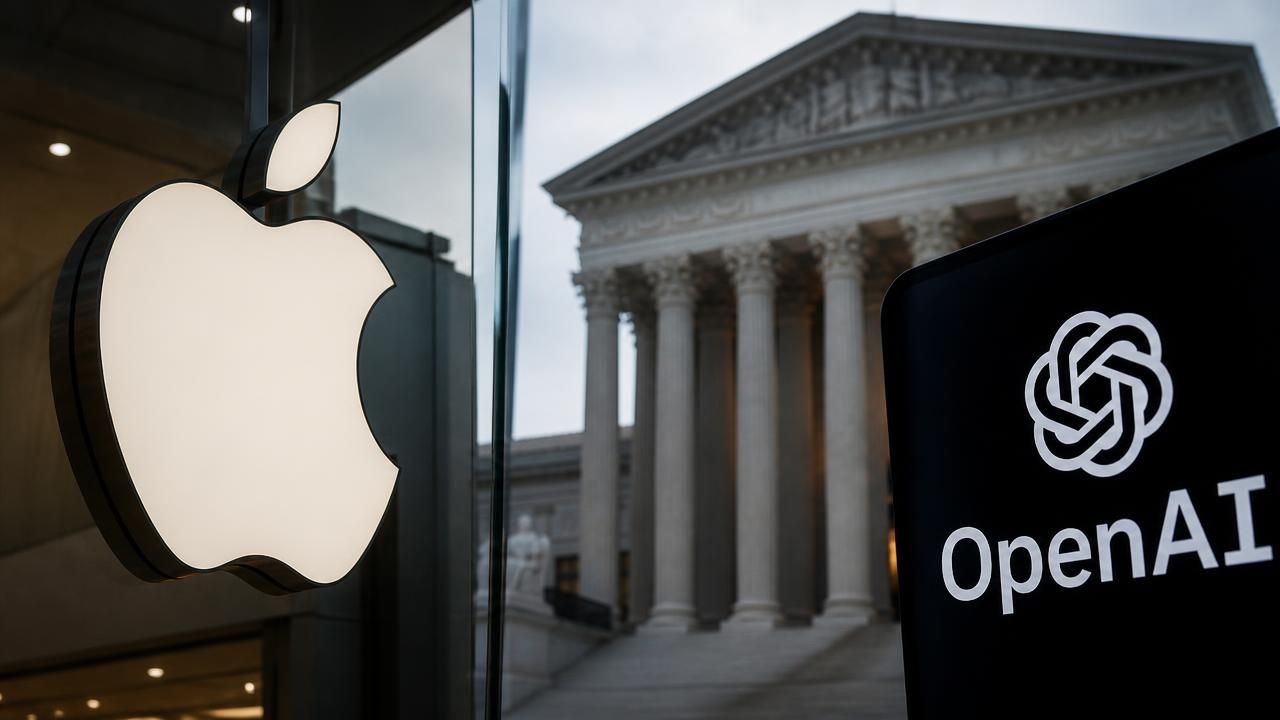
In an explosive escalation of a once-promising partnership, Apple has filed a blockbuster trade secrets lawsuit against OpenAI, accusing the ChatGPT maker of stealing confidential hardware and AI design information to build its own line of devices. OpenAI, rather than quietly settling, has fired back with a highly public blog post titled “Apple is getting this wrong,” calling the lawsuit “careless, aggressive, and oddly personal.” The legal clash, now playing out in the court of public opinion as much as in federal court, has sent shockwaves through Silicon Valley and put the future of the Apple-OpenAI partnership—including the integration of ChatGPT into Siri—in serious jeopardy.
The Backstory: From Partners to Rivals
The relationship between Apple and OpenAI began with a handshake and a stage demo. At WWDC 2024, Apple announced a landmark deal to integrate OpenAI’s ChatGPT into Siri, giving iPhone users access to advanced AI capabilities directly from their devices. At the time, it seemed like a win-win: Apple gained a powerful AI partner without having to build its own large language model from scratch, and OpenAI gained access to Apple’s massive user base.
But the relationship soured as OpenAI began pivoting from software to hardware. According to multiple sources, including startupfortune.com, OpenAI has confirmed it is building a family of physical devices—a move that would put it in direct competition with Apple’s core business. Apple’s lawsuit, filed late last month, alleges that OpenAI poached Apple employees who brought along proprietary documents and trade secrets related to hardware design, supply chain logistics, and even Siri’s underlying architecture.
Apple’s Allegations: A Pattern of Theft
The complaint, as reported by CNN and NBC Los Angeles, paints a picture of systematic theft. Apple claims that OpenAI, under the guise of “research” and “collaboration,” recruited key engineers from Apple’s secretive hardware and AI teams, inducing them to violate their confidentiality agreements. These employees allegedly shared sensitive information about Apple’s unannounced device prototypes, chip designs, and manufacturing techniques directly with OpenAI’s leadership.
Apple is seeking a preliminary injunction to prevent OpenAI from using these alleged trade secrets in its own device development, as well as unspecified damages. The legal filing, described by The Week as a “blockbuster,” is not just about money—it’s an attempt to halt OpenAI’s hardware ambitions in their tracks.
OpenAI’s Defense: “Careless, Aggressive, and Oddly Personal”
OpenAI’s response has been notably combative. In a blog post published overnight, the company pushed back with what The Verge characterized as a “cherry-picked” selection of emails and iMessage exchanges. OpenAI claims that Apple was fully aware of its hardware plans and even encouraged the collaboration, providing written approval for employees to work on certain projects. The post directly counters Apple’s narrative, accusing the tech giant of rewriting history to stifle competition.
“Apple’s lawsuit is careless, aggressive, and oddly personal,” OpenAI wrote. “We shared our roadmap with Apple in good faith, and they thanked us for it.”
However, as AppleInsider notes, OpenAI’s public statement sidesteps the core IP theft claims entirely. It focuses on tone and personal attacks rather than addressing the specific allegations of employees leaving Apple with confidential documents. Legal experts say this could be a strategic misstep, as it signals weakness on the merits.
Legal Analysis: The Mountain to Climb
Trade secrets cases are notoriously difficult to win. To succeed, Apple must prove three things: that the information qualifies as a trade secret, that Apple took reasonable measures to protect it, and that OpenAI acquired it improperly. Inc.com highlights a potential mistake in Apple’s filing—a minor factual error that legal experts say could undermine Apple’s credibility, though they differ on how much it matters.
Jim Cramer, writing for 247Wallst.com, called the lawsuit “heavyweight,” suggesting that Tim Cook’s decision to sue means Apple has real evidence. “You don’t sue someone you’re not worried about,” said Walter Piecyk of LightShed Partners, echoing the sentiment that Apple is genuinely threatened by OpenAI’s hardware push.
The case also raises broader questions about the boundaries of employee mobility and IP protection in the hyper-competitive AI industry. As thenextweb.com points out, the lawsuit is already hurting OpenAI—long before a verdict. Potential partners are wary, talent recruitment may suffer, and OpenAI’s reputation as a collaborative force has taken a hit.
Eight Key Issues and the Siri Tie-Up
DigitalToday.co.kr has outlined eight critical issues stemming from the lawsuit, ranging from the validity of non-disclosure agreements to the future of Apple’s integration of ChatGPT into Siri. The partnership, once seen as mutually beneficial, is now a liability for both companies. Apple is reportedly considering whether to terminate the Siri deal, which would be a major blow to OpenAI’s consumer reach. For Apple, losing ChatGPT integration could alienate users who have come to expect cutting-edge AI features.
The AI Hardware War Begins
Analysts see this lawsuit as the opening salvo in a larger “AI hardware war.” According to AOL.com, Apple’s lawsuit is not just about past theft but about future competition. OpenAI’s device family, if it comes to market, would compete directly with the iPhone, iPad, and Apple’s rumored AI-powered glasses. The stakes are enormous, and Apple is determined to protect its territory.
Forbes draws business lessons from the conflict, emphasizing that today’s partners can become tomorrow’s competitors. Companies must clearly define IP ownership, restrict employee movement, and anticipate strategic pivots. The Apple-OpenAI case is a textbook example of the pitfalls of deep collaboration with a potential rival.
What’s Next?
The immediate next step is the preliminary injunction hearing, where Apple will argue that OpenAI must stop using its alleged trade secrets while the case proceeds. A ruling could effectively freeze OpenAI’s hardware development, a potentially devastating setback. Meanwhile, OpenAI is expected to file a motion to dismiss, arguing that Apple’s claims are speculative and unsupported.
Beyond the courtroom, the case is reshaping perceptions. As Mashable’s 8-point breakdown notes, the lawsuit reveals just how intertwined and yet volatile the biggest tech players have become. Whether Apple wins or loses, this battle signals that the era of friendly AI partnerships is over—replaced by suspicion, litigation, and a ferocious race for dominance in AI hardware.
For now, the only certainty is that the Apple-OpenAI saga is far from over. Both companies are digging in, and the outcome could determine not just their futures, but the trajectory of the entire tech industry.