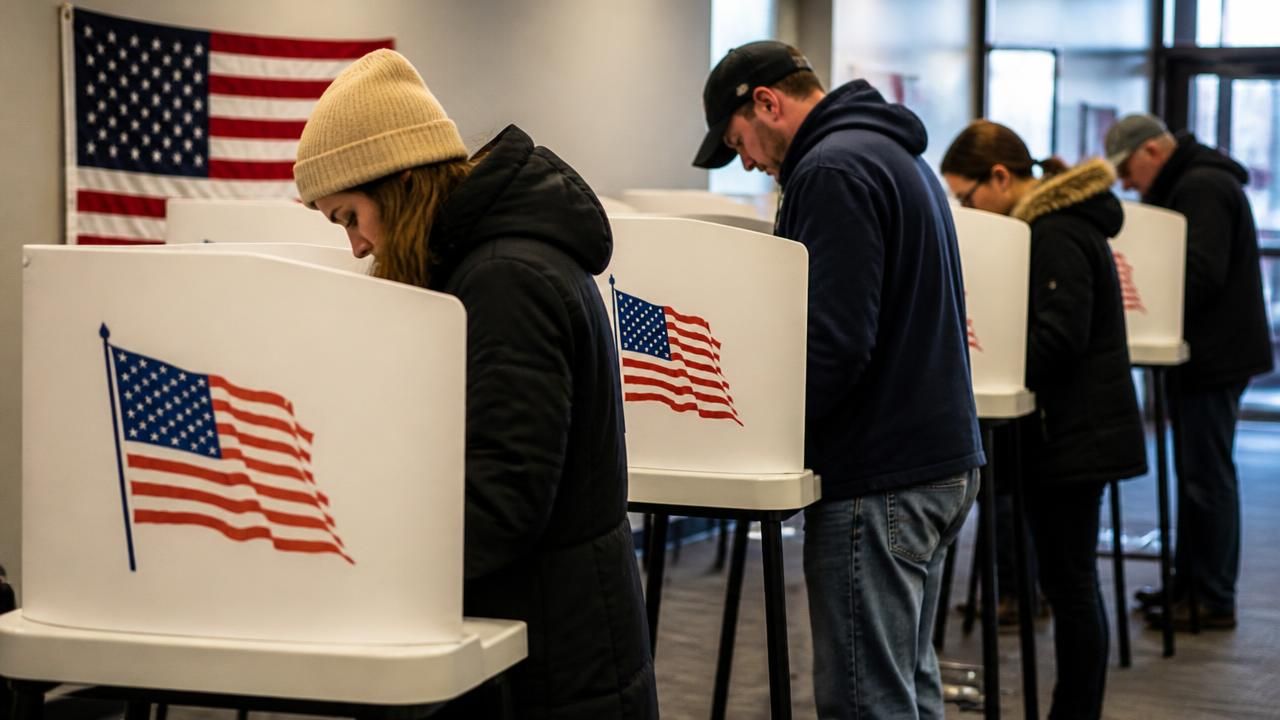
The Midwest has emerged as the central battleground in the Democratic Party's ongoing ideological civil war, as primary elections in Michigan, Wisconsin, and Minnesota become a high-stakes test of whether progressive candidates can win in the competitive states that will likely decide the 2024 presidential election. With the primaries in these three states converging in the same election cycle, political observers say the results will send a powerful message about the direction of the party and the definition of electability.
A Defining Moment for Progressives
At the heart of the fight is a fundamental question: Can progressives win in swing states, or do their policies alienate the moderate voters Democrats need to defeat Republicans in November? NPR, in its coverage of the races, described the Midwest as a "high-stakes proving ground" for progressives, highlighting the tension between ideological purity and practical politics.
Politico framed the moment with a stark headline: "We're about to find out how powerful progressives really are." The Washington Times echoed that sentiment, noting that the "next big races between moderates and progressives are in pivotal Midwestern states." PBS called the region "the next theater" in the Democrats' progressive vs. moderate fight. Across outlets, the coverage signals that these primaries are more than local affairs—they are a national referendum on the party's future.
Key Races and Stakes
The primaries in these three states feature a mix of open seats and incumbent challenges, with candidates staking out clearly divergent ideological positions. In Michigan, Wisconsin, and Minnesota, voters are weighing candidates who embrace Medicare for All, the Green New Deal, and defunding the police against those who emphasize bipartisanship, incremental reform, and fiscal restraint. The outcomes will not only determine nominees for Congress and statewide offices but also set the tone for the general election campaigns in states that narrowly flipped to Joe Biden in 2020.
According to NPR, the races are a test of "what electability really means." Progressives argue that bold, transformative policies inspire younger and more diverse voters, who are essential to Democratic victories. Moderates counter that suburban swing voters, many of whom abandoned the GOP in the Trump era, will be repelled by progressive positions on issues like healthcare and policing.
"We're about to find out how powerful progressives really are," Politico declared, capturing the national significance of these Midwestern primaries.
Framing the Fight
The way different outlets frame the story reveals the cleavage lines within the party. NPR's coverage emphasizes the narrative of a "proving ground," suggesting that the outcomes will have implications beyond the Midwest. PBS highlights the "theater" of the fight, implying a dramatic confrontation between two visions of the party. The Washington Times focuses on the "pivotal" nature of the states, reminding readers that these are not safe blue districts—they are the battlegrounds that decide control of Congress and the White House.
Meanwhile, local and regional coverage from sources like KUNC and WUFT, which republished NPR's piece, underscores how these races are resonating with voters in the region. The coordination of messaging across public radio stations suggests that the story is being treated as a major national event.
The Stakes for the General Election
Democrats are acutely aware that the Midwest will be critical in November. Michigan, Wisconsin, and Minnesota were all part of the so-called "blue wall" that Hillary Clinton lost in 2016, and Biden narrowly reclaimed them in 2020. A primary that produces a nominee seen as too extreme could jeopardize the party's chances in the general election. Conversely, a primary that energizes the progressive base could boost turnout among young voters and minorities, who are crucial to Democratic victories.
Some analysts argue that the fight is as much about messaging as it is about policy. Progressives have increasingly reframed their agenda around popular programs like child tax credits and paid leave, while moderates argue that they can better appeal to independents by focusing on kitchen-table issues and emphasizing their independence from party leadership.
What to Watch
As the primaries approach, several factors will determine the outcome:
- Turnout: Will progressive candidates generate enough enthusiasm among younger voters to offset the higher turnout that moderates typically see among older, more established Democrats?
- Money: Moderate candidates have often relied on corporate PACs and wealthy donors, while progressives have built small-dollar fundraising machines. The spending disparity could shape the race.
- Endorsements: High-profile endorsements from national figures like Alexandria Ocasio-Cortez or Bernie Sanders—or from President Biden and party leaders—could tilt the scales.
- Local conditions: Each state has its own political dynamics. In Minnesota, the presence of a significant progressive movement may give left-wing candidates an edge, while in more moderate Wisconsin, the party's internal divisions may manifest differently.
The results of these primaries will be closely watched not just for who wins, but for what the margins reveal about the mood of the Democratic electorate. A strong showing by progressives in even one of these states would embolden the left to push for more aggressive policies in the general election. Conversely, a sweep by moderates would likely prompt a reassessment of the party's strategy and message.
A National Bellwether
The Midwest primaries are, in many ways, a microcosm of the broader debate that has consumed the Democratic Party since the 2016 presidential election. The tension between the left and the center is not new, but these races bring it into sharp focus at a critical moment. As Politico asked, the question is no longer whether progressives have power—it's how they will use it, and whether the party can unite before November.
For now, all eyes turn to the voters of Michigan, Wisconsin, and Minnesota. Their choices will resonate well beyond their states, shaping the narrative of the 2024 election and the future of the Democratic Party itself.