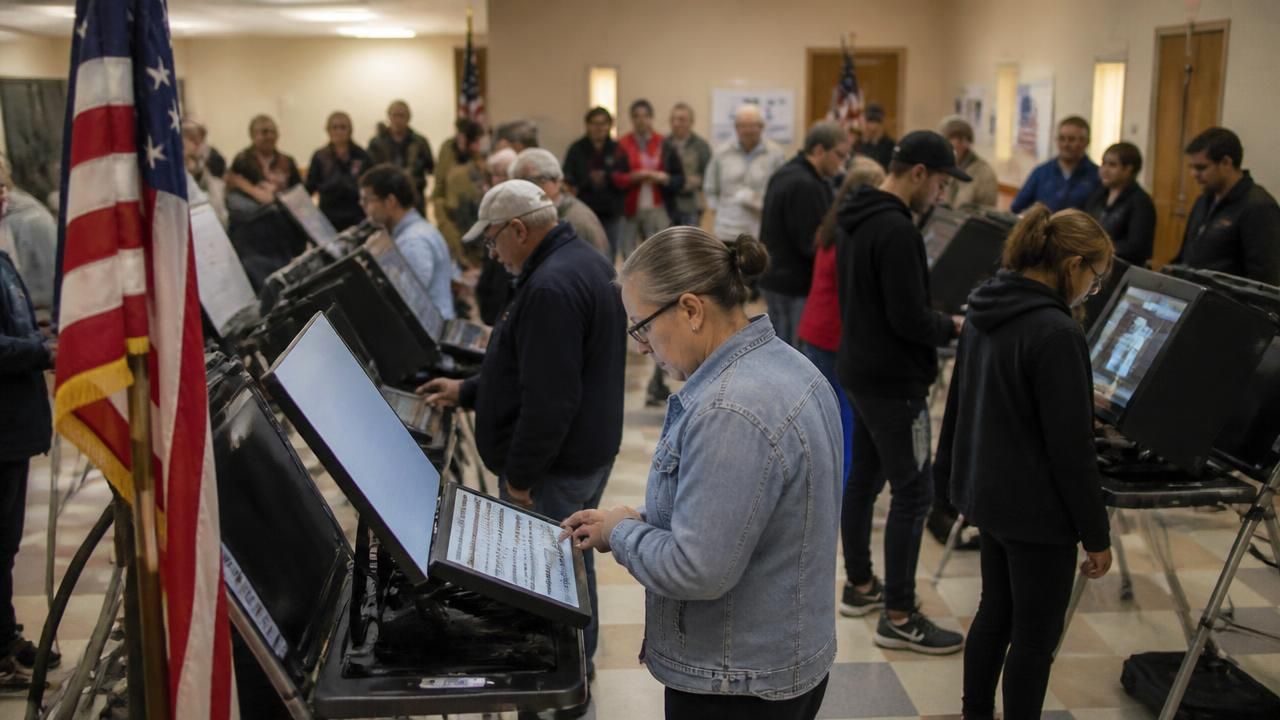
Voters across the United States headed to the polls on Tuesday for a wave of primary elections that could shape the balance of power in Congress and test the enduring influence of former President Donald Trump. From Kansas and Michigan to Texas and Nevada, the day's contests featured high-stakes races, ballot measures, and redistricting battles that local and national outlets alike described as pivotal for the upcoming midterms.
NPR, in its preview of the five states holding primaries Tuesday, noted that the races could "ultimately decide control of Congress next year," underscoring the national significance of what might otherwise seem like local contests. The network highlighted Kansas, Michigan, Missouri, Virginia, and Washington as the primary battlegrounds, with Virginia's congressional redistricting referendum drawing particular attention.
A Pivotal Primary Tuesday
Tuesday's elections were not confined to those five states. Alabama, Ohio, Utah, Pennsylvania, Texas, North Carolina, Arkansas, and South Carolina also held primaries or runoffs, creating a de facto national primary day. Local news outlets across the country offered comprehensive voter guides, reflecting the high level of public interest.
The Alabama Reflector provided details on the state's primary elections as voting began, while the Utah News Dispatch offered "5 things you need to know" for primary Election Day in the Beehive State. In Pennsylvania, Spotlight PA published both a comprehensive guide to voting and a last-minute reminder for Election Day. The Ohio Capital Journal similarly broke down what voters needed to know about the Buckeye State's May primary.
These guides, often indistinguishable in their urgency, emphasized the mechanics of voting: poll times, identification requirements, and where to cast ballots. USA Today helpfully compiled poll opening times for all 50 states, while also providing specific lists for the June 2 and May 19 primary dates, ensuring voters had no excuse for missing their chance to participate.
Trump's Endorsement Power
The most striking narrative of the night was the continued dominance of Donald Trump in Republican primaries. NPR's coverage declared that "Trump dominates in GOP primaries across the country," a sentiment echoed by the New York Times' headline: "With Trump's Backing, Paxton Routs Cornyn in Texas Senate G.O.P. Runoff." The Texas runoff became a lightning rod for the former president's influence, as his endorsed candidate, Ken Paxton, defeated the incumbent senator John Cornyn in a race that many viewed as a referendum on Trump's grip on the party.
In Nevada, the Reno Gazette Journal reported that all five of Trump's endorsed candidates appeared headed to victory, cementing his role as kingmaker in the Silver State. This pattern was repeated in state after state, with Trump-backed challengers unseating incumbents and establishment favorites.
"The stakes could not be higher," noted one local political analyst. "This is a chance for voters to shape the direction of the country, and the president's endorsement has become the single most powerful currency in Republican primaries."
The Texas Showdown
The Texas Senate runoff was perhaps the most closely watched race of the night. Paxton, who had been endorsed by Trump, ran a campaign that leaned heavily on the former president's backing and a promise to fight the "deep state." Cornyn, a seasoned incumbent, fought back with calls for institutional stability but ultimately could not overcome the Trump wave. The New York Times framed the outcome as a clear victory for Trump, noting that "the result sent a message to Washington that the party's base remains firmly behind the former president."
Beyond the Republican Primaries
While Republican contests dominated the news cycle, Democratic primaries and non-partisan ballot measures also drew attention. In Texas, Wikinews' interviews with Democratic candidate Daryl Eddings Sr.'s campaign manager and independent presidential candidate Frank McEnulty—though from earlier cycles—highlighted the breadth of political engagement at the grassroots level. The presence of third-party and independent candidates served as a reminder that the electoral landscape extends beyond the two major parties.
Ballot measures were also on the minds of voters. In Massachusetts, the Bay State Banner reported that the electorate would vote on five ballot questions, including issues related to taxation and education. Similarly, CapRadio provided analysis of California's 2024 state propositions and general election results, indicating that voters in the Golden State were weighing in on everything from housing to criminal justice reform. These measures, often overlooked in the shadow of candidate races, can have profound and lasting effects on state policy.
Redistricting and Its Discontents
Virginia's Tuesday ballot included a critical question on congressional redistricting, as the Virginian-Pilot reported. The proposal aimed to change how district lines are drawn, potentially shifting the balance of power in the House of Representatives. Redistricting efforts in other states, such as Alabama and Ohio, also drew scrutiny, with advocates on both sides arguing that the way lines are drawn can determine election outcomes for a decade.
What Voters Needed to Know
For those heading to the polls, the practicalities were paramount. Poll times varied by state, with USA Today publishing detailed lists for each state. In most states, polls opened between 6 a.m. and 7 a.m. and closed between 7 p.m. and 9 p.m. local time. Voters were reminded to bring acceptable identification, and many states offered early voting or mail-in options.
- Kansas, Michigan, Missouri, Virginia, Washington: Primaries for federal and state offices, with Virginia's redistricting referendum a key item.
- Texas: Senate runoff between Paxton and Cornyn, plus other statewide and congressional contests.
- Nevada: All five Trump-endorsed candidates won their primaries, setting up likely general-election victories.
- Alabama, Ohio, Utah, Pennsylvania: Voters weighed in on key state and federal races, with local outlets providing extensive guides.
- Massachusetts and California: Ballot measures on taxes, education, and housing drew significant attention.
Looking Ahead
As results rolled in, political observers began to assess the implications for the 2026 midterm elections. With Trump's endorsement proving decisive in nearly every contested GOP primary, the party appears firmly aligned with his agenda. Meanwhile, Democrats, who largely avoided competitive primaries, are looking ahead to the general election with an eye toward suburban voters and the issue of abortion rights.
The night's results also raised questions about the future of incumbency. The ouster of a sitting senator like Cornyn, a respected figure in GOP circles, signaled that even longstanding members of Congress are not safe from the Trump-aligned base. "This is a realignment," said a political science professor quoted by multiple outlets. "The old rules of seniority and moderation are giving way to a more populist, Trump-centric Republican Party."
With the general election still several months away, the full consequences of these primaries remain to be seen. But one thing is clear: the 2026 election cycle is being shaped in the image of one man, and both parties are scrambling to adapt.
As voters in five states and beyond returned their verdicts, the message from the ballot box was unmistakable. Whether through endorsements, redistricting, or ballot measures, the decisions made on Tuesday will echo far beyond the primary season.