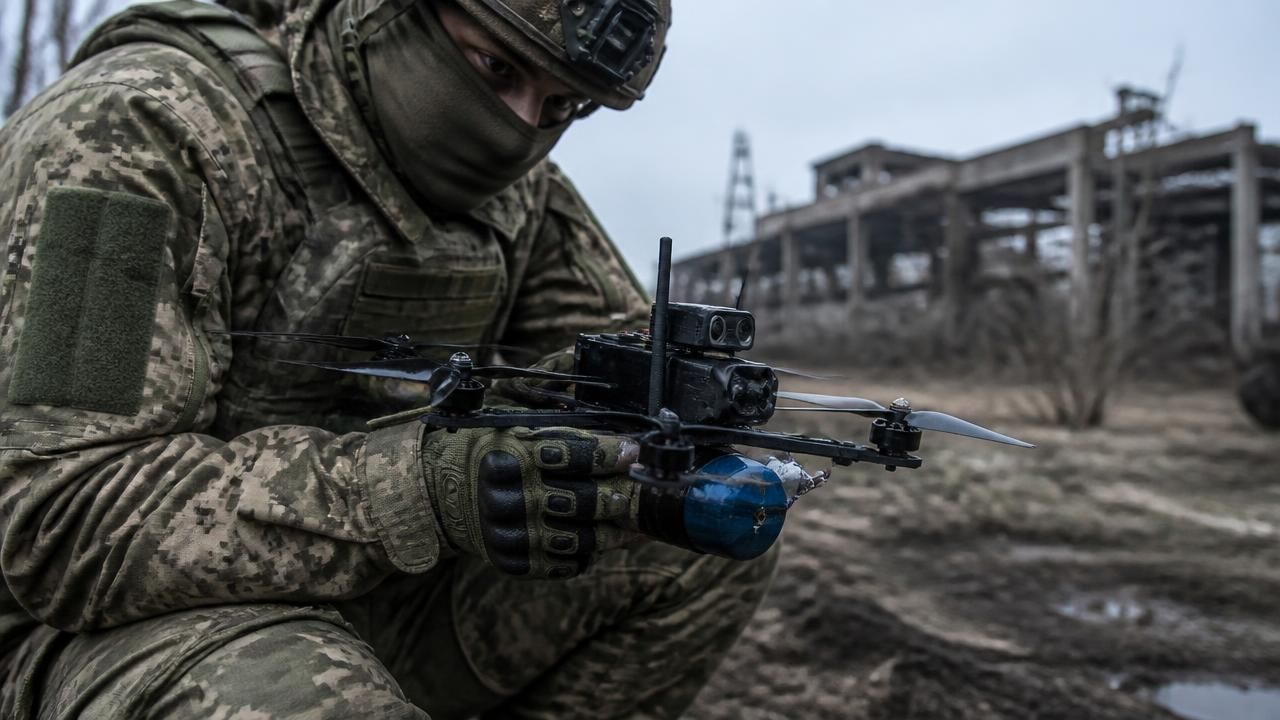
In the trenches of eastern Ukraine, a new kind of warfare is taking shape. Ukrainian drone operators have already destroyed Russian armored vehicles and even helicopters using $400 Shrike drones — small, first-person-view (FPV) aircraft packed with explosives. Now, thousands of these drones are being upgraded with an AI system that allows them to autonomously track and home in on moving targets. The result: a fire-and-forget weapon that could change the calculus of modern combat.
The technology comes from Auterion, a US-based company whose Skynode S strike kits are being integrated into Ukrainian-made Shrike drones by SkyFall. In mid-July, the Ukrainian military began receiving the first units, with plans to deliver 50,000 AI-equipped drones in the coming months. The US is also sending 33,000 Skynode AI drone kits as part of its military aid package, according to a breaking report by Wes O'Donnell.
How the Technology Works
The Skynode S system is designed to work with existing FPV drones, giving them a level of autonomy previously reserved for much more expensive munitions. According to Auterion CEO Lorenz Meier, a human operator can manually fly the drone into a battlefield area, designate a target up to half a mile away, and then "flip the switch to turn it into fire-and-forget terminal guidance mode." This means the drone can track and strike a moving vehicle without requiring constant control from the operator, who might otherwise be exposed to electronic warfare or counter-sniper fire.
The integration is particularly significant because of its cost. MSN reports that the price of Ukraine's AI FPV drone has been slashed to $500, while its range has increased sixfold to 68 miles. This makes the system highly scalable. As Meier told Ars Technica, the goal is to provide "swarm-ready, low-cost precision strike" capabilities that can be mass-produced.
Ukraine's Drone Arsenal Expands
The AI upgrade is just one part of a broader Ukrainian push to leverage drones across the battlefield. EUobserver details how drones like the FP-1, Liutyi, and Hornet are behind Russia's new fuel crises, striking oil refineries deep inside Russian territory. These long-range strike drones have become a key asymmetric tool for Kyiv.
At the tactical level, Ukraine's drones are "catching new rides into battle," as MSN puts it, with drones being launched from ground vehicles and motherships to extend their reach. The Week highlights a range of experimental drone tech, including claws that can grab payloads, motherships that release swarms, and even shotguns mounted on drones for counter-drone defense.
Meanwhile, Western defense firms are taking note. Defense Express reports that US military officials were impressed by the HX-2 drone, which demonstrated an 88% effective hit rate during exercises in Lithuania. The HX-2 is already being used by Ukraine against Russian forces. On the maritime front, Forbes reveals that a new company is now building Ukraine's deadly drone boats for Western militaries, a move that could reshape naval operations in the Black Sea.
Russia's Autonomous Response
Moscow is not standing still. In a breaking report, Wes O'Donnell claims that Russia has now fielded a fully-autonomous AI weapon against Ukraine. This raises the stakes in the AI arms race, as both sides seek to gain an edge through machine speed decision-making. The New York Times, in a recently published feature, describes how Ukraine is becoming a "new arsenal of killer A.I. drones," with dozens of companies iterating on designs in a matter of days rather than years.
But the proliferation of AI drones is not limited to the battlefield. The Combating Terrorism Center at West Point warns that the Ukraine war is fueling the evolving threat of drone terrorism. Hobbyist drones, combined with cheap AI kits, could allow non-state actors to conduct precision attacks against infrastructure or crowds. ABC News adds another layer of concern: "cruise missile" drones and low-cost Shahed knockoffs are now openly listed on Alibaba, making them accessible to anyone with an internet connection.
The Business of War
The drone boom is also attracting investment and controversy. 24/7 Wall St. asks which drone stock will dominate the next war, comparing AVAV, KTOS, and ONDS. Meanwhile, Eric Schmidt, former Google CEO, has revealed a secret military project focused on attack drones — a sign that deep-tech talent is entering the defense space. Even SpaceX is getting pulled in, with reports that the company has told the Pentagon to pay up for Starlink services that have become essential to Ukrainian drone operations.
Implications for the Future
What does this mean for the future of warfare? Analysts at The National Interest and other outlets argue that we are entering a new age of "Great Power rivalry" where AI will be a decisive factor. As the cost of autonomous drones falls to a few hundred dollars, the utility of billion-dollar tanks and jets is being called into question. The Pentagon is now scrambling to adapt, with exercises in Lithuania and elsewhere testing the effectiveness of these systems.
Yet ethical and strategic questions remain. Can autonomous weapons be trusted to distinguish between combatants and civilians? How do you maintain human control when the machines are flying at 60 miles per hour? Lorenz Meier insists that the Skynode system still requires a human to designate the target, but as AI improves, that line could blur. Russia's fully-autonomous weapon suggests that at least one nation has already crossed that threshold.
"The war in Ukraine is serving as a living laboratory for AI-enabled warfare," said a defense analyst at the Royal United Services Institute. "What we learn here will shape military procurement for decades."
A Global Arms Race
As the drone industry expands, the implications are global. Alibaba listings for Shahed knockoffs mean that Iranian-style kamikaze drones are now available for cheap, and not just to governments. The Wall Street Journal reports that Iran's drones are already being used in both Israel and Ukraine, demonstrating how a single technology can proliferate across multiple conflicts.
For Ukraine, the coming months will be critical. With 50,000 AI-enabled drones on the horizon, Kyiv hopes to maintain its edge. But Russia is learning too, and its ability to jam and spoof signals is advancing. The AI systems on both sides will need to adapt to an ever-changing electromagnetic battlefield.
What's Next?
The next wave of drone warfare will likely involve greater autonomy, longer ranges, and more integration with other platforms. Ukraine's drone boats, for instance, are already striking Russian naval assets. Eric Schmidt's project could push the boundaries of what autonomous systems can do. And as the world watches, the lessons from Ukraine will be written into military doctrine from Washington to Beijing.
For now, the $400 Shrike with a $500 AI upgrade is a symbol of a new era: cheap, smart, and lethal. The question is not whether autonomous drones will dominate the next war — they already do.