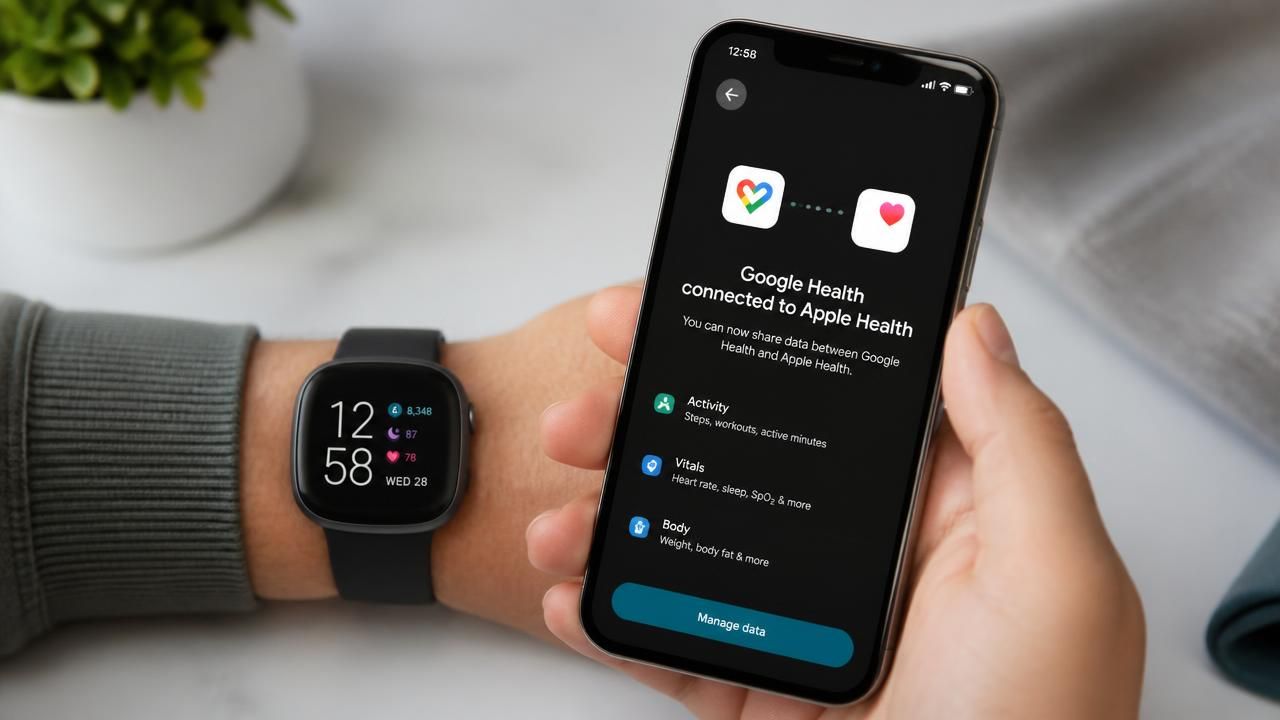
In a move that has thrilled fitness enthusiasts and frustrated Apple Watch owners alike, Google has finally enabled two-way data sharing between its Google Health app (the rebranded Fitbit app) and Apple Health. Rolling out as part of Google Health version 5.05, the update allows Fitbit users to sync their workouts, steps, vitals, and more directly to Apple Health — a feature that had been conspicuously absent for years.
The change, first reported by 9to5Mac and picked up by outlets including The Verge, MacRumors, and AppleInsider, eliminates the need for third-party synchronization tools like Power Sync for Fitbit or Fitbit to Apple Health Sync. Previously, the connection was strictly one-way: users could import Apple Health data into Google Health, but could not push Fitbit data back out to Apple's ecosystem. That left users juggling manual exports or shady workaround apps — a pain point now resolved with a few taps inside the Google Health app.
How It Works
To enable the new sync, users simply update to the latest version of Google Health, tap their profile icon, select “Partner apps,” and choose Apple Health. From there, the app will request permission to read and write health data, which is then shared with Apple's HealthKit framework. The integration supports a wide range of metrics, including:
- Workouts (including GPS-tracked runs, rides, and gym sessions)
- Step counts and daily activity
- Heart rate zones and resting heart rate
- Sleep stages and sleep duration
- Body metrics like weight and BMI
It's important to note that the sync remains a two-way street: Google Health still imports Apple Health data into its own dashboard, giving users a unified view of their wellness stats across both platforms. However, as TechRepublic points out, the iOS version of Google Health has historically lagged behind Android in features; this update brings iOS users closer to parity, though some advanced Fitbit features still remain exclusive to the Android app.
The Long Road to Interoperability
The announcement marks the culmination of a long and often frustrating journey for Fitbit users who also own iPhones. Since Google acquired Fitbit in 2021 for $2.1 billion, speculation has swirled about how deep the integration with Apple's health ecosystem would go. Early on, Google made it possible to import Apple Health data into the Fitbit app, but the reverse path was always blocked — a deliberate move that many saw as a competitive silo.
Third-party developers stepped into the breach with sync apps, but these solutions were often unreliable, requiring manual triggers or premium subscriptions. Lifewire even published a “workaround” guide for those desperate to bridge the gap. Now, with native support, users can set and forget the connection, trusting that their Fitbit data will appear in Apple Health automatically.
The update also arrives amid a broader transformation of Google's fitness product line. As Wired and ExtremeTech have reported, the Fitbit app itself is being slowly replaced by the Google Health app, a rebrand that began in earnest this year. The transition has not been without controversy — Ghacks notes that the new app comes with a subscription price increase effective May 19, and some long-time Fitbit users have voiced concerns about feature parity. Google has countered with new AI-powered features, including a “Coach Ai” with Gemini that offers personalized training plans, as detailed by Il Sole 24 Ore.
Why Google Is Doing This
On the surface, enabling Fitbit data to flow to Apple Health seems counterintuitive — why hand over valuable user data to a direct competitor? But as Android Headlines points out, Google's motivation may be more about attracting iPhone users to its own ecosystem. By making Google Health a truly cross-platform hub, Google positions itself as a neutral aggregator that can pull in data from Apple Watch, Fitbit, Samsung, Garmin, and other devices. In its own blog post, Google emphasized the goal of “bringing your data into one place, on your terms,” suggesting a broader strategy to become the default health data repository, regardless of hardware.
This move also aligns with Google's investment in Health Connect, an Android-based platform that lets fitness apps share data with each other. MyHealthyApple has described Health Connect as the backbone of Android's health interoperability, and the new Apple Health link could be seen as an attempt to extend that openness to the iOS world.
“Your health data should work for you, across all your devices,” a Google spokesperson said in a statement. “We're excited to bring this long-requested feature to Apple Health users.”
Privacy and Security Concerns
While the sync is convenient, it also raises renewed questions about health data privacy. The announcement comes on the heels of a reported breach that exposed records from 61 million fitness tracker users, as covered by Fierce Healthcare. Wareable has also highlighted the importance of reading wearable privacy policies, noting that many apps share data with third parties for advertising purposes.
Users who enable the sync are granting Apple and Google access to a more complete picture of their health — potentially including sensitive information such as heart rhythm irregularities, sleep apnea indicators, or even menstruation cycles. Both companies encrypt health data in transit and at rest, but the question of how that data is used for machine learning or advertising remains a topic of debate. Wired has published a guide on locking down your health data, and experts recommend reviewing permissions by going to Settings > Privacy > Health on iOS and the corresponding Android settings menu.
The Bigger Picture
The Google Health–Apple Health sync is just one piece of a rapidly evolving landscape in health data interoperability. Ars Technica reports that Google is shutting down the old Google Fit APIs in 2025, pushing developers fully onto Google Health and Health Connect. Meanwhile, eWeek notes that Microsoft is diving into the space with Copilot Health, which connects Apple Health and Fitbit alongside hospital records. And Hit Consultant reports that healthcare providers like Novant Health are integrating Fitbit and HealthKit into electronic medical records systems like Epic MyChart.
For consumers, the new feature means no more choosing between ecosystems. You can wear a Fitbit Charge 6, track a workout, and instantly see it in Apple Health alongside your Apple Watch data. Your step count from one device can complement your sleep data from another, giving you a more holistic view of your health.
The move also intensifies competition among the major players. Fitbit's own Whoop competitor (the screen-less tracker teased at Google's latest event) could benefit from seamless Apple Health integration, while Garmin has already enabled migration paths from Fitbit to capture disaffected users. As DC Rainmaker notes, the health-wearable market is becoming more fluid, with users expecting data portability as the default.
How to Get It
The update is rolling out globally via app stores now. To get started:
- Update Google Health (formerly Fitbit) to version 5.05 or later.
- Open the app and tap your profile icon.
- Select “Partner Apps” and choose “Apple Health.”
- Approve the permissions for the data types you want to share.
- Confirm the consent screens; data will begin syncing automatically.
Google notes that the sync is bi-directional, meaning you can also continue to import Apple Health data into Google Health for a unified dashboard. For those switching from Fitbit to Apple Watch entirely, the company has also published a guide on transferring data, alongside PCMag’s step-by-step walkthrough.
The Bottom Line
Google Health's new Apple Health integration is a significant step toward breaking down the walled gardens that have long defined the wearable industry. While concerns about privacy and data control remain, the convenience of having all your health metrics in one place is a powerful draw. As Google continues to evolve its health suite — from AI coaches to screenless trackers — the company is betting that openness will win over more loyal users than it loses.
For now, Fitbit and Apple users can finally have their data — and sync it too.