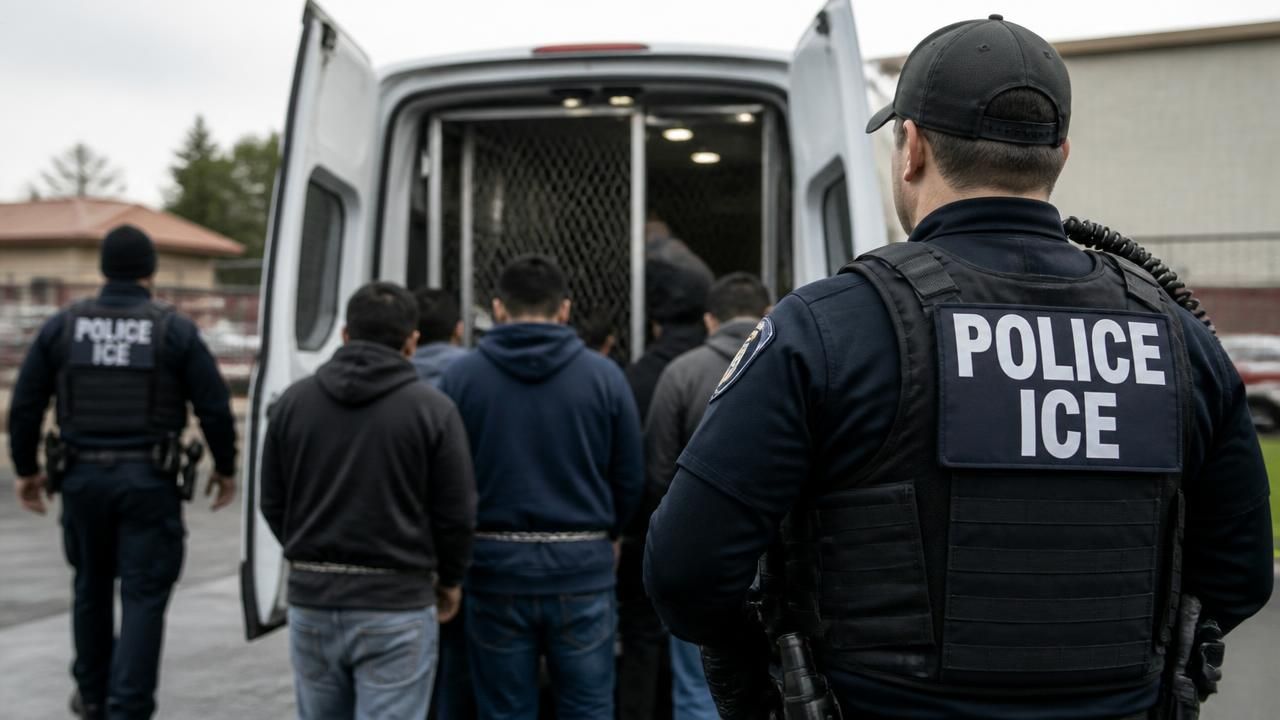
The U.S. Immigration and Customs Enforcement (ICE) collected nearly 1 million DNA profiles in 2025, including samples from young children and toddlers, according to internal documents obtained by WIRED. The surge marks a dramatic acceleration of a controversial program that places genetic material from people never convicted of a crime into the FBI’s Combined DNA Index System (CODIS), a criminal database used for law enforcement matching.
Researchers and civil liberties groups say the total DNA collected from immigrants by the Department of Homeland Security (DHS) has now reached approximately 1.5 million profiles over four years, with the lion’s share occurring during the second Trump administration. The practice, originally authorized under a 2020 rule change, has expanded rapidly despite legal challenges and privacy concerns.
The Scope of Collection
According to the WIRED investigation, ICE collected nearly 1 million DNA samples in 2025 alone—a staggering figure that includes infants and toddlers. The samples are taken from individuals detained by ICE, often during the booking process, and then uploaded to CODIS, which is maintained by the FBI. Although the stated purpose is to identify criminals and solve crimes, critics point out that the vast majority of those sampled have not been convicted of any offense.
“The government is building a massive biometric surveillance database on people who are presumed innocent,” said a representative from the Electronic Frontier Foundation (EFF), which has been tracking the expansion. “Once your DNA is in CODIS, it’s nearly impossible to get it out, even if you’re never charged with a crime.”
Data from the Center for Public Integrity and The Record from Recorded Future News corroborates these findings. They note that DHS has collected DNA from 1.5 million immigrants over the past four years, with a significant spike after January 2025. The collection is not limited to adults; U.S. citizens have also been swept up in the dragnet, as WIRED previously reported.
Legal and Policy Shifts
The legal basis for the expanded DNA collection stems from a rule change finalized in 2020 under the first Trump administration, which expanded categories of detainees subject to DNA sampling. The rule allows DHS to collect DNA from any individual detained, including those merely suspected of immigration violations, rather than only those convicted of crimes. The second Trump administration has implemented the rule aggressively, overruling earlier guidance that limited collection to more serious cases.
In 2021, the Biden administration attempted to limit the practice, but the rule remained on the books. With the return of Trump to office, enforcement has been turbocharged. “This is a deliberate policy choice to treat immigrants as a criminal population,” said an immigration attorney quoted by Capitol News Illinois. “It’s dehumanizing and unconstitutional.”
Concerns and Pushback
Privacy advocates warn that CODIS is not just a database for identifying suspects—it is a permanent repository that can be used for familial searching, trait prediction, and other purposes far beyond its original intent. “Once your genetic material is in the system, you have no control over how it’s used,” said a privacy expert. “The government can retain it forever, even if you are later found to be innocent or deported.”
The program has also sparked legal battles. In Illinois, protesters arrested during ICE demonstrations have sued over DNA collection, and a conspiracy charge against the “Broadview 6” was recently dismissed as part of a settlement that also allowed the plaintiffs to challenge the constitutionality of the practice. Lawsuits have been filed in multiple states, arguing that forced DNA collection violates Fourth Amendment protections against unreasonable searches and seizures.
“Collecting DNA from people who have not been convicted of a crime is a massive invasion of privacy and a dangerous precedent for all Americans, not just immigrants.”
— Civil liberties attorney quoted in the Capitol News Illinois report
A Growing Database with Far-Reaching Implications
The expansion of DNA collection fits a broader trend of biometric surveillance at the border and within immigration enforcement. ICE has also scaled up facial recognition and fingerprinting technologies. Critics argue that these programs disproportionately affect communities of color and create a chilling effect on immigrants seeking services or reporting crimes.
“The message to immigrant communities is clear: any contact with the authorities can result in your genetic information being seized and stored permanently,” said the EFF representative. “This destroys trust and undermines public safety.”
What Happens to the Data?
The FBI’s CODIS database is used by federal, state, and local law enforcement agencies to match crime-scene evidence. While the FBI maintains that profiles from detained immigrants are indistinguishable from those of convicted offenders, privacy researchers note that the inclusion of innocent individuals can lead to false matches and miscarriages of justice.
A 2025 analysis by The Record found that DHS has not released comprehensive statistics on how often DNA from immigrants has been used to solve crimes, making it difficult to assess the program’s effectiveness. “There is no evidence that this massive expansion has improved public safety,” said one researcher. “It’s just mass surveillance for its own sake.”
Historical Context and Future Outlook
The DNA collection program has deep roots. Congress authorized federal agencies to collect DNA from arrestees in 2006, and DHS began implementing pilot programs for immigrants in 2010. However, the 2020 rule change expanded the definition of “covered” individuals, and the second Trump administration has operationalized it on an industrial scale.
For now, the program continues unabated. Lawsuits challenging the practice are pending, but courts have been reluctant to halt immigration enforcement during a time of heightened political tension. Meanwhile, civil liberties groups are urging Congress to pass legislation limiting DNA collection to convicted felons and requiring consent for others.
Broader Implications for Privacy and Technology
The controversy also underscores the growing power of biometric databases in the digital age. DNA is the ultimate personal identifier—it reveals information about health, ancestry, and familial relationships. Placing this data in a government database without robust oversight raises fundamental questions about civil liberties, especially for vulnerable populations.
As one expert put it, “This is not just an immigration issue. It is a test case for how far the government can go in collecting genetic data from citizens and non-citizens alike. If we allow this to stand, it sets a precedent for everyone.”
With nearly a million DNA profiles taken in a single year, including from toddlers who have never committed a crime, the stakes could not be higher. The battle over this database is far from over, and its outcome will shape the future of privacy and digital identity in the United States.