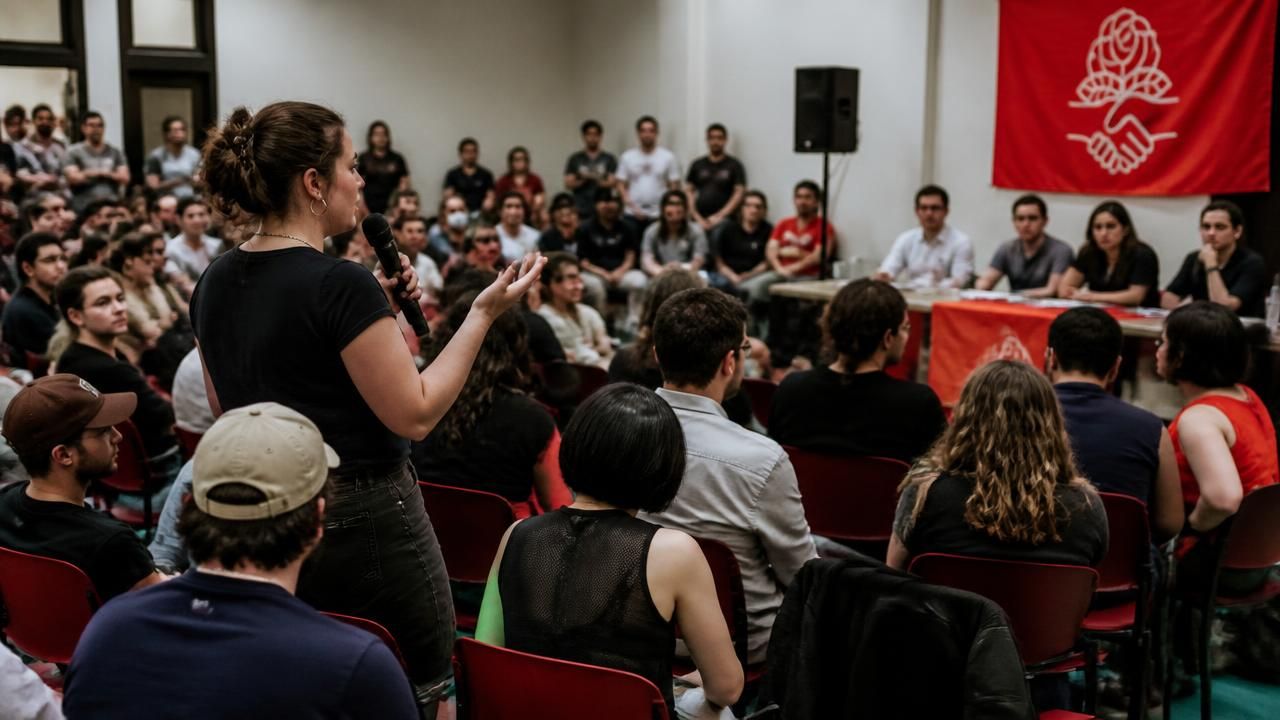
The Democratic Socialists of America (DSA) have arrived. Once a marginal sect on the far left, the organization now claims elected officials across the country, a growing membership, and a seat at the table of Democratic Party politics. But with that arrival comes a reckoning: as the DSA wins primaries and gains influence, its members are wrestling with how far candidates can stray from core principles in pursuit of electoral success. The debate, playing out in Chicago and beyond, reflects a broader struggle over the future of socialism in America—a struggle that has drawn fire from former President Donald Trump, sparked media fact-checking, and intersected with labor fights against established Democratic leaders.
At the heart of the current tension is a classic dilemma: purity versus pragmatism. In Chicago, where DSA-backed candidates have notched a series of primary victories, members gathered to debate whether socialist candidates should be free to distance themselves from controversial goals like abolishing prisons as they chase more seats this fall. The New York Times reported that the discussion exposed a generational and ideological divide within the organization. Some argue that winning elections requires appealing to moderate voters, while others insist that compromising on core demands betrays the movement's purpose.
The Chicago Showdown Over 'Abolish Prisons'
The Chicago debate is a microcosm of a national conversation. According to the NYT, DSA chapters in the city have notched wins for state legislative seats, but the platform that got them there has been carefully tailored to local concerns. The question now is whether candidates can publicly disavow the national organization's more radical positions—such as prison abolition—without facing backlash from the membership. One faction contends that such distancing is necessary to win in competitive districts; another calls it a betrayal of the socialist principles that animate the DSA.
“We need to be honest about what we believe and not try to hide it,” one member argued during the session, while another countered that “winning elections is how we build power, and we need to be strategic about what we emphasize.”
The outcome of this debate will shape the DSA's electoral strategy in the coming months, not just in Chicago but nationwide.
From Margins to Mainstream
The Washington Examiner, a conservative outlet, recently chronicled the DSA's rise from obscurity to influence. The piece traced the organization's growth from a small cadre of intellectuals in the 1980s to a political force with more than 90,000 members and a growing list of elected officials, including Rep. Alexandria Ocasio-Cortez and members of the “Squad.” The Examiner attributed this rise to a combination of factors: income inequality, the 2008 financial crisis, and the mobilizing power of social media. For the Right, the DSA's ascent is a warning sign of radical leftism infiltrating the Democratic Party. For the Left, it's a long-overdue revival of socialist ideas in American politics.
But with mainstream acceptance come new pressures. The DSA's internal structure, deliberately decentralized, makes it difficult to enforce discipline. Chapters often have their own priorities, and candidates endorsed by the DSA may or may not fully embrace its platform. This flexibility has been a strength, allowing local groups to adapt to their constituencies, but it also creates the very conflicts now playing out in Chicago.
Trump's 'Communist' Rhetoric and the Media Fact-Check
As socialism gains traction, it has also become a target for the Right. Former President Trump has repeatedly used the term “communist” to smear his opponents, including President Biden and Democratic lawmakers. In one recent diatribe, Trump delivered an “apocalyptic” rant against what he called the “communist” left, prompting CNN anchor Kaitlan Collins to interject a crucial correction: “Socialism… is not communism,” she said, in a moment that went viral. The Mediaite report highlighted Collins' pushback, which underscored a persistent confusion in American political discourse. Socialism, as practiced by the DSA, seeks to democratize the economy through reforms like Medicare for All and universal housing. Communism, in the historical sense, implies a single-party state and the abolition of private property. The distinction matters, and socialists have long argued that conflating the two is a deliberate smear tactic.
That rhetorical battle is not just academic. It has real implications for policy debates and election outcomes. As the Indiana Citizen's Hicks Commentary noted, the “Socialist Presidency” is a specter raised by conservatives to rally their base. The commentary, part of a series from the state's free-market think tank, argued that the Biden administration's economic agenda, from the American Rescue Plan to the Inflation Reduction Act, represents a slide toward European-style social democracy—or what critics call “creeping socialism.” For the Right, the DSA's influence over the Democratic Party is evidence that these fears are justified.
Labor Fights and the Politics of the Machine
The DSA's rise has also coincided with a resurgence of labor militancy, but not always in easy alignment with the party establishment. In These Times reported on the ongoing battle between John Samuelsen, the combative leader of the Transport Workers Union (TWU), and former New York Governor Andrew Cuomo. Samuelsen has long viewed Cuomo as just another boss—someone who talks progressive while undermining labor. The feud predates Cuomo's resignation over sexual harassment scandals but continues to reverberate. The piece argues that labor leaders like Samuelsen are unwilling to give Democratic establishment figures a pass, even when the alternative is a Republican. That refusal to fall in line is echoed by the DSA's insistence on holding Democrats accountable.
This strain between the left wing and the party’s moderate wing is not new, but it has become more visible. As the DSA pushes for primaries against incumbent Democrats, it sometimes finds itself in opposition to the very party it is nominally aligned with. The result is a fractious coalition, one that Republicans hope to exploit.
An Urban-Rural Realignment?
Amid these political battles, there are signs of a demographic shift that could reshape the landscape. Hudson Valley Post reported that up to 1 million New York City residents might flee to upstate New York, driven by high costs, crime, and the pandemic's toll. While not directly related to socialism, this movement carries political implications. If progressives leave the city for the countryside, they may bring their politics with them, changing the calculus in upstate districts that have long been conservative strongholds. Conversely, the exodus could dilute the city's political power. The DSA, which thrives in urban centers, may need to adapt to a more dispersed membership.
What's Next for the DSA?
The DSA's internal debate is far from settled. As the organization looks toward the midterms and beyond, it must decide what kind of left it wants to be: a principled minority that refuses to compromise, or a pragmatic force that wins at any cost. The Chicago chapter's deliberations will offer a clue, but the stakes are national. If the DSA can strike a balance, it may continue its ascent. If it tears itself apart over purity, it risks squandering the momentum it has built.
For now, the world watches as socialism—once a dirty word in American politics—becomes a subject of serious debate. Whether that debate leads to actual socialist policies remains an open question, but the fact that it is happening at all marks a significant shift in the country’s political conversation.