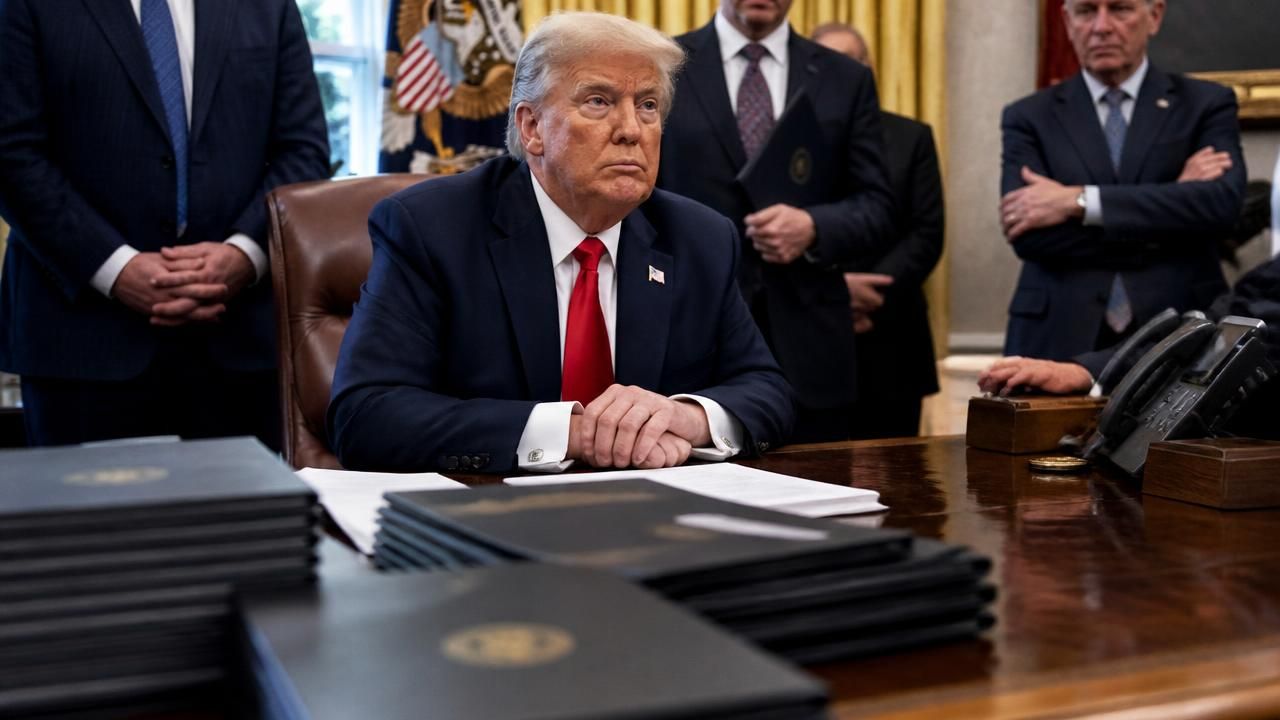
In a single week, President Donald Trump’s interference with the Justice Department has imperiled a criminal case, set the stage for sanctions in another, and clouded the confirmation prospects of his chosen attorney general. Simultaneously, he has amplified unverified claims of Chinese election meddling, stoking fears that he is laying the groundwork to challenge midterm results he does not like. This confluence of actions, detailed across dozens of news reports, paints a portrait of a president willing to bend democratic institutions to his will—and of a political system struggling to respond.
A Justice Department Under Siege
The New York Times reported that Trump’s meddling has created “problems of his own making” for the Justice Department. In one case, presidential interference threatened to derail a prosecution; in another, a federal judge signaled sanctions over the administration’s conduct. Meanwhile, Senate confirmation hearings for his attorney general pick have been complicated by revelations of White House pressure on prosecutorial decisions. Critics describe a department increasingly viewed as an extension of the president’s personal grievances.
This pattern is not new. As GQ noted, former Attorney General William Barr undermined his own department to protect Trump, and a CNN analysis chronicled “Trump’s 10 worst abuses of power.” The latest DOJ leadership appears to be following suit: the No. 2 official, according to the Times, has targeted the very office where he once served as a prosecutor, raising questions about politically motivated purges. The conservative City Journal offered “Five Ways to Right the DOJ,” acknowledging the crisis of confidence while proposing institutional fixes.
Election Interference Claims and Midterm Fears
Trump’s recent speech on election integrity—previewed by the Wall Street Journal—included unsubstantiated allegations that China meddled in the 2020 election. The BBC and AOL both noted that critics see this as a “ploy to challenge midterm results” if Republicans underperform. The White House dismissed such concerns as “fearmongering,” but Democrats point to Trump’s history: his refusal to accept the 2020 outcome, the pressure on state officials to “find votes,” and the January 6 insurrection.
“It’s not fearmongering to note that the president has already tried to overturn an election once,” said a Democratic strategist quoted by PBS News. The White House calls such warnings baseless.
Former President Barack Obama weighed in, blasting Trump’s claim that his 2016 win was tainted by “treason” as “bizarre.” Obama’s rebuke underscores how Trump has repeatedly questioned election integrity without evidence—from wiretapping allegations in 2017 to the “Stop the Steal” movement in 2020.
The Georgia Indictment and the Fake Electors Scheme
One of the most concrete legal challenges to Trump’s machinations is the Georgia indictment, in which Trump and 18 others were charged for efforts to overturn his 2020 loss in the state. The New York Times explained the fake electors scheme in detail: Trump allies submitted slates of electors falsely certifying he won states he lost, a strategy central to the conspiracy. These cases represent the first attempts to hold the former president and his inner circle accountable for election subversion.
Historical Echoes: Helsinki, Russia, and the Mueller Investigation
Trump’s current behavior recalls his 2018 Helsinki summit, where he sided with Vladimir Putin against U.S. intelligence agencies on election interference, as the BBC and Fox 61 reported. His reluctance to blame Russia and his attacks on the FBI set a precedent for his current posture. The Mueller investigation, which examined Russian interference and potential obstruction, ended with no conspiracy charges but detailed numerous episodes of attempted interference by the president. A Politico timeline of the Trump-Russia saga remains a reference point for understanding the depth of these controversies.
Political Fallout: Republican Warnings and Swing Voters
Trump’s tactics are alienating even some Republicans. A top GOP pollster issued a grim warning, according to The New Republic, that Trump’s support is tanking among key demographics. USA Today opined that his “revenge tour” could cost Republicans in the 2026 midterms. Even on the right, the City Journal acknowledges the need for institutional reform. Meanwhile, the Comey indictment—the FBI director Trump fired—has escalated his promise of political retribution, alarming moderates.
The chaos extends beyond legal and electoral matters. The New Republic reported that MAGA influencers increasingly believe the assassination attempt against Trump was fake, and Trump was forced to admit he bankrupted the Kennedy Center—smaller stories that nonetheless feed a narrative of grievance and misinformation. CNN’s coverage of Trump’s Epstein ties added another layer of scandal, though it remains tangential to the core issue of institutional erosion.
What’s at Stake
The convergence of these stories reveals a president determined to test the limits of executive power. His interference in the Justice Department, his preemptive attacks on election integrity, and his willingness to embrace foreign adversaries all undermine the rule of law. As the midterms approach, the question is whether democratic norms—and the courts, Congress, and voters—will hold the line. The evidence from the past week suggests a system under extraordinary strain, but also one where resistance is mounting.
Ultimately, as the Atlantic noted, Trump’s plan to subvert the midterms is already under way. Whether it succeeds depends on the vigilance of institutions and the public. The stakes, as Obama said, are nothing less than the preservation of American democracy.