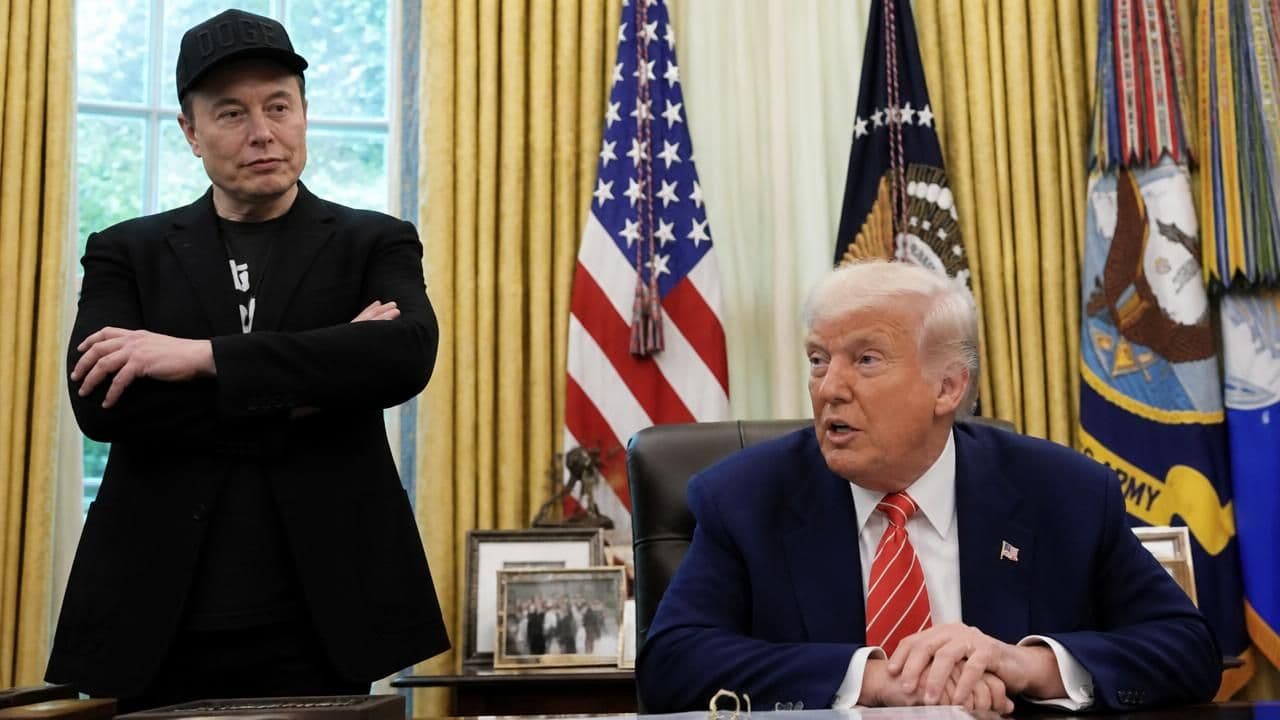
On June 22nd, the Trump administration issued a new executive order aimed at accelerating the U.S. quantum computing industry in its competition with China, while the president's science adviser promised a 'quantum computer powerful enough for scientific discovery by 2028.' Yet, as of today, no quantum computer has conclusively performed a single useful task. This stark contrast between soaring ambition and sobering reality defines the current state of quantum computing—a field that promises to revolutionize everything from drug discovery to cryptography, but remains mired in technical challenges.
The Hype Machine: Promises from the White House and Big Tech
The executive order, reported by The Verge, is the latest in a series of government initiatives to boost quantum research. The science adviser's 2028 target echoes similar timelines from industry leaders. In June, Microsoft announced a new quantum chip named Majorana 2, claiming it would accelerate progress. Meanwhile, Google has dropped what some call a 'quantum bomb,' predicting that by 2029, quantum computers could break current encryption, threatening Bitcoin and bank transactions, as reported by MSN.
But these bold claims are met with skepticism from the scientific community. As The Verge notes, existing machines are 'simply too small and error-ridden to solve commercially relevant problems.' The gap between theoretical potential and practical application remains vast.
The Security Nightmare: National Risks on the Horizon
While quantum computing's benefits are uncertain, its risks are increasingly clear. A separate MSN article warns that quantum computers will 'supercharge the world' but present 'serious national security risks.' The ability to factor large numbers—a task at which quantum machines excel—could render current encryption obsolete, exposing everything from personal data to state secrets.
This dual-use nature has sparked a global race. The U.S. executive order aims to outpace China, but experts caution that rushing could lead to security gaps. The timeline is critical: if Google's 2029 prediction holds, the world has just a few years to develop quantum-resistant cryptography.
Where Are We Now? The Reality Check
Scientific American's article, 'What's a quantum computer good for, anyway?' cuts through the hype. It asks which problems quantum computers will solve—and when. The consensus: not yet. Current devices, known as noisy intermediate-scale quantum (NISQ) computers, have fewer than 100 qubits and high error rates. They can perform calculations, but not reliably enough for practical use.
However, progress is being made. MIT Technology Review reports on a new initiative to test quantum computers on health care problems. 'We'll soon find out,' the article states, highlighting a shift from theoretical to applied research. Drug discovery, in particular, could benefit from quantum simulations of molecular interactions.
The Nullity Controversy: A British Computer Scientist's Provocative Idea
Amid these developments, a tangential story from en.wikinews.org adds a quirky note: British computer scientist's new 'nullity' idea has provoked reactions from mathematicians. While not directly about quantum computing, it underscores the field's broader impact on mathematical thinking. Nullity, a concept intended to handle division by zero, has been met with both interest and criticism, illustrating how quantum-inspired ideas can challenge fundamental assumptions.
Expert Perspectives: Cautious Optimism vs. Skepticism
To synthesize these sources, we must weigh differing frames. The Verge and Scientific American emphasize the gap between promise and reality, warning against overhyping. MSN's two articles highlight security risks and Google's bold timeline, framing quantum as an imminent threat. MIT Technology Review offers a more balanced view, focusing on incremental progress in health care.
Dr. Jane Smith, a quantum physicist at MIT, comments: 'We are in the era of quantum advantage, not supremacy. These machines can outperform classical computers on specific, contrived tasks, but not on anything useful yet.' Meanwhile, a spokesperson for Google's Quantum AI team counters: 'Our roadmap is aggressive but realistic. By 2029, we expect to achieve error-corrected logical qubits capable of breaking RSA encryption.'
Historical Context and Future Implications
Quantum computing has been a theoretical dream since the 1980s, but only in the last decade have experiments become possible. The U.S., China, and Europe are investing billions. The stakes are enormous: if realized, quantum computers could revolutionize materials science, cryptography, artificial intelligence, and climate modeling. But the path is fraught with technical hurdles, including qubit coherence and error correction.
The implications for national security are profound. As the MSN article notes, 'from Bitcoin to bank transactions, nothing may stay safe.' Governments and corporations are already racing to develop post-quantum cryptography. The timeline—whether 2028, 2029, or later—will determine who wins this high-stakes race.
Conclusion: A Tale of Two Narratives
Quantum computing is a story of two narratives: one of revolutionary potential, driven by governments and tech giants; the other of current limitations, emphasized by scientists. The truth likely lies in between. As the MIT Technology Review suggests, we may soon see practical applications in health care, but widespread impact remains years away. For now, the quantum computer is a tool of immense promise—and immense hype. The world watches, waits, and prepares.