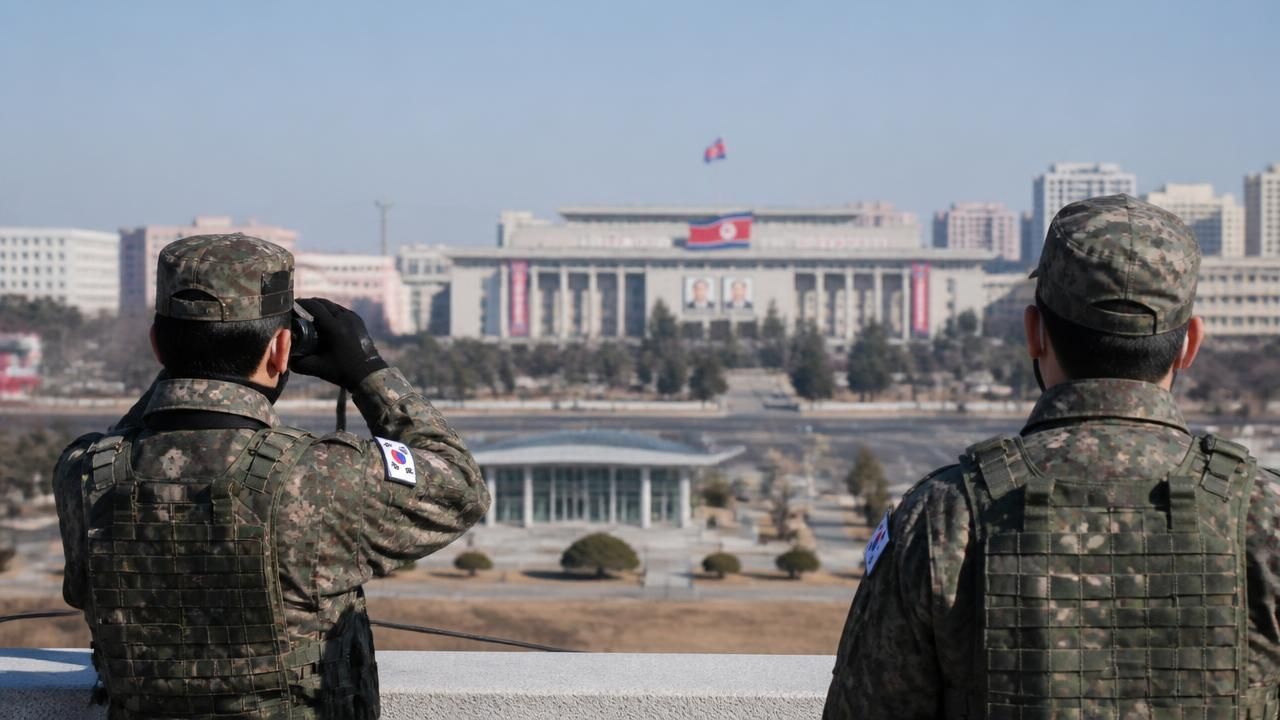
In a significant departure from decades of orthodoxy, South Korea is moving away from its policy of prioritizing the immediate denuclearization of North Korea. The shift, which has been quietly unfolding over recent months, signals a growing consensus in Seoul that the previous demand for complete, verifiable, and irreversible denuclearization before any meaningful engagement has failed to produce results.
A Policy in Transition
For years, successive South Korean governments maintained that denuclearization was the cornerstone of any inter-Korean relationship. Economic cooperation, humanitarian aid, and even family reunions were made contingent on tangible steps by Pyongyang to dismantle its nuclear weapons program. This "denuclearization-first" approach was a central pillar of the conservative administrations and was also echoed, albeit differently, under the previous progressive government's engagement strategy.
Now, according to multiple diplomatic sources, the administration is adopting a more flexible, phased approach. While long-term denuclearization remains the ultimate goal, the policy no longer treats it as a prerequisite for dialogue. Instead, Seoul appears willing to pursue parallel tracks: engagement and cooperation on issues of mutual interest, while continuing to address security concerns through strategic dialogue with allies.
"We are not abandoning the goal of denuclearization," a South Korean official told reporters on condition of anonymity. "But we recognize that insisting on it upfront led to a deadlock. We need to create conditions for dialogue, not just wait for the North to unilaterally disarm."
Why the Change Now?
The policy shift comes after years of a diplomatic stalemate. North Korea has continued to advance its nuclear and ballistic missile programs, despite international sanctions and multiple rounds of talks. The last high-profile summit between the United States and North Korea collapsed in 2019 over disagreements on sanctions relief versus denuclearization steps. Since then, Pyongyang has refused to engage in substantive negotiations, citing perceived threats from the US and South Korea.
South Korea has also faced domestic pressures. The public's patience with a strict denuclearization-first approach has worn thin, with many Koreans weary of years of heightened tension and no progress. Economic imperatives are another factor: the North Korean economy, already crippled by sanctions and COVID-19 border closures, presents a potential opportunity for South Korean investment and inter-Korean economic projects that could benefit both sides.
Some analysts point to a changing geopolitical environment. With the US focused elsewhere and China exerting greater influence in the region, Seoul may be seeking to recalibrate its own leverage and avoid being sidelined in any future negotiations.
Experts Question Pyongyang's Willingness
Despite the strategic rationale behind the shift, experts are skeptical about its impact on North Korea's calculus. "There is little evidence that Pyongyang is interested in returning to the negotiating table," said Dr. An Hyeong-jun, a senior researcher at the Sejong Institute in Seoul. "The North has repeatedly stated that it views its nuclear weapons as a non-negotiable guarantee of regime survival. A change in Seoul's tone alone will not alter that foundational stance."
"The idea that South Korea can buy peace through diplomacy ignores the reality that North Korea's nuclear program is not a bargaining chip; it is a survival mechanism."
That sentiment is echoed by analysts abroad. "Pyongyang has historically preferred to deal with Washington directly, treating Seoul as a secondary actor," says Dr. Mira Rapp-Hooper, a former US State Department official now at Yale University. "Even if Seoul is more conciliatory, the North may simply pocket the concession and continue to demand more from the US."
What Will Pyongyang Do Next?
North Korea's likely response to Seoul's policy shift is a matter of intense speculation. Options range from continued provocation to cautious engagement. Analysts outline several possible paths:
- Escalation: Pyongyang could double down on its weapons testing and rhetoric, viewing the shift as a sign of weakness and an opportunity to extract further concessions.
- Ignore Seoul: The North may simply ignore South Korea's overtures and focus its attention on the United States, waiting for a new administration or a change in Washington's stance.
- Conditional Engagement: Pyongyang might signal a willingness to engage in limited dialogue, but only on its own terms—such as demanding lifting of sanctions or an end to US-ROK military exercises.
- Direct US Talks: North Korea could seek to bypass Seoul entirely and pursue a direct summit with the US president, as it has done in the past.
History suggests that North Korea tends to react to perceived concessions with increased demands. The collapse of the 2019 Hanoi summit was partly attributed to North Korean leader Kim Jong Un's insistence on comprehensive sanctions relief in exchange for partial denuclearization steps.
Implications for the Region
South Korea's policy shift could strain coordination with its main ally, the United States. Washington has historically backed the denuclearization-first principle, and any deviation could create friction within the alliance. However, US officials have recently shown signs of flexibility, with some calling for "creative diplomacy" to break the impasse.
Japan, too, will be watching closely. Tokyo has been cautious about engagement with Pyongyang, particularly regarding ballistic missile threats. A more conciliatory South Korean position could complicate trilateral security cooperation.
China, on the other hand, may welcome the shift, as it aligns with its own proposal for a "dual suspension"—the suspension of North Korean missile tests in exchange for a halt to US-South Korea military exercises. Beijing could use the change to promote its role as a mediator.
The Road Ahead
Ultimately, Sydney Seiler, a former North Korea mission chief for the US intelligence community, cautions that the onus remains on Pyongyang. "The ball is in North Korea's court. South Korea has signaled flexibility, but without a reciprocal gesture from the North, the region will remain locked in a dangerous and costly standoff."
The coming months will be telling. If North Korea responds with missiles and rhetoric, the policy shift will be seen as a failed gambit. If it responds with even a hint of dialogue, it could open the door to a new era of engagement—though that outcome, most experts agree, remains distant.