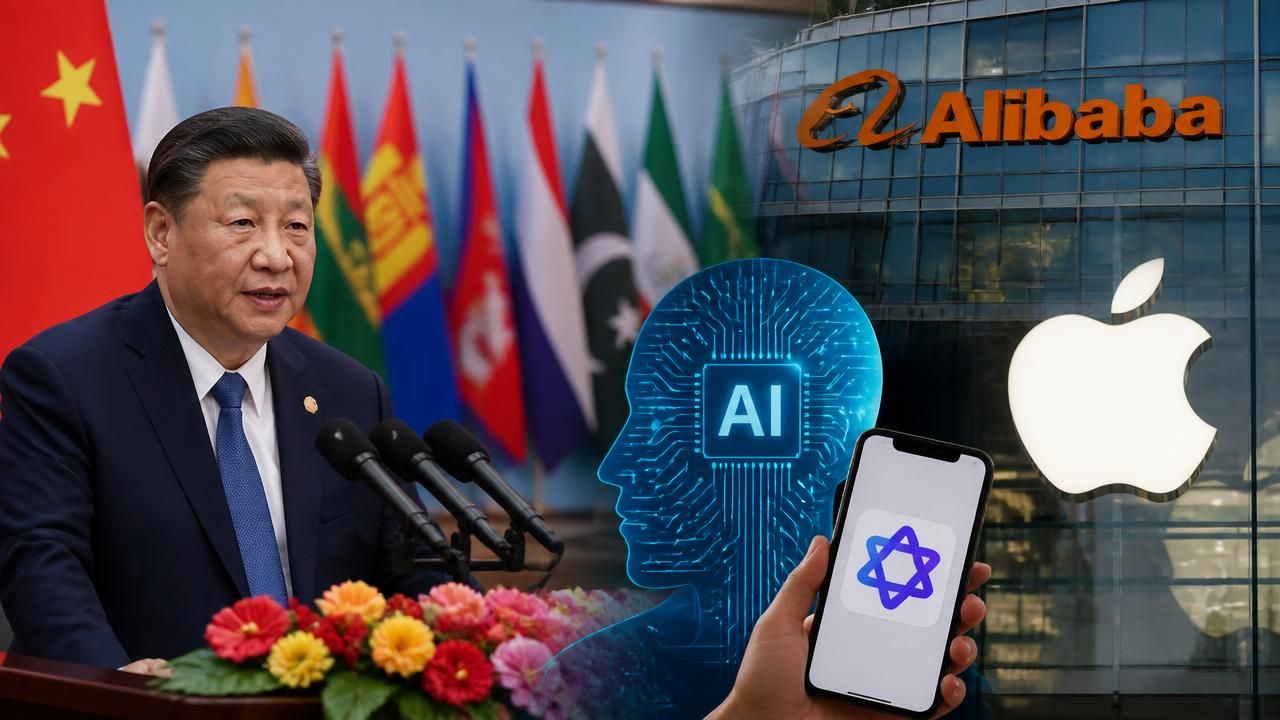
The US-China artificial intelligence rivalry has escalated from competitive posturing to open conflict, with Anthropic accusing Alibaba of the largest known AI model theft in history, Chinese President Xi Jinping stepping onto the global stage to counter Washington's technology curbs, and Apple effectively choosing a Chinese model to power its AI features in the country. The convergence of commercial, criminal, and diplomatic developments marks a decisive chapter in the struggle for technological supremacy.
Anthropic Alleges 'Massive AI Extraction'
Anthropic, the US AI safety company behind the Claude family of models, has accused Alibaba of conducting a massive "distillation" attack — using 28.8 million queries to Claude to train a rival model without authorization. According to Ars Technica, this is the "largest Claude cloning attack" documented to date. Firstpost reported that Anthropic described it as the "largest-known AI model theft attempt," while Tekedia and Innovation Village echoed the language of "history's biggest AI theft attempt."
Distillation, a common but controversial technique, involves using one model's outputs to train another, effectively transferring knowledge without copying code directly. Anthropic contends that the scale of Alibaba's operation constitutes theft, not fair use. In response, Alibaba has banned its employees from using Anthropic's AI tools, as noted by MSN, creating a paradoxical situation: the company stands accused of stealing while simultaneously locking out the victim's products.
Alibaba's Qwen: Apple's Surprise Bet
Even as these accusations fly, Alibaba has been executing a powerful commercial strategy. Its Qwen AI models — which Bloomberg Markets says claim performance similar to Anthropic's Claude — are now set to be integrated into Apple Intelligence in China. CNBC reported that Alibaba's US-listed shares jumped 4% on the news, and TNW noted the same gain after the approval. The partnership is a major validation for China's domestic AI ecosystem, offering Alibaba a global platform while giving Apple regulatory cover in a market where American models face restrictions.
Alibaba's AI-driven revenue surge has been well documented; Borneo Bulletin reports that the company's revenue is expanding on the back of AI and e-commerce. The Apple deal, however, is a strategic coup — one that sends ripples across the market. MSN noted that Baidu shares also rose on speculation of similar integration, underscoring how geopolitical tension can still yield commercial winners.
Xi Jinping Makes AI Summit Debut
In a demonstration of the political significance of AI, Chinese President Xi Jinping is slated to debut at China's flagship AI summit, according to Bloomberg. France 24 reports that Xi urged global cooperation and warned against single-country dominance.
Global cooperation is essential for AI safety and development. No country should seek to monopolize its benefits, Xi said, implicitly criticizing US export controls and technology-sharing restrictions.
Yahoo News added that Xi "chided the US for its curbs on tech sharing," framing Washington's policy as antithetical to the spirit of scientific progress. This is a direct rebuke of the US strategy, which has included sweeping chip export bans and restrictions on transferring AI technology to Chinese companies.
A Broader Tech Cold War
The Alibaba-Anthropic clash is just one front in a wider conflict. Tencent and Hon Hai are riding the AI wave, as Bloomberg notes, while US authorities have also accused another Chinese startup, Moonshot AI, of stealing technology from American rivals. Moonshot, meanwhile, claims its Kimi K3 model can rival OpenAI and Anthropic — a claim that only intensifies suspicions.
On the other side, China has flagged a potential backdoor in Anthropic's Claude Code tool, according to Lapaas, illustrating that the mutual distrust cuts both ways. The Next Web observed that "China and the US are now warning against each other's AI," a situation that Reuters argues is threatening global safety efforts. "As AI grows more powerful, the US-China feud threatens the very cooperation needed to prevent catastrophic misuse," Reuters wrote.
Divergent Narratives, Escalating Stakes
How the story is framed depends on the source. The Verge described China's moves as "a one-two punch to America's AI dominance," while the New York Post warned of threats to US national security. The Wall Street Journal offered a sports analogy: "If U.S.-China AI Rivalry Were Football, the Score Would Be 24-18." Brookings, meanwhile, published a detailed analysis of competing AI strategies, arguing that the US and China are on "two divergent paths" with global consequences.
The Anthropic-OpenAI battle itself, documented in a Reuters investigation, shows how these dynamics are playing out inside the US as well. Anthropic's calls for extending America's lead — reported by The Star — resonate in Washington, but the industry remains split on whether decoupling or engagement is the better strategy.
What This Means for the World
The implications are immense. Apple's decision to use Qwen in China signals that even the most valuable US company must adapt to the reality of Chinese AI regulation — and, perhaps, Chinese technological capabilities. Anthropic's accusations, whether or not they are later proven, have already poisoned the well for cross-border research collaboration.
For policymakers, the need for a global AI governance framework has never been more urgent. Xi's summit speech may be a step toward dialogue, but the underlying tensions — over chips, talent, and data — are unlikely to ease. As Reuters notes, safety efforts are the ultimate casualty. The world is watching whether these two superpowers can find common ground, or whether the AI cold war will continue to escalate, one allegation at a time.