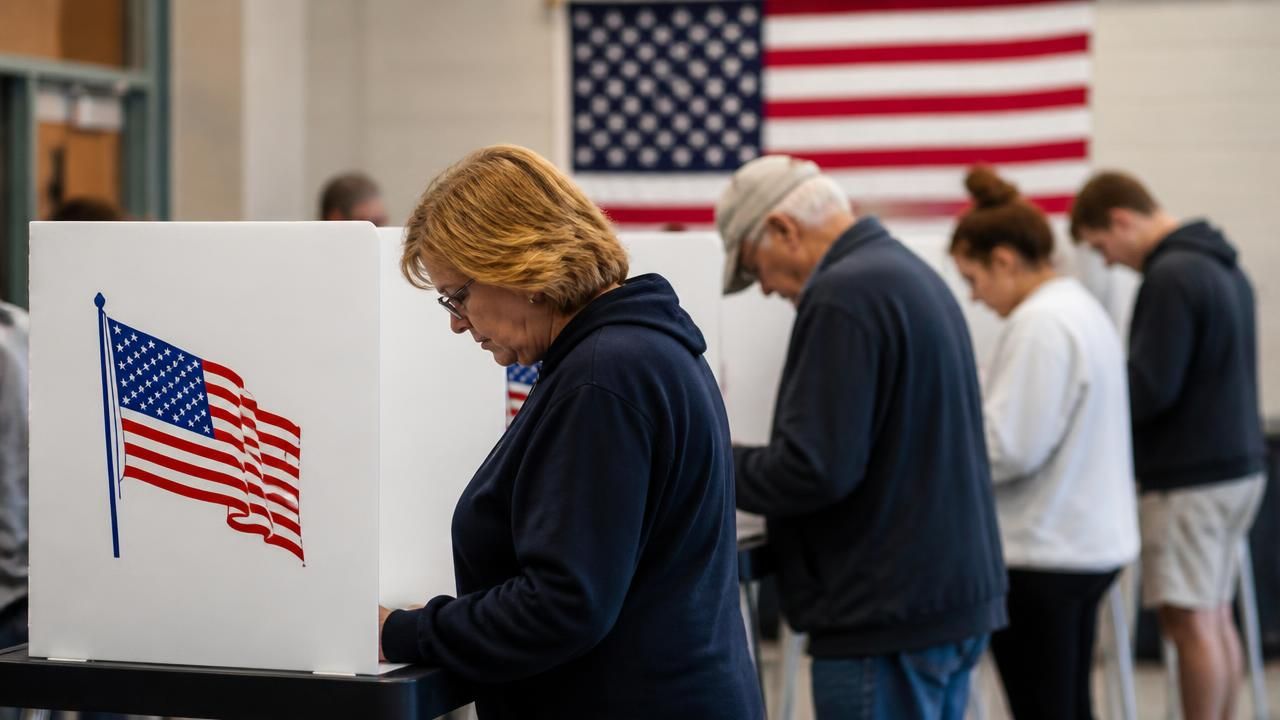
On Tuesday, Missouri voters head to the polls for a primary election that also serves as a critical test of the balance between citizen-led democracy and legislative authority. At issue is Amendment 7, a constitutional measure approved by the Republican-controlled General Assembly that would make it significantly harder for citizens to amend the state constitution through ballot initiatives.
NPR, in its coverage, noted that the referendum is a direct response to years of successful progressive ballot measures in Missouri. “Voters are being asked to raise the bar for ballot initiatives — a measure backed by Republicans after years of seeing voters allow abortion, expand Medicaid and allow gaming,” the network reported. Similar efforts are underway in other states, making Tuesday's vote a bellwether for a national Republican push to curb direct democracy.
What Amendment 7 Would Do
Amendment 7, if approved, would raise the required majority for voter-initiated constitutional amendments from a simple majority (50% plus one) to a 57% supermajority. It would also impose a single-subject rule, requiring that each initiative address only one issue, and would require that petition signatures be gathered from each of Missouri's six congressional districts. The measure additionally would restrict contributions by out-of-state entities to ballot measure campaigns, a provision that supporters argue is needed to prevent “outside cash” from swaying Missouri's fundamental law.
Currently, Missouri is one of the few states where a bare majority can amend the constitution. That has made it a battleground for grassroots campaigns. In recent years, voters have enshrined abortion rights in the state constitution (2024), expanded Medicaid (2021), legalized medical marijuana (2018), and approved casino gambling in specific regions. Each of these victories for progressive and libertarian causes was achieved over the objections of the Republican-led legislature.
Arguments For and Against
Supporters of Amendment 7, including many Republicans and business groups, argue that the current system is too easy to abuse. They contend that out-of-state interests can pay signature gatherers and flood the airwaves, leading to a constitution that is a patchwork of special-interest laws rather than a coherent governing document. They also point to the fact that 57% aligns with the threshold used in some other states for certain fiscal matters, and argue it will force consensus. “The constitution is the foundational legal document of our state,” said one Republican state senator during debate. “It should not be amended on a whim by 50.1% of voters.”
Opponents, however, see a transparent effort to disenfranchise voters. They note that the legislature has repeatedly refused to implement the will of the people on issues like Medicaid expansion and abortion rights. Raising the threshold to 57% would make it nearly impossible for citizen groups to overturn legislative opposition or to protect rights in future elections. “This is a power grab,” said a spokesperson for the American Civil Liberties Union of Missouri, which has campaigned against the measure. “It is designed to make direct democracy so difficult as to be nearly impossible.”
The Missouri measure also has an insidious subtext: it is precisely the mechanism that allowed the state's voters to restore abortion rights in 2024, months after the U.S. Supreme Court overturned Roe v. Wade. In an election year where abortion rights are a mobilizing force, the referendum has drawn national attention. If Amendment 7 passes, similar legal hurdles could be erected in other states where Republican legislatures have tried to limit citizen initiatives, including Arkansas, Ohio, and Wyoming.
National Context
Missouri is part of a broader trend. According to the Ballot Initiative Strategy Center, at least seven other states have seen legislative efforts in 2025 to restrict ballot access or raise voting thresholds. These efforts have intensified after progressive victories on issues like abortion, minimum wage, and voting rights. In Ohio, for instance, voters in 2023 rejected a proposal to make it harder to amend the state constitution before later passing an abortion rights measure. In Missouri, the timing of Tuesday's referendum is no accident; it appears on the same ballot as a contested Republican gubernatorial primary and other state and local races, ensuring higher Republican turnout.
While supporters frame the measure as a safeguard against “special interests,” opponents argue it is a “power grab” designed to retain legislative dominance, according to commentary from advocacy groups covered by several outlets.
What It Means for Missouri and Beyond
The outcome of Tuesday's vote will have immediate consequences. If Amendment 7 passes, it would take effect immediately, applying to any new initiative petition. That would mean future efforts to raise the minimum wage, legalize recreational marijuana, or establish new rights would require a nearly 6-in-10 vote to succeed. It would also likely face legal challenges, as some constitutional scholars argue that requiring a supermajority for future initiatives is itself a constitutional violation of the state's reservation of power to the people.
If it fails, it will mark a rare defeat for a coordinated policy push by Republican state legislators and national conservative networks. But even a defeat may not end the fight. The legislature could try again, or the issue could be settled by the courts. For now, all eyes are on Missouri's tally as a signal of how voters feel about the very process of having a voice in their own governance.
How to Follow the Results
Polls close at 7 p.m. Central Time on Tuesday. Missouri's Secretary of State website and local news outlets will publish unofficial returns as they come in. The result is expected to be close, and mail-in and provisional ballots could delay final counts in some jurisdictions. What is certain, as NPR observed, is that similar questions are being asked across the country — and the answer in Missouri may shape the future of citizen lawmaking for years to come.